
Puddles on a flat roof are more than an eyesore. Water that sits for days breaks down membranes, feeds algae, and adds heavy weight to a structure that was never meant to carry it. If you manage a commercial building, a townhome community, or a home with a low slope section, you have probably seen it after a monsoon storm. Avid Roofing Solutions helps Arizona property owners fix this problem at the source, and tapered insulation is one of the most reliable ways to do it. This guide explains how tapered insulation for flat roofs works, when it makes sense, and what to expect from the process.
Flat roofs are not truly flat. Most are built with a slight pitch so water can move toward drains, scuppers, or gutters. Over time that pitch fades. Buildings settle, decking sags, and old repairs add thickness in random places. The result is a surface with low spots that hold water long after the rain stops. Knowing why this happens helps you choose a fix that lasts instead of one that only hides the problem.
Why Standing Water Forms on Flat Roofs?
Ponding usually starts with design or age. Some roofs were built with almost no slope. Others lost it when the structure shifted or the deck bent under heavy rooftop equipment such as HVAC units. Clogged drains make it worse, because water has nowhere to go even where the slope is fine.
Many manufacturers and roofing standards treat water that remains 48 hours after rain as ponding. In Arizona that matters, because summer heat speeds up damage. Water sitting on a hot membrane can soften seams, and repeated wet and dry cycles stress every fastener and flashing.
Ponding is also a warranty issue. Many membrane makers limit or void coverage when water stands on the roof. That means a poorly drained roof can lose its protection years before it wears out.
How Tapered Insulation for Flat Roofs Works?
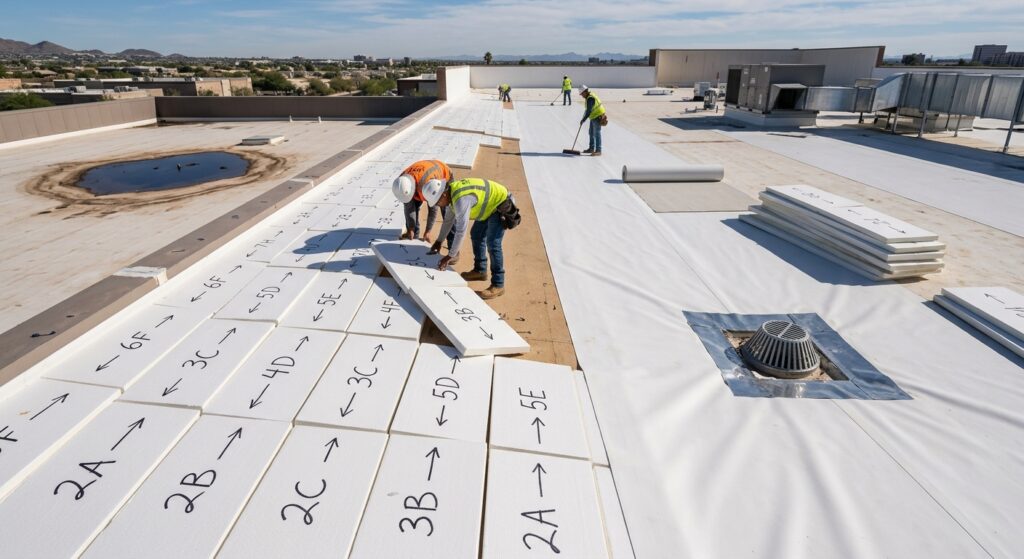
Tapered insulation is made of rigid foam boards cut at a gentle angle, often an eighth or a quarter inch of rise per foot. Installers lay the boards in a planned pattern over the deck. Together they build a continuous slope that guides water toward the drains. The boards also add thermal resistance, so you get drainage and energy savings from one layer.
Each project starts with a layout drawing. Every panel is numbered, and the numbers match a plan made for your roof. Crickets, which are small peaked sections, are added behind curbs and around drains to push water away from trouble spots. This planning step is what separates a real tapered system from a quick patch.
Once the tapered layer is down, a new membrane goes on top. That could be TPO, PVC, EPDM, or modified bitumen, depending on your building and budget. Because the slope is now part of the roof, water runs off naturally instead of waiting to evaporate.
Flat Roof Drainage Solutions That Pair Well With Taper
Tapered boards work best inside a complete drainage plan. Sometimes that means adding or enlarging drains, installing scuppers, or clearing blocked outlets. A roofer should study the whole system, not just the low spots. A thorough roof inspection maps where water collects and shows how deep the problem runs.
Core samples and moisture scans can also find wet insulation hiding under a membrane that looks fine. Wet insulation has to come out. Covering it with new material only traps moisture and shortens the life of the new roof.
Signs Your Roof Needs Tapered Insulation
Not every puddle calls for a full tapered system. A small dip near a drain may only need a repair. Certain signs, though, point to a bigger slope problem. Watch for these on your next roof walk, or ask your roofer to check them.
- Water still standing two days after a storm
- Dark algae or dirt rings where puddles dry out
- Blisters, cracks, or open seams near low areas
- Interior stains in the same spot after each rain
- A visible sag when you sight across the roof deck
If you see more than one of these, the roof likely has a slope problem. Smaller flat roof repair work can buy time, but it rarely stops water from returning. Fixing the slope is what stops it for good.
Tapered Insulation vs Other Standing Water Fixes
Owners often ask whether they can skip slope work and just coat the roof. A coating can seal a surface and reflect heat, and it has a place in many projects. It does not move water, though. If ponds remain, they keep stressing the coating. A roof coating works best on a roof that already drains well, or one that has been corrected first.
Adding drains is another common fix. Extra drains help when low spots are few and the structure allows it. They need plumbing work and can be costly in an occupied building. Tapered insulation often costs less than rerouting drain lines, and it handles broad areas of ponding.
Spray foam can build slope too. Foam roofing lets a crew fill low spots and create a seamless layer in one process. It suits roofs with odd shapes, many penetrations, or limited access. Rigid boards suit large open roofs where a planned pattern goes down quickly.
Flat Roof Standing Water Fix Options at a Glance
Here is a simple way to think about it. Minor dips near drains can often be repaired. Widespread ponding calls for slope. A worn out roof with ponding everywhere usually needs a full roof replacement with a tapered layer built in, since that is the lowest cost moment to add it.
Putting slope in during a replacement also avoids opening the roof twice. You pay for tear off, deck repair, and membrane once, and the new system starts life with proper drainage.
What Standing Water Does to Arizona Roofs?
Arizona’s climate is hard on flat roofs. Summer surface temperatures can climb well above 150 degrees. A pond on that surface acts like a heat sink, and the membrane under it ages faster than the dry areas around it.
Monsoon storms add another risk. A sudden downpour can drop an inch of rain in under an hour. If the roof already holds water, the extra load and any clogged drains can lead to leaks fast. After a big storm, a contractor who handles storm damage roof repair in Arizona can assess leaks, wet insulation, and debris right away.
Water weight matters too. One inch of water over a square foot weighs about 5.2 pounds. Spread that across a 10,000 square foot roof and the load passes 26 tons. Older structures with light decking can deflect further under that weight, which creates even deeper ponds.
Installing Tapered Insulation for Flat Roofs Step by Step
A good installation follows a clear order. Skipping steps leads to callbacks, so it helps to know what a quality job looks like before you sign a contract.
First, the crew inspects the deck and measures slope with a level or laser. They mark drains, curbs, and the lowest points. Next, a designer builds the taper plan with board thickness, crickets, and drain sumps.
Then the old roof is removed or prepared. Wet or damaged insulation comes out and the deck gets repaired. The base layer goes down, followed by the numbered tapered boards, which are fastened or adhered to the manufacturer’s specification.
Finally, the membrane is installed, flashed at every edge and penetration, and tested. A last walk confirms the slope and checks every drain. Photos from each stage give you proof of the work.
Tapered Roof Insulation Cost and What Drives It
Price depends on roof size, taper rate, board thickness, the membrane you choose, and how much deck repair is needed. Roofs with more drains and crickets need more custom pieces, which raises material cost. Access also matters, since a hard to reach roof takes more labor.
A rough budget helps before you call anyone. Our roofing cost calculator gives a starting estimate, and an on site visit turns that into a firm number. Ask for a line item quote so you can compare bids fairly, and ask whether the price includes drain work, edge metal, and warranty registration.
Think about long term savings too. Better insulation can lower cooling bills, and a roof that drains well tends to last longer. Many owners find the taper pays for itself through fewer repairs and a longer membrane life.
Common Mistakes With Flat Roof Slope Projects
The first mistake is treating ponding as a cosmetic issue. It is a sign the roof is not draining, and ignoring it shortens roof life. The second is installing a new membrane over wet insulation, which traps moisture and leads to blisters within a few years.
Another mistake is using a one size taper for every roof. Slope needs differ by deck, drain placement, and building shape. A custom layout takes more time to design, but it prevents new low spots. Finally, skipping drain upkeep undoes good work. Even a perfect slope fails if the outlet is clogged.
Caring for Your Roof After Installation
Even a well sloped roof needs attention. Leaves, dust, and debris can still block drains. Set a schedule to clear them, especially before monsoon season starts in June and after major storms.
A regular roof maintenance plan catches small issues early. Two visits a year, one in spring and one in fall, are common. Crews check seams, flashings, drains, and any rooftop equipment that might leak or scratch the membrane.
Building owners with several properties often benefit from a documented program. If you manage warehouses, offices, or retail centers, Avid Roofing Solutions handles commercial roofing in Arizona projects of many sizes and can build a plan that fits your calendar and budget.
How to Choose a Contractor for Tapered Insulation
Ask whether the contractor designs a taper plan or simply guesses. Ask to see past flat roof projects, and confirm they are licensed and insured in Arizona. Request references from owners with similar buildings.
Get the warranty in writing. A good contractor explains what is covered, what voids it, and how drainage is handled. Clear answers are a sign of experience, and vague ones are a warning.
Final Thoughts on Fixing Standing Water
Standing water is a sign your roof needs a better path for rain. Tapered insulation for flat roofs builds that path into the roof itself, protects the membrane, and can improve energy performance at the same time. The best results come from a careful inspection, a custom layout, and clean installation.
If you are seeing puddles, leaks, or blisters, do not wait for the next storm. Schedule a roof inspection with Avid Roofing Solutions and get a plan built for your building. Prefer to talk first? Contact our team and we will answer your questions.
Frequently Asked Questions
What is tapered insulation for flat roofs?
It is a system of rigid foam boards cut at a slight angle and laid in a planned pattern. The boards create slope on a roof that is otherwise level, so rain flows to drains instead of pooling. It also adds insulation value.
How long can water sit on a flat roof before it causes damage?
Water that remains for more than 48 hours after rain is generally treated as ponding. Repeated ponding can wear membranes, grow algae, and weaken the deck over time. Early correction costs far less than repairing water damage.
How much slope does a flat roof need?
A common target is at least a quarter inch of drop per foot toward the drains. Tapered systems are designed to hit that target based on your roof layout. Your roofer can confirm the right rate for your building.
Can tapered insulation be installed over an existing roof?
Sometimes, but it depends on the condition of the roof underneath. Wet or damaged layers must be removed first. Most projects pair tapered insulation with a new membrane or a full replacement.
Is a roof coating enough to stop ponding?
No. A coating protects the surface, but it does not change the slope. If water still collects, the roof needs tapered insulation, added drains, or a foam layer to correct drainage.
Does tapered insulation lower energy bills?
It can. The foam boards add thermal resistance, which reduces heat moving into the building. Savings vary with roof size, thickness, and the building’s cooling system.
Who should I call for an urgent roof leak in the Phoenix area?
Call a local roofer that offers emergency roof repair in Phoenix. A fast response limits interior damage, and a follow up inspection can decide whether slope work is needed.