
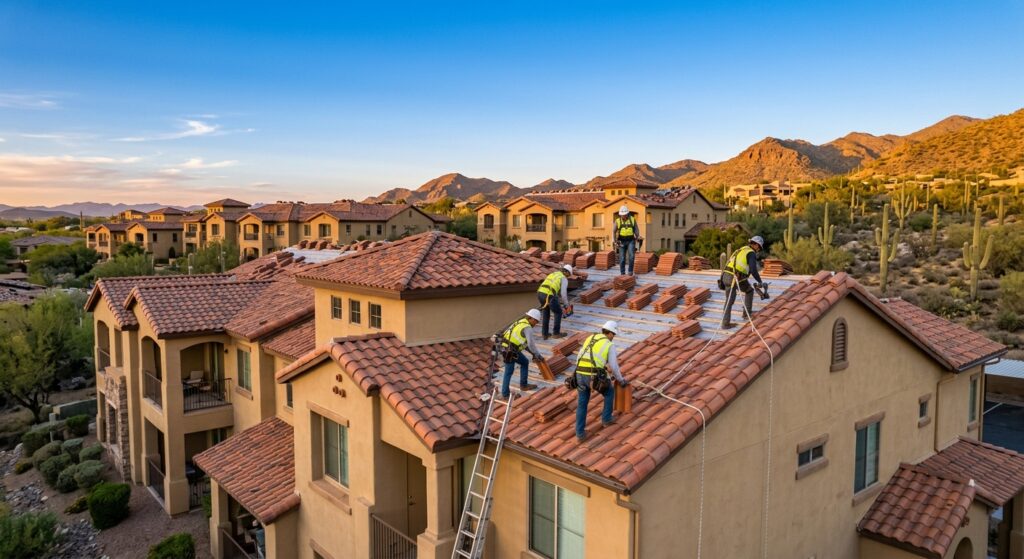
Replacing the roofs on an apartment complex, condo community, or HOA neighborhood is one of the largest projects a board or property manager will ever oversee. The cost is high, dozens of residents are affected, and Arizona weather leaves little room for delay. Avid Roofing Solutions works with associations and owners across the state, and the same questions come up every time. This guide covers planning, budgets, and timelines for multi-family roof replacement in Arizona so your project stays on track.
Good projects rarely start with a bid. They start with information. A board that knows the age, condition, and remaining life of each roof can plan funding, schedule work in phases, and avoid emergency spending. The sections below walk through each step in order.
Start Multi-Family Roof Replacement in Arizona With a Condition Assessment
Before you request bids, get a full picture of the roofs. A professional roof inspection records the material, age, slope, drainage, flashing condition, and any active leaks. It also shows which buildings are urgent and which can wait.
Arizona roofs age fast. Intense UV, extreme heat, and monsoon wind all shorten service life. Tile roofs may last for decades, but the underlayment beneath them often fails sooner than the tile itself. Shingle roofs and flat roofs wear on different schedules, so a mixed community needs a building by building view.
Document everything with photos and written notes. A clear report supports your reserve study, helps you compare bids on equal terms, and protects the board if a resident questions a decision later.
Plan ahead as well. A simple five year capital plan lists each building, its age, and its expected replacement year. Updating it after every inspection keeps the board ahead of surprises and helps new members understand the roadmap.
Repair or Replace? How to Decide
Not every aging roof needs to come off. If damage is limited and the roof has years of life left, targeted repairs paired with a steady roof maintenance plan can delay a large expense. A full roof replacement makes sense when leaks keep returning, repair bills climb each year, or large sections are brittle or failing.
A useful test is to compare the cost of repairs over the next three to five years with the cost of replacement. If repairs approach half the price of a new roof, replacement usually wins. A new roof also resets the warranty and removes much of the guesswork.
Building an HOA Roof Replacement Budget
Money is where most projects stall. Your HOA roof replacement budget should start with the reserve study, which estimates remaining roof life and the funds set aside. If reserves fall short, the board needs to know early so it can plan for the gap.
Costs depend on roof type, square footage, the number of layers to tear off, deck repair, and the number of buildings. Tile and metal cost more up front than asphalt shingles, but they can last longer in the desert. Multi building contracts often bring better pricing, since crews and materials are mobilized once.
Use our roofing cost calculator to get a ballpark figure for a single building before bids arrive. Treat it as a starting point, and rely on written bids for final numbers.
HOA Roof Replacement Budget Line Items to Include
Many budgets miss items that later show up as change orders. Ask every bidder to price the following separately so you can compare them fairly.
- Tear off and disposal
- Deck repair or replacement, priced per sheet
- Underlayment upgrades
- Flashing, vents, and drip edge
- Permits and inspections
- Warranty and registration fees
- A contingency of 10 to 15 percent
A contingency fund protects you from surprises such as rotted decking found after tear off. It is easier to approve a contingency up front than to call an emergency vote halfway through the job.
Funding Options for Large Roofing Projects
Associations typically pay through reserves, a special assessment, a loan, or a mix of the three. Each has trade offs. Reserves cost owners nothing new but can drain a healthy fund. Special assessments are fast but can strain owners on fixed budgets. A community loan spreads the cost over years and keeps monthly increases smaller.
Review the roofing financing options available to you before the board votes. Also check your governing documents, since many require a member vote above a certain dollar amount.
Choosing Materials for Multi-Family Buildings
Material choice affects cost, appearance, and upkeep for decades. HOAs also have design rules, so match any architectural guidelines early and get approvals in writing.
Concrete and clay tile are common across Arizona communities. They handle heat well and give a classic look, but the underlayment below is the real waterproofing layer. Replacing aging tile roof underlayment while the tile is lifted prevents leaks from showing up a few years later.
Asphalt shingles are a lower cost choice for many townhome and condo groups. A planned shingle roof replacement can move quickly and suits steep roofs with simple shapes. Look for algae resistance and high wind ratings.
Low slope sections on carports, balconies, and garden style apartments need a different approach. A durable membrane or foam system suits these areas better than shingles, and good drainage is key to avoiding ponding.
Larger apartment complexes with flat sections follow commercial roofing in Arizona methods, which means membrane systems and detailed flashing. Smaller townhome groups usually follow residential roofing in Arizona practices. Many communities need both.
A Realistic Roof Replacement Timeline for HOA Projects
Plan for months of preparation before the first shingle comes off. A typical project moves through four phases, and the ranges below are general. Your schedule will vary with community size and approval rules.
Roof Replacement Timeline for HOA Boards, Phase by Phase
Assessment and reserve review usually takes two to six weeks. Bidding and contractor selection takes another four to eight weeks, including site walks, questions, and board review. Owner notices and any needed vote add a few more weeks.
Permits and material ordering take two to six weeks, depending on the city and supplier lead times. Specialty tile or custom colors can take longer. Order early so the crew is not waiting on deliveries.
Construction time depends on size. A single building may take one to two weeks for shingles, and longer for tile or complex roofs. A community of twenty buildings is usually done in phases and can take several months.
Closeout is the last phase. It includes a final walkthrough, a punch list, warranty paperwork, and cleanup. Do not release the last payment until every item is signed off.
Scheduling Around Arizona Weather
Timing matters. Summer heat limits how long crews can safely work on a roof, so many start before sunrise to avoid the hottest hours. Monsoon season, which runs from mid June to late September, can interrupt work with sudden storms.
Many associations schedule replacement for fall through spring, when temperatures are milder and storms are rare. Crews fill up for those months, so start the process in summer if you want to build in autumn.
Ask every bidder how they protect open roofs overnight. Good crews dry in each section daily with underlayment so a surprise storm does not soak a building. If a storm damages roofs before replacement begins, report it quickly. Specialists in storm damage roof repair can document the damage and make temporary repairs, which supports any insurance claim.
Communicating With Residents During the Project
Noise, debris, parking limits, and early starts disturb daily life. Good communication cuts complaints and keeps the project friendly.
Send notices at least two weeks ahead, and again a few days before work begins. Include dates, working hours, parking changes, and tips for moving patio items. Share one contact for questions.
Ask the contractor to assign a single project manager and to protect landscaping, pools, and vehicles. Daily magnet sweeps for nails and tidy job sites show respect for residents and lower your liability.
Common Mistakes Boards Make Before and During Replacement
Waiting for a major leak is the biggest one. Emergency work costs more and limits your options. Another is accepting a bid without a clear scope, which opens the door to change orders.
Boards also underestimate resident communication and skip the final walkthrough. Plan the closeout early. Ask for photos, warranty documents, and a final inspection before the last check goes out.
Understanding Warranties and Insurance Coverage
Two warranties matter on most projects. The manufacturer warranty covers the materials, and the contractor warranty covers the workmanship. Read both closely. Ask how long each lasts, what voids it, and whether it transfers if ownership changes.
Insurance matters as well. Request certificates for general liability and workers’ compensation, and ask to be named as an additional insured for the project. This protects the association if an accident or property damage occurs during the job.
Also ask how warranty claims are handled. A clear process with a named contact saves time later, especially across a large community where many owners may report issues.
How to Compare Bids and Pick a Roofing Contractor
The lowest price is rarely the best value. Compare scope, materials, warranty, and the crew’s experience with multi building work. Ask for proof of license, insurance, and workers’ compensation, plus references from similar communities.
Request bids in the same format so the numbers line up. Meet the project manager, not just a salesperson. Local presence matters too, because a nearby contractor can respond faster to warranty calls. Check the areas we serve across Arizona to confirm coverage for your community.
Final Thoughts on Multi-Family Roof Replacement
A successful roof project comes down to preparation. Start with a clear assessment, build a realistic budget with a contingency, pick materials that fit the climate and your design rules, and set a timeline that respects Arizona weather. Keep residents informed and hold the contractor to a written scope.
Ready to get started? Schedule a roof inspection with Avid Roofing Solutions to get a clear picture of your buildings. Have questions about scope or scheduling? Contact our team and we will help you plan the next step.
Frequently Asked Questions
How much does multi-family roof replacement cost in Arizona?
Cost varies widely with material, roof size, condition, and the number of buildings. Tile and metal cost more than shingles, and deck repair can add to the total. Get written bids from several contractors and include a contingency.
How long does an HOA roof replacement take?
Planning, bids, and approvals often take three to five months. Construction for one building may take one to two weeks, while a large community can take several months. Phased schedules are common.
How often do HOA roofs need to be replaced in Arizona?
Shingle roofs often last 15 to 25 years in desert heat, while tile roofs can last far longer. The underlayment under tile usually needs replacement sooner than the tile. Regular inspections give the most accurate answer.
Who pays for roof replacement, the HOA or the owner?
It depends on your governing documents. In many condo and townhome communities the association handles roofs and pays through reserves or assessments. Review your CC&Rs or ask an attorney to confirm.
Can an HOA replace roofs in phases?
Yes. Phasing spreads cost over several budget cycles and lets you start with the worst buildings. Ask your contractor to price phases separately, and to hold material pricing where possible.
What is the best time of year to replace a roof in Arizona?
Fall through spring is usually best. Temperatures are milder, and monsoon storms are unlikely. Summer work is still possible, but crews must manage heat and sudden weather.
Does an HOA need a member vote for a new roof?
Often yes, especially when the cost passes a threshold set in the governing documents or when a special assessment is needed. Check your bylaws early so the vote does not delay the schedule.