
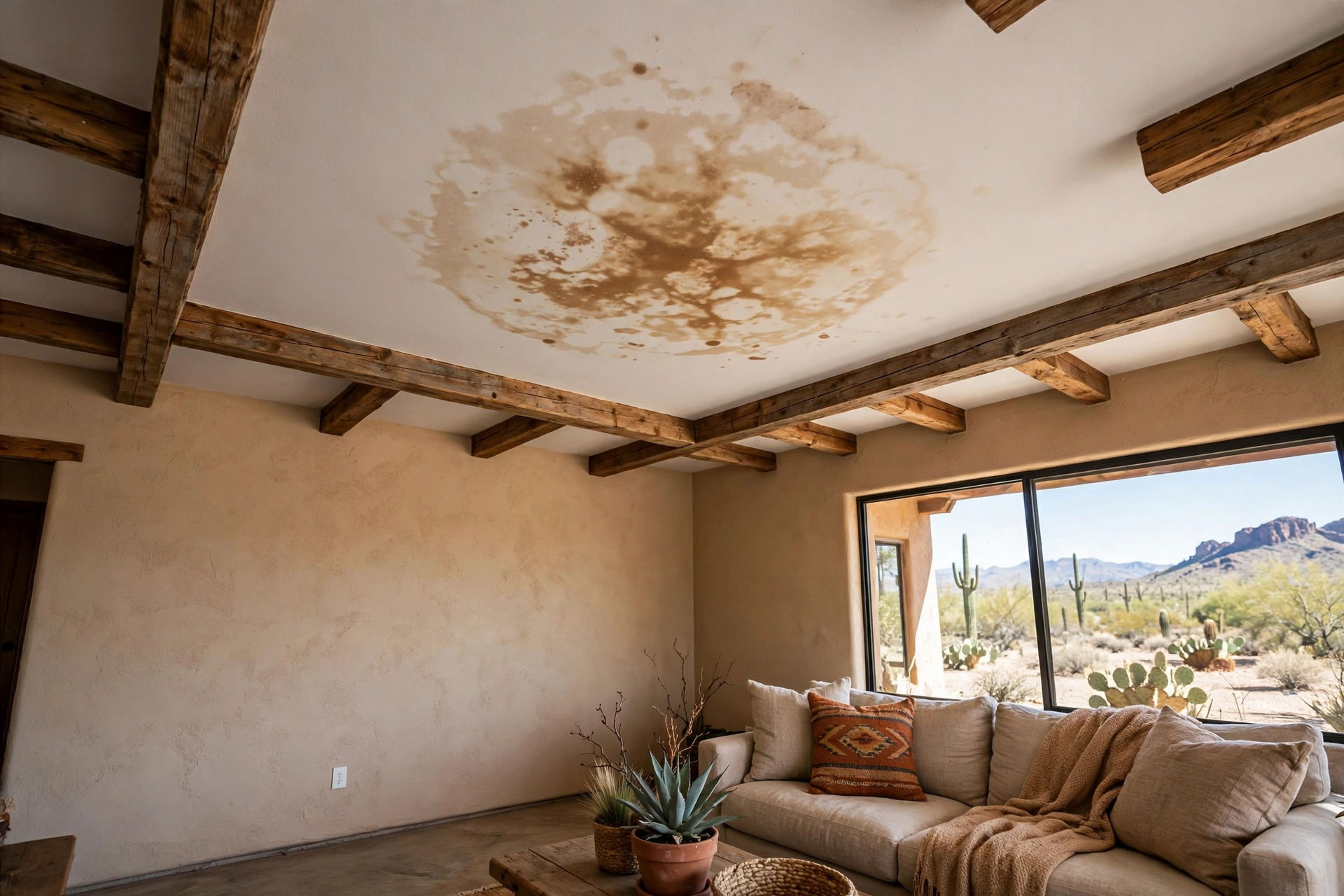
A ceiling stain in an Arizona home comes from one of two common sources, rain water through the roof or condensate water from the air conditioning system, and the timing, place, and feel of the stain tell you which one you are dealing with.
The ring on the ceiling looks the same in both cases. Brown edge, pale centre, paint starting to bubble. Guessing wrong costs money in both directions. Owners call a roofer for a stain that turns out to be a blocked condensate drain, and owners call an air conditioning firm for a stain that turns out to be a cracked tile valley leaking every monsoon storm.
Use the clear signs below to sort the source before you book anyone. Then book the right trade first, and fix the cause before you touch the paint.
The Timing Test: Rain Days and Run Days
Start with the calendar. It settles more cases than any other check.
A roof leak stain appears or grows after rain. In Phoenix that usually means monsoon storms between mid June and late September, or the slower winter rains. If the stain showed up in July after a storm week and had not changed since spring, the roof is the prime suspect. Mark the edge in pencil, date it, and watch it through the next rain.
An air conditioner stain appears or grows on hot dry days when the system runs for hours. Phoenix systems run hard from May to October, and a stain that grows through a rainless heatwave is pointing at the unit, not the sky. Cooling condensate is clean water made inside the system, and it can drip for weeks without a single cloud.
Keep a simple log for a week. Note the date, the weather, how long the system ran, and if the stain grew or felt damp. That log is gold for the technician or roofer you call, and it can cut a diagnostic visit in half.
The Place Test: Where the Stain Sits
Next, map the stain against what sits above it.
Roof leak stains often sit below valleys, flashing points, vents, skylights, chimneys, and roof edges, and they can also appear some distance from the entry point, since water runs along decking and joists before it drops. A stain near an outside wall, under a slope change, or below a tile valley fits a roof source. So does a stain in a room with no cooling equipment above it.
Air conditioner stains sit below the indoor air handler, below duct runs, and below condensate lines, which in many Arizona homes live in the attic. A stain in a line along a duct path, a drip from a ceiling vent, or a stain below the attic unit itself fits a cooling source. Check the secondary drain pan under the attic unit if you can view it safely from the access hatch. A pan full of water or a rusted pan is a strong sign.
Homes in the Prescott area, served by roofing services in Prescott, run cooling fewer months of the year, so a summer only stain there still deserves both checks, since monsoon rain and cooling season overlap there too.
The Feel and Look Test
Touch and close looking add the last clues. Wash your hands after, and do not press on a sagging ceiling.
A roof leak stain often feels damp after rain and dry in a dry spell. The water can carry dirt, wood tannins, and dust from the attic, so the ring tends to be darker brown and the paint damage wider. You may find damp insulation smell, a musty odour that spikes after storms, or matching damp on the top of the wall below.
Condensate water is clean, so its stains tend to be lighter, with a fainter ring, and the damp returns on a daily cycle tied to system run time. Look for water at the base of the air handler, a blocked or slime filled condensate drain line, and a float switch that has tripped the system off in the past. A unit that shuts down on hot afternoons and a growing ceiling stain often share one cause, a drain line that is no longer draining.
Both sources can grow mould if left alone, and both can damage drywall, so the tests above are for sorting the first call, not for delaying it.
What Each Fix Looks Like
If the signs point to the roof, a roofer checks the area above the stain, lifts tiles or inspects the foam or shingle surface, and traces the entry point, which may sit uphill from the stain. Fixes range from a cracked tile and new underlayment patch to flashing reseals and valley repairs. The range of roofing services shows the repair paths, and the page on storm damage roof repair in Arizona covers the cases where a storm started the leak.
If the signs point to cooling, an air conditioning technician clears the condensate drain, checks the pans and float switch, and looks for duct leaks that drip condensed moisture. That work sits with your cooling firm, and a good roofer will tell you plainly if the roof above your stain is dry and sound.
Sometimes both trades are needed. A roof leak can soak attic insulation that then holds damp against ducts, and a long running condensate drip can rot decking from below. A clear first diagnosis keeps the order of work sensible.
A Typical Summer Stain Scenario
Picture a home in Sun City in early August. A pale ring grows on the living room ceiling during a week of 112 degree days with no rain. The stain sits below the attic air handler. The homeowner logs growth on run days only, finds the secondary pan holding water, and calls the cooling firm first. The drain line is blocked with slime, the pan is cleared, and the stain stops growing within two days.
Now flip one fact. The same ring grows only after two monsoon storms, sits below a tile valley, and feels damp after rain. That owner calls a roofer first, and the crew finds a cracked valley tile and worn underlayment. Owners in that position can start from the page for roofing services in Sun City and book the inspection while the pencil marks are still fresh.
Same stain shape. Different timing, different place, different trade, and a faster fix for both owners because the first call was the right one.
Do Not Paint Over an Active Stain
Fresh paint hides a ring for a few weeks and solves nothing. If the source is active, the stain returns, the drywall softens, and mould can spread inside the ceiling where you cannot see it.
Let the ceiling dry fully after the source is fixed. A roofer or technician can confirm the area is dry, and a moisture check is worth asking for before you seal and paint. Cut out and replace drywall that has gone soft or mouldy rather than painting over it. Note the dates and keep your photos and invoices. If you sell the home, a documented repair with a known cause reads far better than a fresh patch with no story.
Seasonal owners returning to Surprise homes should add this stain check to their first walk through, and Valley owners can compare roof types and upkeep needs in the guide to foam roof vs tile roof in Phoenix if a repair turns into a bigger roofing decision. The company background is on the about page.
Can a roof leak stain appear when it has not rained?
Yes, but it is less common. Water held in insulation or decking after a storm can keep dripping for days, and a stain can show late. If a stain grows through a long dry spell with heavy cooling use, test the cooling system as the likely source.
How do I check my condensate drain line?
Look for the drain line at the indoor unit and its outlet outside. If the outside outlet drips steadily while the system runs, the line is flowing. No drip on a long run, plus a full secondary pan, points to a blockage that a technician should clear.
Will a roofer check the attic for the source?
Yes, where safe access exists. A booked inspection includes the roof surface above the stain and a view of attic signs such as damp insulation, deck streaks, and the area around the air handler, which helps sort roof water from condensate.
How fast should I act on a new ceiling stain?
Act within days, not months. Photograph and date it, run the timing and place tests in this guide, and book the trade the signs point to. Active water damage spreads, and early fixes are smaller and cheaper.
Book a Free Roof Inspection for Your Ceiling Stain
If your stain grows after rain, sits below a valley or vent, or you cannot sort the source, book a free roof inspection through the contact page or call (602) 888-0450. Avid Roofing Solutions is family owned, licensed, insured, and bonded, serving Phoenix, Sun City, Surprise, Prescott, and the wider state. If the roof is sound and the cooling system is the cause, the team will tell you that plainly and point you to the right fix.