
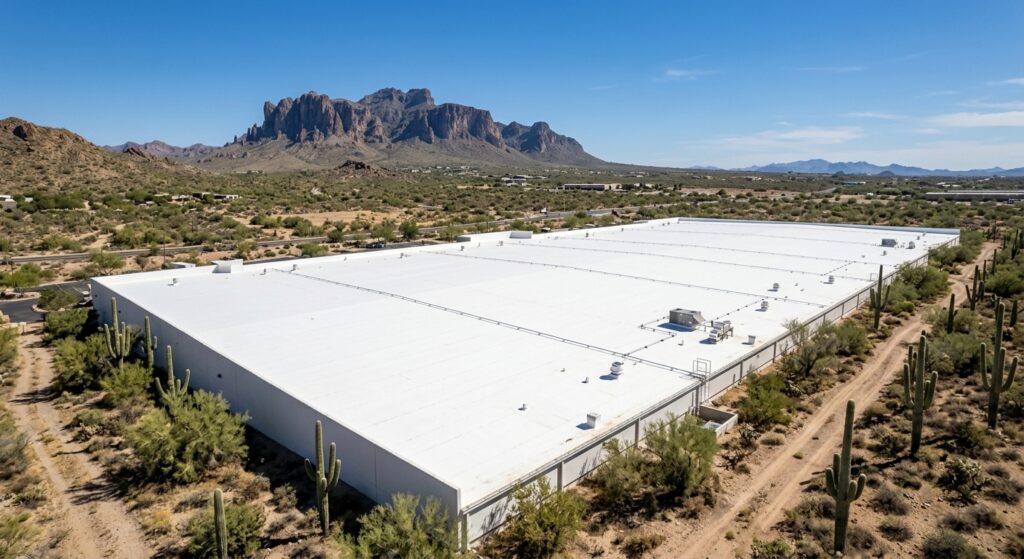
Arizona is hard on flat roofs. Summer surfaces bake well past 150°F, UV exposure never lets up, and monsoon storms can drop an inch of rain in under an hour. The membrane on top of your building decides how well it all holds up. Avid Roofing Solutions helps property owners across the state choose between TPO and PVC, and this guide shares what matters most.
Both materials are single ply, white, and built to reflect heat. They look alike from the ground. After 20 years in the desert, though, they behave very differently. This TPO vs PVC roofing Arizona comparison covers lifespan, cost, seams, and repairs so you can choose with confidence.
TPO vs PVC Roofing Arizona Owners Should Compare First
TPO stands for thermoplastic polyolefin. It blends rubber and plastic polymers, and installers weld the seams with hot air. It became popular because it costs less than PVC and reflects a lot of sunlight. Many bids for new flat roofs in the Southwest start with TPO.
PVC stands for polyvinyl chloride. It has covered commercial roofs for more than 50 years. Seams are also heat welded, but the sheet contains flexible plasticizers and stabilizers. Those ingredients give PVC a different feel and a different aging pattern.
Both come in common thicknesses of 45, 60, and 80 mil. A mil is one thousandth of an inch. In Arizona, 60 mil is a sensible minimum because thicker sheets handle foot traffic, hail, and thermal movement better.
The core difference is chemistry. PVC resists grease, oils, and many chemicals. TPO is simpler, cheaper, and generally a little stiffer. That chemistry shapes how each membrane ages under a desert sun.
How the Arizona Climate Tests a Flat Roof Membrane
Phoenix regularly sees highs above 110°F, and a roof surface can run far hotter than the air. White membranes cut that heat load, but the sheet still expands in the afternoon and shrinks overnight. That daily swing stresses seams and flashings more than most owners expect.
Ultraviolet light slowly breaks down polymers. Every membrane carries UV stabilizers in its top layer, and the quality of that layer matters more here than in cloudy states. Arizona gets about 300 sunny days a year, so the clock runs fast.
Monsoon season adds another test. Flat roofs have very little slope, so any low spot holds water. Ponding that lasts longer than 48 hours can speed up wear and may void a warranty. Good drainage design matters as much as the membrane.
Dust is the quiet problem. A layer of fine desert dirt lowers reflectivity and raises roof temperature. A white roof that never gets cleaned slowly turns into a tan one.
Hail is rare but real. Foothill areas and parts of the Phoenix metro see damaging storms every few years. Thicker membranes and fully adhered systems resist impact better, which is another reason to avoid 45 mil sheets on exposed roofs.
Best Flat Roof Material for Arizona Heat
Reflectivity helps both membranes. New white TPO and PVC sheets typically reflect roughly 75 to 85 percent of sunlight, and many carry Energy Star or Cool Roof Rating Council listings. That can trim cooling bills, especially on large commercial buildings.
Where they split is how well they keep that performance. PVC tends to hold its reflectivity and flexibility longer, partly because its surface sheds dirt well. TPO can chalk and dull sooner, depending on the manufacturer and formulation.
If the roof sits near a restaurant exhaust or an HVAC unit that drips oil, PVC has a clear edge. Grease and chemicals attack many other membranes.
Which Membrane Lasts Longer on Arizona Flat Roofs?
The short answer is PVC. A well installed PVC roof commonly reaches 25 to 30 years or more in the desert. TPO typically delivers 15 to 25 years under the same conditions. Those are ranges, not promises, and installation quality moves the numbers a lot.
How Long TPO Lasts in Desert Conditions?
Early TPO products earned a mixed reputation. Some sheets cracked or lost surface quality after only 8 to 10 years in hot climates. Manufacturers have reformulated since then, and current 60 and 80 mil sheets from major brands perform far better.
Even so, TPO has a shorter track record than PVC. Additive packages vary between brands, so the manufacturer you choose matters. A basic sheet in Arizona may land at the low end of the range, while a premium 80 mil sheet can approach the high end.
How Long PVC Lasts in Arizona?
PVC has decades of field data behind it. Its welded seams form a very strong bond, often stronger than the sheet itself. It also handles ponding water, fire exposure, and chemical contact better than most single ply options.
The tradeoff is plasticizer loss. Over many years, heat can pull plasticizers out of the sheet and make it stiffer. Quality PVC slows that process. Bargain products do not, so always ask for the manufacturer data sheet before you sign.
Cost Comparison for Phoenix and Tucson Flat Roofs
TPO usually costs less upfront. Installed prices change with roof size, insulation, and access, but PVC often runs 10 to 25 percent more per square foot. On a 10,000 square foot roof, that gap can reach several thousand dollars.
Lifespan changes the math. If PVC lasts five extra years, its yearly cost can match or beat TPO. Add energy savings and fewer repairs, and the higher price often pays for itself.
If your building is in the Valley, our Phoenix roofing services team can price both options on the same roof plan. Southern Arizona owners can request the same side by side quote through Tucson roofing services.
To set a rough budget before any visit, try the roofing cost calculator. For larger projects, ask about roofing financing options so the stronger membrane does not strain cash flow.
Cheap bids often hide thin sheets, skipped insulation, or weak flashing details. Compare the scope line by line before you compare the total price.
Energy Savings and Warranty Details That Affect Long Term Value
Cooling is the biggest utility cost for many Arizona buildings. A reflective membrane keeps the roof deck cooler, so air conditioners cycle less. Cool roof research often reports meaningful savings, especially on single story buildings with large roof areas.
Warranties deserve a close read. Material coverage is common, but a full system warranty that includes labor and workmanship is worth more. Ask whether it transfers to a new owner, because that adds resale value.
Check what voids coverage too. Ponding water, rooftop equipment installed without approval, and skipped maintenance are the usual culprits. Contractors who photograph every service visit make claims much easier to win.
Choose an installer certified by the membrane manufacturer. Certification opens the door to stronger warranties and better training. Also ask for references on Arizona projects at least ten years old, since that is where heat damage shows.
Seams, Installation, and Repairs
Installation quality can matter more than the material. Both membranes rely on welded seams, and a poor weld is a leak waiting to happen. Hot air welding needs the right temperature, speed, and pressure, and a good crew probe tests every seam.
Flashings around drains, pipes, and parapet walls fail more often than open field areas. Ask how the contractor details these spots, and request photos during the job.
Membranes can be mechanically attached, fully adhered, or ballasted. Fully adhered systems often suit Arizona because they resist wind uplift during monsoon gusts. Mechanically attached systems cost less but can flutter in strong wind.
Repairs work the same way on both. Small punctures get a patch of compatible material, heat welded in place. Compatibility matters. You cannot weld TPO to PVC, so a mixed repair fails. Any trusted flat roof repair crew should identify the membrane first.
Flat Roof Membrane Arizona Owners Can Protect With Simple Upkeep
Regular care can add years to any membrane. Book a roof inspection twice a year, ideally before monsoon season and again after it ends. Check seams, flashings, drains, and penetrations.
Keep drains and scuppers clear, trim nearby trees, and rinse dust off with low pressure water. A steady roof maintenance plan costs far less than a mid life repair. Keep a written log of each visit for warranty claims.
After hail or a heavy storm, request a storm damage roof repair assessment quickly. Small tears grow fast under thermal movement.
Choosing Between TPO and PVC for Your Building
Your building type and budget should drive the decision. These quick rules help most owners narrow it down.
- Pick PVC for restaurants, labs, or any roof exposed to grease and chemicals.
- Pick PVC if you plan to own the building for 25 years or more.
- Pick TPO for tighter budgets, shorter hold periods, or simple warehouse layouts.
- Pick TPO when a premium 80 mil sheet fits the budget and the roof drains well.
Also think about what is on the roof today. If the membrane is failing, a full roof replacement lets you fix slope, insulation, and drains at the same time. If the sheet still has life, a roof coating can extend service for several more years.
Property managers planning commercial roofing in Arizona projects should also compare warranty terms. Many manufacturers offer 15 to 30 year coverage, but the fine print on ponding water and maintenance records can limit it.
Final Thoughts on TPO vs PVC Roofing Arizona Buildings Rely On
TPO and PVC both work on Arizona flat roofs, but they are not equal over time. PVC usually lasts longer, resists chemicals better, and keeps its reflectivity. TPO costs less and performs well when the sheet is thick and the installer is skilled. The right choice depends on your budget, building use, and how long you plan to keep the property.
Ready for a clear answer? Schedule a roof inspection with Avid Roofing Solutions and get a side by side membrane recommendation for your roof. You can also contact our team with photos or questions today.
Frequently Asked Questions
Which lasts longer in Arizona, TPO or PVC?
PVC usually lasts longer. A quality PVC roof often reaches 25 to 30 years in the desert, while TPO typically lasts 15 to 25 years. Sheet thickness, installer skill, and maintenance can shift both numbers.
Is PVC roofing worth the extra cost in Arizona?
Often yes. PVC costs more upfront, but longer life, better chemical resistance, and steady reflectivity can lower the yearly cost. It makes the most sense if you will keep the building for 20 years or more.
How hot does a flat roof get in Phoenix?
A dark roof can pass 160°F on a summer afternoon. White membranes like TPO and PVC run noticeably cooler, which reduces heat transfer into the building and eases the load on air conditioning.
What slope does a flat roof need for TPO or PVC?
Most manufacturers call for at least one quarter inch of slope per foot. Without it, water ponds and shortens membrane life. Tapered insulation or added drains can fix slope problems during a replacement.
Can I install a new membrane over my old flat roof?
Sometimes. A recover is possible when the existing roof is dry, sound, and allowed by local code. A moisture scan comes first. Wet insulation or multiple old layers usually mean a full tear off.
Do TPO and PVC qualify as cool roofs in Arizona?
Most white TPO and PVC membranes do. Look for Energy Star or Cool Roof Rating Council listings on the product data sheet. Those ratings confirm solar reflectance and thermal emittance, which help with rebates and code compliance.
How often should a flat roof be inspected in Arizona?
Twice a year is a good rule. Inspect before monsoon season and after it ends. Add an inspection after any hail, high wind, or major storm to catch small damage early.