
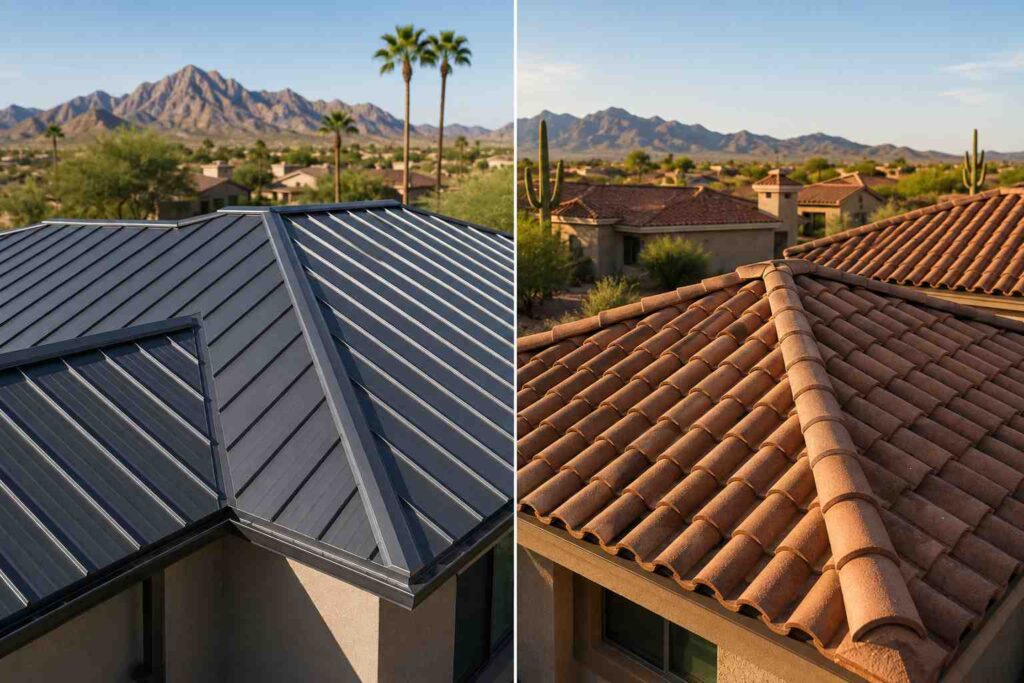
Metal roofing and tile roofing both perform well in Arizona’s extreme climate, but they suit different priorities. Metal roofing reflects heat effectively, weighs less, and often costs less upfront. Tile roofing offers longer lifespan, better UV resistance, and a classic look that matches desert architecture. Homeowners choosing between the two should weigh budget, home style, and long term maintenance needs. Avid Roofing Solutions helps Arizona homeowners compare both options based on their specific home and climate exposure.
Choosing a roofing material is one of the biggest decisions a homeowner makes. Arizona’s intense sun, monsoon storms, and wide temperature swings put unusual stress on any roofing system. The right material choice can mean decades of reliable protection.
Metal Roofing vs. Tile Roofing for Arizona Homes
Both metal and tile roofing handle Arizona heat far better than standard asphalt shingles. Each material reflects sunlight differently, which directly affects home cooling costs during the hottest months.
Metal roofing comes in standing seam panels or metal shingles designed to mimic other materials. Most metal roofs use steel, aluminum, or copper coated with reflective finishes. These finishes bounce solar heat away from the home instead of absorbing it.
Tile roofing includes clay tile and concrete tile options. Clay tiles offer a traditional Southwestern look and naturally resist fading. Concrete tiles cost less than clay but still provide strong durability against Arizona’s harsh sun exposure.
Weight is a major difference between the two materials. Tile roofing is significantly heavier than metal, which means some older homes need structural reinforcement before installation. Metal roofing works well on homes where added roof weight is a concern.
Homeowners weighing residential roofing options should also consider how each material handles Arizona’s monsoon winds. Both metal and tile perform well when installed correctly, though installation quality matters more than the material itself in most wind related failures.
How Roofing Material Choice Affects Long Term Costs
Upfront installation cost usually favors metal roofing. Standing seam metal panels typically cost less per square foot than premium clay tile, though pricing varies based on panel style and finish quality.
Tile roofing often wins on lifespan. A well maintained clay or concrete tile roof can last 50 years or more in Arizona’s dry climate. Metal roofing typically lasts 40 to 70 years depending on the material and coating quality.
Maintenance needs differ between the two as well. Tile roofs occasionally need individual tile replacement after impact damage, while metal roofing rarely requires spot repairs once properly installed. Understanding tile roof underlayment requirements helps homeowners plan for the maintenance a tile system actually needs over time.
Energy costs factor into the total cost picture too. Reflective metal roofing can lower summer cooling bills noticeably compared to darker roofing materials. Light colored tile also reflects heat well, though the exact savings depend on tile color and coating.
Financing plays a role for many homeowners facing a full roof replacement. Reviewing available roofing financing options can make either material more accessible without straining a household budget all at once.
Clay Tile vs Concrete Tile as Entities Within the Tile Category
Not all tile roofing is the same. Clay tile and concrete tile differ in weight, cost, and appearance despite both falling under the tile roofing umbrella.
Clay tile tends to hold its color longer under intense UV exposure. The material is naturally fired at high temperatures, which gives it excellent resistance to fading and cracking over decades of Arizona sun.
Concrete tile costs less initially but can fade faster than clay over many years. Manufacturers have improved concrete tile coatings significantly, narrowing the performance gap between the two materials.
Homeowners comparing these two tile types should read our detailed breakdown of clay tile vs concrete tile roofing to understand which option fits their home style and budget best.
UV Resistance and Weather Performance in Arizona
Arizona roofs face some of the harshest UV exposure in the country. Materials that resist sun damage last longer and require fewer repairs over their lifespan.
Metal roofing with quality reflective coating handles UV exposure exceptionally well. The coating prevents the base metal from overheating and slows the breakdown process that eventually leads to fading or coating failure.
Tile roofing has natural UV resistance built into the material itself. Both clay and concrete tile resist the sun damage that causes many other roofing materials to crack, fade, or become brittle over time.
Understanding how UV roof damage affects different materials helps homeowners set realistic expectations for how their chosen roofing type will hold up over the years ahead.
Monsoon season adds another performance factor. Metal roofing sheds rain quickly due to its smooth surface and steep installation angle. Tile roofing also drains well when installed with proper underlayment and flashing at every transition point.
Choosing Between Metal and Tile for Your Arizona Home
Home architecture style often guides the final decision more than performance data alone. Southwestern and Mediterranean style homes typically look most authentic with tile roofing. Modern or contemporary homes often pair beautifully with sleek metal panel roofing.
Budget constraints matter for most homeowners making this decision. Metal roofing offers strong performance at a lower entry price point, making it attractive for homeowners who want durability without the higher tile installation cost.
Structural considerations cannot be ignored. Older homes built without reinforced roof framing may require costly upgrades before tile installation becomes possible. A professional assessment during a roof inspection reveals whether your home can support tile roofing without additional structural work.
Resale value is another consideration worth discussing with a local roofing professional. Both materials generally hold their value well in Arizona’s real estate market, though buyer preferences can vary by neighborhood and home style.
Installation Quality Matters More Than Material Alone
Even the best roofing material fails prematurely with poor installation. Flashing details, underlayment quality, and proper fastening all affect how well a roof performs over its intended lifespan.
Experienced installers understand the specific challenges Arizona’s climate presents. Extreme heat during installation can affect how certain materials cure or seal, making timing and technique important factors in long term roof performance.
Warranty coverage often depends on proper installation as much as material quality. Manufacturers frequently require certified installation to honor full warranty terms, which makes contractor selection just as important as material selection.
Homeowners should always verify licensing, insurance, and local experience before hiring a residential roofing contractor for a full roof replacement project.
Climate Considerations Beyond Heat and UV
Arizona’s climate is not just about heat. Sudden temperature drops after sunset stress roofing materials in ways that differ from steady heat exposure alone.
Metal roofing expands and contracts with these swings, but quality panels are engineered with expansion joints to accommodate this movement without cracking or warping over time.
Tile roofing handles temperature swings differently. Individual tiles move independently, which distributes stress across the roof rather than concentrating it at a few connection points.
Dust storms, common in Arizona during summer months, can also affect roofing surfaces over time. Both metal and tile shed dust relatively well compared to more porous roofing materials, keeping maintenance manageable.
Environmental and Sustainability Factors
Many Arizona homeowners now consider environmental impact alongside cost and durability when choosing a roofing material. Both metal and tile roofing offer strong sustainability credentials compared to shorter lived alternatives.
Metal roofing is highly recyclable at the end of its service life. Many metal roofs are manufactured using a significant percentage of recycled content, reducing the material’s overall environmental footprint.
Tile roofing is made from natural materials like clay and concrete, both of which are abundant and long lasting. The extended lifespan of tile roofing also means fewer replacement cycles over a home’s lifetime, which reduces long term waste.
Homeowners focused on energy efficiency should note that both materials support solar panel installation. Metal roofing often simplifies solar mounting due to its flat, uniform surface compared to the contoured shape of tile.
Making the Right Choice for Your Home
Metal roofing and tile roofing each bring real strengths to Arizona homes facing extreme heat, intense UV exposure, and seasonal monsoon storms. Metal offers lower upfront cost and lighter weight, while tile delivers longer lifespan and classic desert curb appeal.
The right choice depends on your budget, home style, and how long you plan to stay in your current home. Both materials can protect your investment for decades when installed correctly by an experienced roofing team.
If you are ready to compare options for your specific home, a professional consultation can clarify which material fits your goals best. Reach out today to schedule an assessment and get a clear recommendation based on your roof’s exact needs.
Frequently Asked Questions
Is metal roofing or tile roofing better for Arizona homes?
Both perform well in Arizona’s climate. Metal roofing costs less upfront and weighs less, while tile roofing typically lasts longer and offers a traditional Southwestern appearance.
How long does a metal roof last in Arizona?
A quality metal roof typically lasts 40 to 70 years in Arizona, depending on the material type and coating quality used during installation.
How long does a tile roof last in Arizona?
Clay and concrete tile roofs commonly last 50 years or more when properly maintained, making tile one of the longest lasting roofing options available.
Does metal roofing get too hot in Arizona summers?
Quality metal roofing with reflective coating actually helps reduce heat absorption compared to darker materials, often lowering summer cooling costs for homeowners.
Can any home support a tile roof?
Not always. Older homes may need structural reinforcement to support the added weight of tile roofing, which a professional inspection can confirm.