
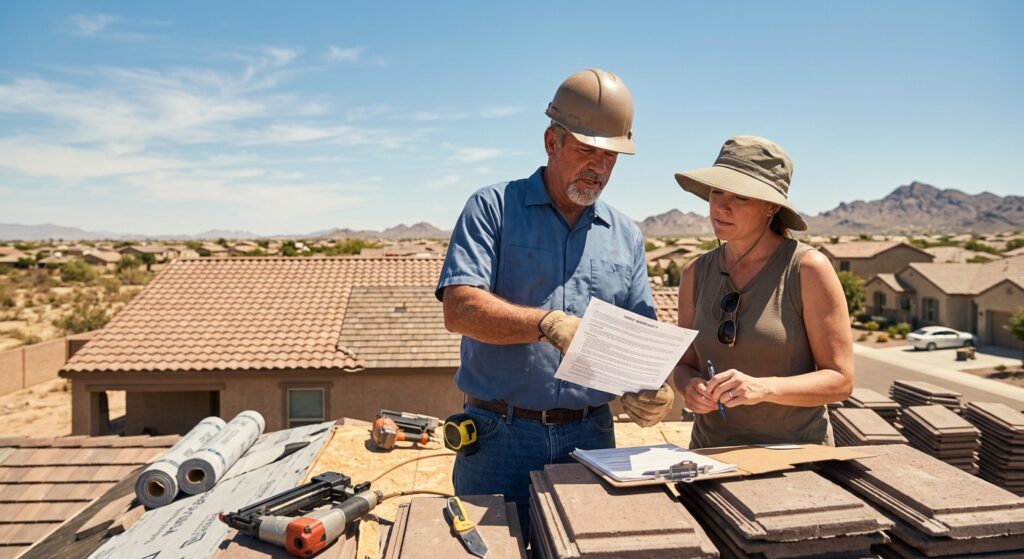
A new roof is a big investment, and the warranty is what protects it when something goes wrong. Yet many Arizona homeowners and property managers sign a contract without knowing what the warranty covers, who stands behind it, or what can quietly cancel it. Avid Roofing Solutions sees the same surprises again and again after a leak or a storm. This guide explains roof warranties in Arizona, the difference between manufacturer and workmanship coverage, and the mistakes that can void protection you paid for.
Desert conditions make the details matter. Heat, UV, monsoon wind, and dust test every roof, and warranty language often treats those conditions in specific ways. A few minutes of reading before you sign can save thousands of dollars later.
How Roof Warranties in Arizona Work?
Most roofing projects involve two separate promises. The manufacturer warranty covers the materials. The workmanship warranty, sometimes called a contractor or installation warranty, covers how the roof was put on. They come from different companies, last for different lengths, and cover different problems.
Some premium programs combine both into a single system warranty backed by the manufacturer. These usually require a certified installer and a full set of approved components. Not every roof qualifies, so ask which type you are being offered.
A warranty is also not insurance. A warranty covers defects and installation errors. Homeowners or property insurance covers sudden events such as hail or wind damage. You may need both, and mixing them up is a common source of disappointment.
Manufacturer vs. Workmanship Roof Warranty Coverage
What a Manufacturer Warranty Covers
A manufacturer warranty protects against defects in the product itself. Examples include shingles that crack or shed granules too early, tiles that fail, or a membrane that splits because of a flaw in manufacturing. Lengths vary widely by product, and some are labeled lifetime.
Read the fine print. Many manufacturer warranties are prorated, which means the payout shrinks each year. Some cover only replacement materials and not the labor to install them. Wind speed limits and short algae coverage periods are also common.
What a Workmanship Warranty Covers?
A workmanship warranty covers installation errors. Think poor flashing, missed fasteners, bad sealing around vents, or leaks caused by how the roof was assembled. Most installation problems show up within the first few years, which is why this coverage matters.
Length varies by contractor. Some offer a few years, others offer ten or more. The warranty is only as strong as the company behind it, so a contractor with a long local track record is worth more than a big promise from a company that may not exist in five years.
Ask whether labor and materials are both covered if a leak is traced to installation, and whether tear off and cleanup are included.
Manufacturer vs. Workmanship Warranty Differences at a Glance
- Who backs it: the manufacturer or the roofing contractor
- What it covers: product defects or installation errors
- Typical risk window: long term for materials, early years for workmanship
- Who handles claims: the manufacturer’s process or your contractor
The strongest setup is a reputable manufacturer paired with a contractor who stands behind the work. When one side fails, the other can still protect you.
What Can Void a Roof Warranty
Warranties are conditional. Break a condition and the company may deny a claim, even for a real defect. These are the most common causes.
Improper Installation and Unapproved Materials
Installing a product outside the manufacturer’s instructions can void coverage. That includes the wrong fastener type or count, the wrong underlayment, poor attic ventilation, or mixing components that are not approved together.
In Arizona this often comes down to what sits under the surface. A tile roof depends on the layer below it, and matching the right tile roof underlayment to the tile is a good example of a detail that protects both the roof and the warranty.
Skipped Maintenance and Neglect
Many warranties require reasonable upkeep. Clogged gutters, piles of debris, ponding water, and ignored small leaks can all give a company a reason to deny a claim. Keep records of a regular roof maintenance program so you can show you cared for the roof.
Unauthorized Repairs, Add-ons, and Roof Traffic
Having an unapproved contractor patch the roof can void workmanship coverage and sometimes the manufacturer’s coverage too. The same goes for solar panels, satellite dishes, and HVAC work that cut through the roof without proper flashing. Even regular foot traffic from other trades can damage a membrane or tile.
Before any rooftop addition, call your roofer and check the warranty terms. Many roofers will coordinate with solar and HVAC crews to protect your coverage.
Storms, Hail, and Acts of Nature
Most warranties exclude damage from hail, wind above a stated limit, fire, and flooding. That damage usually belongs under insurance. If monsoon winds lift shingles or hail bruises tile, document it and call a specialist in storm damage roof repair in Arizona right away. Quick documentation helps an insurance claim and keeps any warranty claim clean.
Late Notice, Missing Paperwork, and Ownership Changes
Some warranties must be registered within a set window after installation. Others require written notice of a problem soon after you notice it. Missing a deadline can end a valid claim.
Transfers matter too. Some warranties pass to a new owner only with notice and a fee, and some cannot be transferred at all. This can affect resale value, so check before you list a property.
Roof Warranties in Arizona by Roof Type
Warranty rules change with the material. Knowing the common traps for your roof type helps you ask better questions.
Asphalt shingle warranties often include wind and algae coverage, but poor attic ventilation can reduce or void protection. A professional shingle roof replacement should include a ventilation check so the warranty stays intact.
Metal roofing usually carries a finish warranty against fading and chalking in addition to the panel warranty. Metal roofing suits Arizona sun, but the fastener and coating terms deserve a close read.
Low slope roofs often need proper drainage to keep coverage. Ponding water can limit or void protection on many membrane systems. A roof coating may carry its own warranty with separate surface prep rules, so confirm what the roof needs before the coating goes on.
Tile itself often has a long manufacturer warranty, but underlayment, flashing, and installation are covered separately. A roof is only as good as its weakest layer, and the warranty should reflect every layer.
How Arizona Heat and Monsoons Affect Warranty Claims
Arizona has some of the harshest roof conditions in the country. Heat shortens lifespan, and some warranties exclude certain heat related wear. Ask directly whether UV damage, blistering, and thermal cracking are covered.
Monsoon wind and debris add another factor. Flying branches, gravel, and dust can cause damage the warranty will not cover. Trimming trees and keeping drains clear lowers risk and shows good faith if you ever file a claim.
Common Roof Warranty Myths
One myth is that a lifetime warranty means the roof lasts a lifetime. In reality, lifetime often refers to the product’s stated service life, and it may be prorated or limited to the original owner. Another myth is that every leak is covered. Coverage depends on the cause, and many exclusions apply.
Some owners believe a warranty stays valid no matter who works on the roof. In most cases, unapproved work can end it. Others assume the contractor registers everything automatically. Confirm in writing who files the registration and when, and keep a copy of the confirmation.
Finally, many people think a warranty replaces maintenance. It does the opposite. Most warranties assume you will keep the roof in good condition, and a documented care routine is often your best protection when a claim is reviewed.
Questions to Ask Before You Sign a Roofing Contract
Put these questions to every contractor and get the answers in writing.
- Is the warranty prorated, and when does proration start?
- Does it cover labor, materials, or both?
- Is it transferable, and is there a fee?
- Which actions or events void it?
- How and when do I file a claim?
- Who handles claims if the company changes hands?
Ask for sample warranty documents before signing. Compare a bid’s price with the coverage included, since a lower price with thin protection can cost more over time.
Homeowners planning residential roofing in Arizona projects should focus on workmanship length and transfer rules. Property managers handling commercial roofing in Arizona should also ask about system warranties that cover the whole assembly, including insulation and flashing.
How to File a Roof Warranty Claim?
Act quickly. Take dated photos of the damage and note when you first saw it. Gather your contract, warranty certificate, invoices, and maintenance records. Do not attempt a repair yourself, since that can void coverage.
Contact your roofer first for workmanship issues. For product defects, your roofer usually helps submit the claim to the manufacturer. A professional roof inspection gives you a written report that can support the claim.
Expect a visit from the roofer or a manufacturer representative. Be patient, but follow up in writing and keep a log of every call and email.
Keeping Your Roof Warranty Valid for the Long Term
Treat the warranty like a legal document. Store it with your contract and receipts, and register it if required. Schedule regular upkeep, use approved contractors for repairs, and tell your roofer before any rooftop work begins.
If your roof is aging and coverage is ending, plan ahead. A full roof replacement with a fresh warranty may cost less than repeated repairs. If budget is the barrier, review the roofing financing options available to you.
You can also see what other owners say about their experience on our testimonials page before choosing a contractor.
Final Thoughts on Roof Warranties
A roof warranty is only useful if you understand it. Know who backs each part, what is covered, and what can void it. Keep records, keep up with maintenance, and call your roofer before any change to the roof. These habits protect both your roof and your wallet.
Want help reviewing your roof or your current warranty terms? Schedule a roof inspection with Avid Roofing Solutions and get clear answers. You can also contact our team with any questions before you sign.
Frequently Asked Questions
What is the difference between a manufacturer warranty and a workmanship warranty?
A manufacturer warranty covers defects in the roofing materials. A workmanship warranty covers installation errors made by the contractor. They are issued by different companies and usually last for different lengths.
How long do roof warranties last in Arizona?
It depends on the product and the contractor. Manufacturer coverage can run from about 10 years to lifetime, while workmanship coverage often ranges from a few years to ten or more. Always check the written terms.
What voids a roof warranty?
Common causes include improper installation, unapproved materials, skipped maintenance, unauthorized repairs, and rooftop additions without proper flashing. Missing registration or notice deadlines can also end coverage.
Does a roof warranty cover storm damage?
Usually not. Hail, high wind, and fire damage are typically excluded and fall under insurance. Document storm damage right away and contact your insurer and a qualified roofer.
Are roof warranties transferable to a new owner?
Some are, but often with notice, a fee, or a time limit. Others cannot be transferred. Check the terms before you sell, since a transferable warranty can add value to a property.
Does a roof warranty cover leaks?
It depends on the cause. A leak from poor installation falls under workmanship coverage, and a leak from a defective product may fall under the manufacturer warranty. Leaks from storms or neglect are usually excluded.
Do I need regular inspections to keep my warranty valid?
Many warranties require reasonable maintenance, and some ask for proof. Even when not required, scheduled inspections and written records make any future claim much easier to support.