
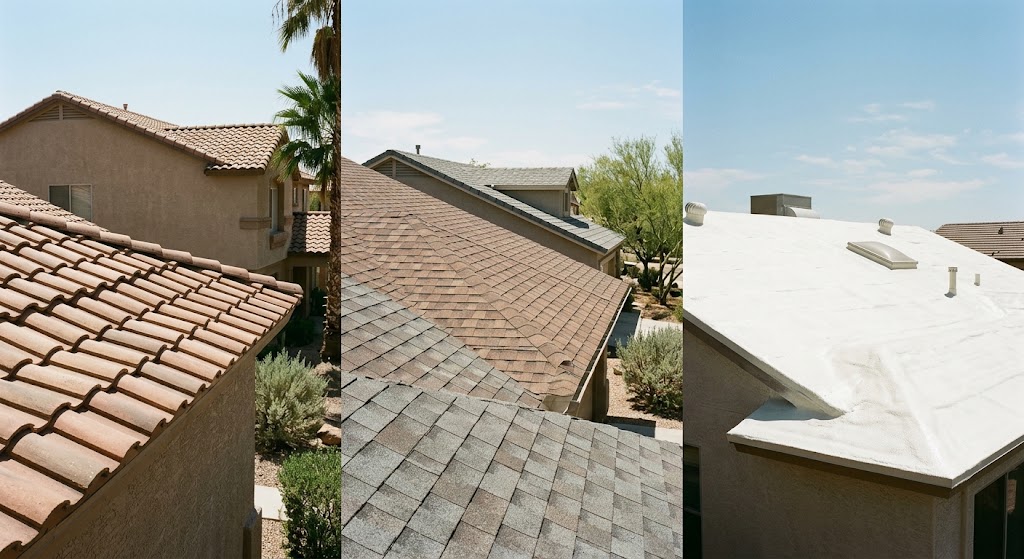
Tile roofing typically lasts fifty years or more, foam roofing lasts around twenty years with regular recoating, and asphalt shingles last twenty to thirty years in Arizona’s climate. Cost follows a similar pattern, with tile carrying the highest upfront investment and shingles offering the most budget friendly option. Avid Roofing Solutions installs all three systems across Arizona and helps homeowners choose the right material based on lifespan, cost, and home style.
Arizona’s intense sun, monsoon storms, and extreme summer heat put unique stress on every roofing material. Choosing the right system for your home means balancing upfront cost against long term durability and maintenance needs.
Roofing Material Comparison for Arizona Homes by Lifespan
Clay and concrete tile roofing offers the longest lifespan among common Arizona roofing materials, often lasting fifty years or longer with proper care. Tiles resist UV damage well and hold up strongly against monsoon winds and hail. You can review a detailed clay tile vs concrete tile comparison to see which type suits your home’s style and budget.
Foam roofing, used mainly on flat commercial style roofs in the Phoenix metro area, typically lasts around twenty years with a recoating cycle every ten years. This system offers excellent insulation benefits, reducing cooling costs significantly during Arizona summers.
Asphalt shingles generally last twenty to thirty years depending on quality and installation. Learn more about shingle roof lifespan expectations and the factors that can shorten or extend that timeframe in Arizona conditions.
Comparing Foam Roof vs Tile Roof Performance
Foam roofing performs exceptionally well on flat or low slope roofs common in newer Phoenix developments, offering strong energy efficiency and a lightweight structure. Our detailed foam roof vs tile roof guide breaks down which system fits different home styles and roof pitches.
Tile roofing suits sloped roofs and traditional Southwestern architecture, offering a timeless appearance alongside its long lifespan. Tile also handles direct sun exposure better than most other materials, since the material itself resists heat absorption effectively.
Homeowners in HOA governed communities should also check whether certain materials or colors face restrictions before finalizing a decision, since some Arizona neighborhoods regulate roofing appearance closely.
Maintenance Needs for Each Roofing Material
Tile roofing requires occasional inspections to check for cracked or slipped tiles, especially after monsoon season winds. Individual tiles can often be replaced without disturbing the surrounding roof structure.
Foam roofing needs a recoating application roughly every ten years to maintain its protective seal and insulation properties. Skipping this maintenance step can shorten the roof’s overall lifespan significantly.
Asphalt shingles require periodic checks for granule loss and curling edges, particularly after extended sun exposure. Catching these signs early often prevents small issues from turning into full leaks.
Cost Differences Between Tile, Foam, and Shingle Roofing
Asphalt shingles remain the most affordable option for most Arizona homeowners, making them popular for straightforward residential replacements. Lower material and labor costs make shingles an accessible choice for budget conscious projects.
Tile roofing carries a higher upfront cost due to material weight, structural requirements, and installation time. However, the extended lifespan often balances this cost over several decades, since tile rarely requires full replacement within a typical homeowner’s time in a house.
Foam roofing costs fall between shingle and tile pricing, with additional long term savings from reduced cooling bills. Understand the full what does a roof replacement cost breakdown to compare pricing across all three systems for your specific home size.
If concrete tile appeals to you but you are unsure about installation time, review why concrete tile replacement takes longer than asphalt shingles in Scottsdale and Phoenix projects before scheduling your installation.
Homeowners replacing an aging roof after years of sun exposure often find this a good opportunity to reconsider material choice entirely rather than simply matching what was there before.
Energy Efficiency Across Roofing Materials
Foam roofing offers the strongest insulation value among the three systems, often reducing cooling costs noticeably during peak summer months. This makes it a popular choice for flat roof commercial style homes across the Phoenix metro area.
Clay and concrete tile naturally reflect sunlight and create airflow between the tile and the roof deck, helping regulate indoor temperatures without relying solely on mechanical cooling systems.
Asphalt shingles vary in energy efficiency depending on color and granule reflectivity. Lighter colored shingles reflect more sunlight than darker options, which can make a modest difference in cooling costs during Arizona summers.
Insurance premiums can also vary slightly based on roofing material, since some insurers view impact resistant materials like concrete tile as lower risk for hail related claims.
Weight and Structural Considerations
Tile roofing is significantly heavier than shingles or foam, which means your home’s structure must be able to support the added weight. Older homes sometimes require structural reinforcement before a tile installation can proceed safely.
Foam roofing is lightweight and applies directly over existing surfaces in many cases, making it a practical option for structures that cannot support heavier materials without modification.
Asphalt shingles remain one of the lightest roofing options available, which is part of why they remain popular for standard residential construction across Arizona neighborhoods.
Choosing the Right Material for Your Home
Consider your home’s roof pitch first, since foam roofing works best on flat or low slope structures while tile and shingles suit sloped designs more effectively. Our residential roofing team can assess your specific structure during a free inspection.
Think about your long term plans for the home. If you plan to stay for decades, tile’s higher upfront cost often makes financial sense. If you are budgeting for a shorter timeframe, shingles may offer better value.
Ask about financing options regardless of which material you choose. Spreading payments over time can make higher lifespan materials like tile more accessible without straining your budget upfront.
Choosing between tile, foam, and shingle roofing comes down to your budget, your home’s structure, and how long you plan to stay in your property. Each material offers real advantages when matched correctly to your specific needs. When you are ready to compare options for your home, contact us for a free inspection and a clear cost breakdown for every material we install.
Frequently Asked Questions
Which roofing material lasts longest in Arizona?
Clay and concrete tile roofing typically lasts the longest, often exceeding fifty years with proper maintenance.
Is foam roofing good for Arizona homes?
Foam roofing works well on flat or low slope roofs and offers strong insulation benefits that reduce cooling costs.
Are asphalt shingles a good choice for Arizona weather?
Yes, quality asphalt shingles handle Arizona heat and monsoons well and remain the most budget friendly roofing option.
How much more expensive is tile roofing than shingles?
Tile roofing generally costs more upfront due to weight and installation complexity, though its lifespan often offsets the difference over time.
Can I finance a tile roof replacement?
Yes, most roofing companies including Avid Roofing Solutions offer financing plans that spread the cost of tile installation over time.
Is foam roofing only available in certain Arizona cities?
Foam roofing through Avid Roofing Solutions is currently available exclusively in Phoenix metro cities due to installation and service requirements.
Which roofing material handles monsoon storms best?
Tile and quality asphalt shingles both perform well during monsoon winds, though tile generally offers stronger long term resistance to hail impact.
Do darker roofing colors cost more to cool in summer?
Darker colors absorb more heat, which can slightly increase cooling costs compared to lighter colored shingles or naturally reflective tile surfaces.
Getting a Professional Recommendation for Your Home
A roofing consultation should include a review of your roof’s slope, current material condition, and any structural considerations unique to your property. This assessment often reveals which materials are realistic options before cost even enters the conversation.
Ask your contractor to walk you through real project examples using each material, including photos of similar homes in your neighborhood. Seeing finished results helps you visualize how each option might look on your own property.
Request a side by side written comparison of estimated costs and expected lifespan for each material you are considering. Having this information in writing makes the decision process clearer and less overwhelming.
Final Thoughts on Choosing Your Roofing Material
Every roofing material offers distinct advantages depending on your home’s structure, your budget, and how long you plan to stay in the property. Understanding lifespan, cost, and maintenance needs helps you make a confident decision.
Arizona’s climate demands materials built to handle intense heat, sudden monsoon storms, and constant sun exposure. Working with an experienced local team ensures your chosen material performs as expected for years to come.
Whether you choose tile, foam, or shingles, a proper installation makes the biggest difference in how well your roof holds up over time.