
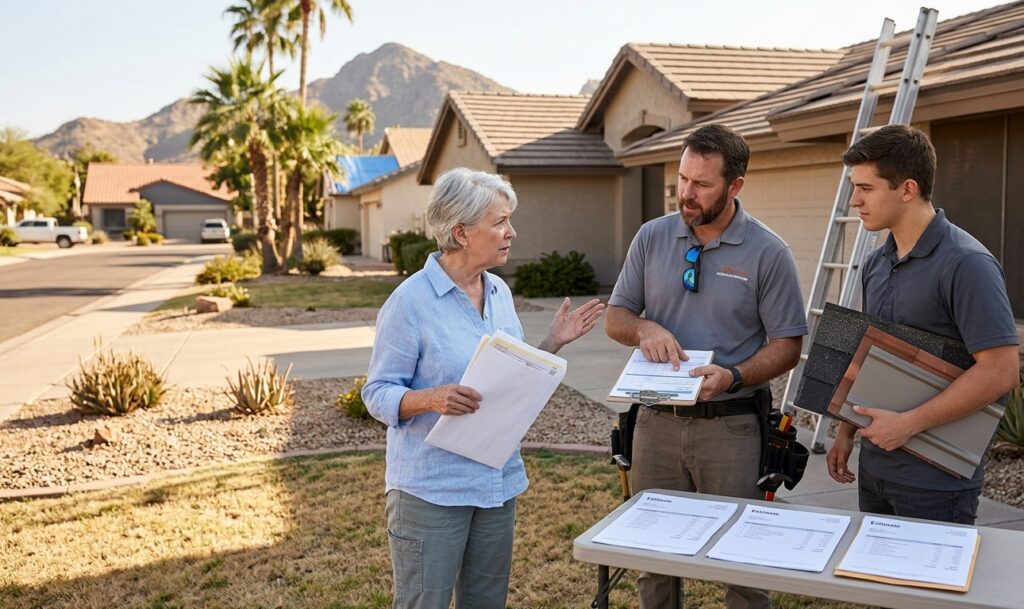
Homeowners searching for a new roof in Phoenix often collect three or four estimates and find numbers that swing wildly from one contractor to the next. One bid lands at nine thousand dollars, another at twenty thousand, and there is rarely a clear explanation for the gap. Understanding what actually drives roof replacement cost in Phoenix helps you compare bids intelligently and avoid overpaying or underestimating the project before work ever begins.
The team behind Avid Roofing Solutions provides Phoenix roofing services to thousands of homeowners across the valley and sees the same pricing patterns repeat across neighborhoods, home styles, and roof ages. The desert climate plays a bigger role in pricing than most people expect, since intense UV exposure, monsoon winds, and sudden temperature swings all shape which materials hold up and which fail early.
Roof Replacement Cost in Phoenix: The Real Numbers
On average, a full roof replacement cost in Phoenix ranges from eight thousand to eighteen thousand dollars for a typical single-family home. Asphalt shingle roofs sit at the lower end of that range, while tile and foam roofing systems push costs higher because of material weight, installation time, and structural requirements that come with heavier products.
Square footage is the single biggest factor in the final number. A 1,800 square foot roof costs meaningfully less than a 3,200 square foot roof, even with identical materials and the same crew doing the work. Roof pitch matters too, since steep slopes take longer to work on safely and require more scaffolding, harnessing, and fall protection equipment throughout the project.
Home layout adds another wrinkle. Roofs with several valleys, dormers, or chimneys cost more to flash and seal properly than a simple rectangular roof with a single ridge line. Contractors price this complexity into their labor estimate, which is one reason two homes of the same size can carry different quotes.
What Drives Roofing Materials Cost?
Materials account for roughly forty to fifty percent of total project cost. Asphalt shingles remain the most budget-friendly option, tile roofing costs more upfront but lasts decades longer, and metal roofing sits in between with strong energy efficiency benefits during Arizona summers. Underlayment quality also affects price, since a premium synthetic underlayment adds a modest cost but extends the life of the whole system.
Labor and Permit Fees You Should Expect
Labor typically makes up thirty to forty percent of the total bill. Maricopa County and surrounding cities require permits for roof replacement, and fees vary by municipality depending on project size and material type. A licensed residential roofing crew factors these costs into your quote so nothing surprises you at the closeout inspection stage.
Tear-off of the old roof adds another line item, especially if multiple layers of shingles were installed over the years by a previous owner. Disposal fees for old tile or shingle debris can add several hundred dollars depending on the volume of material removed from your property and how far the dump site sits from your neighborhood.
Crew size and scheduling also affect labor pricing. A larger crew finishes a straightforward shingle job in a single day, which lowers labor cost per square foot compared to a smaller team stretching the same job across three or four days of work.
Tile Versus Shingle Labor Differences
Tile roofs take considerably longer to install because each tile is placed and secured individually, while shingle roofs go up faster in overlapping rows. This time difference is one of the main reasons tile roofing commands a higher labor cost even before material price gets factored into the final estimate.
Hidden Costs That Catch Homeowners Off Guard
Wood rot, damaged decking, and outdated flashing are common discoveries once the old roof comes off and the crew can finally see the structure underneath. Replacing plywood decking or fixing flashing around vents and chimneys adds cost but prevents leaks that would otherwise cause far more expensive damage to ceilings, insulation, and drywall later on.
Skylights, solar panel mounts, and swamp cooler platforms also add complexity to a project. Each of these features needs to be removed, protected, or reinstalled correctly, and contractors who skip this step in their initial estimate often submit change orders midway through the project, which frustrates homeowners who expected a fixed price.
Older homes sometimes reveal outdated ventilation systems that no longer meet current building code. Bringing attic ventilation up to standard during a replacement adds a modest cost now but reduces heat buildup and helps the new roof last as long as the manufacturer intends.
Financing a Roof Replacement
Because a full roof replacement is a significant expense, many Phoenix homeowners spread the cost over time rather than paying in one lump sum. Flexible financing options make it possible to replace an aging roof now and pay it off in manageable monthly installments instead of draining savings or delaying a repair that is only getting more urgent.
Financing also gives homeowners room to choose a longer-lasting material rather than settling for the cheapest option purely to fit a tight upfront budget. Spreading tile roofing cost over a few years, for example, can make a durable, long-term choice fit comfortably into a monthly budget.
How to Get an Accurate Quote?
Ask for a written, itemized estimate that separates materials, labor, permits, and disposal into clear categories. A vague one-line quote makes it nearly impossible to compare bids fairly, and it often hides costs that surface later as unexpected add-ons once the project is already underway.
A trustworthy residential roofing contractor will also inspect your attic ventilation, decking condition, and flashing before finalizing a number. Skipping this step is one of the clearest warning signs of a lowball estimate that will not hold up once the old roof comes off and hidden problems appear.
It helps to ask each contractor the same set of questions: what warranty applies to labor versus materials, how long the project will take, and what happens if hidden damage is discovered. Consistent answers across bids make it far easier to identify which estimate reflects the real scope of your project.
Comparing at Least Three Estimates
Getting three separate quotes gives you a realistic price range and helps you spot outliers in both directions. An estimate that comes in dramatically lower than the others is worth extra scrutiny, since it may be missing permit costs, disposal fees, or adequate decking repair allowances that show up later as change orders.
Does Timing Affect Roof Replacement Cost in Phoenix
Scheduling matters more than most homeowners expect. Spring and fall are the busiest seasons for roofing companies across the valley, since crews race to finish projects before summer heat and before monsoon season brings unpredictable weather. Booking during these peak windows sometimes means a longer wait and a firmer price, since crews have more demand than availability.
Winter months tend to be quieter for roofing crews in the Phoenix area, and some homeowners find contractors more willing to negotiate on price or add small extras, such as an upgraded underlayment, at no additional charge. If your roof is not in urgent need of replacement, asking about off-season scheduling can shave a modest amount off your final invoice.
Waiting too long to replace a failing roof carries its own cost risk. A roof that develops a leak during monsoon season can lead to interior water damage, mold remediation, and emergency repair fees that far exceed the cost of a planned, scheduled replacement completed before the storms arrive.
Warranty Coverage and Long-Term Cost
A roof replacement is only as good as the warranty backing it. Material manufacturers typically offer coverage lasting twenty to fifty years, depending on the product line, while workmanship warranties from the contractor usually range from two to ten years. A longer workmanship warranty often signals a company confident in the quality of its installation crew.
Homeowners sometimes focus entirely on the sticker price and skip questions about warranty terms, only to discover later that a cheaper installation came with a much shorter labor warranty. Paying slightly more for a contractor who stands behind the work for a decade can save money if a flashing seam or vent boot needs attention a few years down the road.
How Roof Size and Complexity Change the Final Number?
Two homes with the same square footage can still land on very different quotes once roof complexity enters the picture. A simple gable roof with two slopes costs less to replace than a roof with multiple hips, valleys, and dormers, since each transition point requires careful flashing work to prevent future leaks.
Attached structures such as covered patios, carports, and pool equipment enclosures often share roofline with the main house, and contractors need to account for tying these sections into the new roofing system. Homeowners planning a replacement should walk the full perimeter of their property with their contractor to make sure every connected structure is included in the written quote.
Is a Full Replacement Always Necessary
Not every roofing problem requires a full tear-off. Isolated leaks, a handful of cracked tiles, or damaged flashing around a single vent can often be repaired for a few hundred dollars rather than the thousands a full replacement requires. A qualified inspection helps determine whether targeted repair or complete replacement makes more financial sense for your specific situation.
Roof replacement cost in Phoenix depends on size, material, roof pitch, and what your roofer finds once the old surface comes off. Getting a detailed, itemized quote protects your budget and your home for decades to come. Avid Roofing Solutions offers a full range of roofing services, from inspections to complete replacement, so reach out today to get a number you can actually count on.
Cost Per Square Foot by Material Type
Breaking cost down per square foot makes it easier to compare bids across different material types. Asphalt shingles typically run four to seven dollars per square foot installed, metal roofing runs seven to eleven dollars, and tile roofing runs nine to eighteen dollars, with foam roofing systems landing in a similar higher range depending on thickness and coating.
These figures include both material and labor, but they can shift based on how many layers of old roofing need to be removed first and how much decking repair the crew finds once the surface is stripped away. Treat these numbers as a starting point for comparison rather than a guaranteed quote for your specific home.
Homeowners often ask whether a mid-range metal roof makes sense as a compromise between shingle affordability and tile longevity. For homes with simple rooflines and good attic ventilation already in place, metal can be a reasonable middle option that balances upfront cost against decades of durability in Arizona heat.
Working With a Local Crew Versus a Traveling Contractor
Local Phoenix roofing companies tend to have established relationships with material suppliers across the valley, which can shorten lead times on tile, shingle, or underlayment orders compared to a contractor traveling in from outside the region for a single project.
A local crew is also easier to reach months or years later if a warranty issue comes up, since they have an ongoing presence in the community rather than a temporary local address tied to a single job.
Questions to Ask Before You Sign a Contract
Before signing anything, confirm the contractor carries current Arizona licensing, general liability insurance, and workers compensation coverage. This protects you from liability if a worker is injured on your property during the project, and it separates established companies from unlicensed crews offering suspiciously low bids.
Ask how the project handles weather delays, since a sudden monsoon storm can pause work for a day or more. A clear contract should spell out how partially completed roofs are protected from rain during any pause in the schedule, rather than leaving your home exposed overnight.
Finally, clarify the payment schedule. A reasonable structure asks for a modest deposit, a payment when materials arrive, and a final payment only after the job passes inspection. Contractors who ask for the full amount upfront before any work begins are worth approaching with caution.
Cost Differences Across the Phoenix Metro
Pricing can vary somewhat depending on where in the valley your home sits. Older neighborhoods with mature trees and tighter lot access sometimes add modest cost for material staging and debris removal, while newer developments with wide driveways tend to see slightly more efficient, faster installations.
Homes at higher elevations north and east of the city occasionally see different wind load requirements in the local building code, which can affect fastening patterns and, in turn, labor time. A local contractor familiar with code requirements across different parts of the valley will factor this into an accurate estimate from the start rather than adjusting the price midway through the project.
Frequently Asked Questions
How much does a roof replacement cost in Phoenix on average?
Most Phoenix homeowners pay between eight thousand and eighteen thousand dollars for a full roof replacement, depending on square footage, material choice, and roof pitch.
Is tile roofing more expensive than shingle roofing in Phoenix?
Yes. Tile roofing typically costs more upfront due to material weight and installation time, though it often lasts significantly longer than asphalt shingles.
Does homeowners insurance cover roof replacement cost?
Coverage depends on your policy and the cause of damage. Storm or hail damage is commonly covered, while normal wear from age usually is not included.
How long does a roof replacement take in Phoenix?
Most residential roof replacements take two to five days, though larger homes or tile roofs can take longer to complete safely.
Can I finance a roof replacement instead of paying upfront?
Yes. Many Phoenix roofing companies, including Avid Roofing Solutions, offer financing plans that break the total cost into monthly payments.
What is the average lifespan of a new roof in Phoenix?
Asphalt shingles typically last fifteen to twenty years in this climate, while tile roofing can last forty years or more with proper maintenance.
Is a permit required for a roof replacement in Phoenix?
Yes. Most cities in Maricopa County require a permit for a full roof replacement, and a licensed contractor typically handles this paperwork as part of the project.
How can I tell if a roofing quote is missing costs?
Compare the itemized breakdown across bids. If one quote skips permit fees, disposal costs, or decking repair allowances that others include, it likely understates the true final price.
Should I repair or fully replace my roof?
If damage is limited to a small area and the roof is relatively young, repair often makes sense. Widespread wear or a roof nearing the end of its lifespan usually calls for full replacement.
Does the time of year affect roof replacement pricing in Phoenix?
Yes. Spring and fall are the busiest, often pricier seasons, while winter tends to offer more flexibility on scheduling and small pricing concessions.
What warranty should I expect on a new roof?
Look for a manufacturer warranty of twenty years or more and a workmanship warranty from your contractor of at least five years for solid long-term protection.