If you need a new roof or a repair in Arizona, hiring a licensed roofer protects your home and your wallet. A licensed contractor carries a valid ROC number, proof of insurance, and bonding that covers your property if something goes wrong. Before you sign any contract, ask about license status, insurance coverage, warranty terms, and past project history. Avid Roofing Solutions answers these questions clearly for every homeowner across Phoenix, Mesa, Scottsdale, and the rest of Arizona, so you know exactly who is working on your roof.
Arizona’s heat, monsoons, and hailstorms put constant pressure on residential roofs. A poor installation or a rushed repair can lead to leaks, wasted money, and repeat damage within a year or two. That is why the licensing question matters more here than in milder climates. The right roofer protects your home for decades, not just until the next storm.
Homeowners often assume every roofing company operates the same way, but licensing requirements, insurance coverage, and workmanship standards vary widely across the industry. Taking a few extra minutes to ask the right questions upfront can prevent costly mistakes later.
How to Choose a Licensed Roofer in Arizona the Right Way?
Start by checking the contractor’s Arizona Registrar of Contractors license number. Every legitimate roofing company must display this number on their website, contracts, and vehicles. You can search the ROC number directly on the state website to confirm it is active and free of complaints.
Next, ask for proof of general liability insurance and workers compensation coverage. If a worker gets hurt on your property and the company has no insurance, you could be held responsible for medical costs. A tips to find the best roofing contractors near me guide can help you compare local companies side by side before you commit.
Ask how long the company has operated in your specific city. A roofer familiar with Tucson’s intense sun exposure understands different challenges than one working mainly in Flagstaff’s snow load. Local experience often means faster response times and better material choices for your climate zone.
Request references from recent projects completed in your area. A reputable roofer should have no problem sharing contact information for past clients who can speak honestly about their experience, timeline, and final results.
Questions About Roof Inspections and Warranties
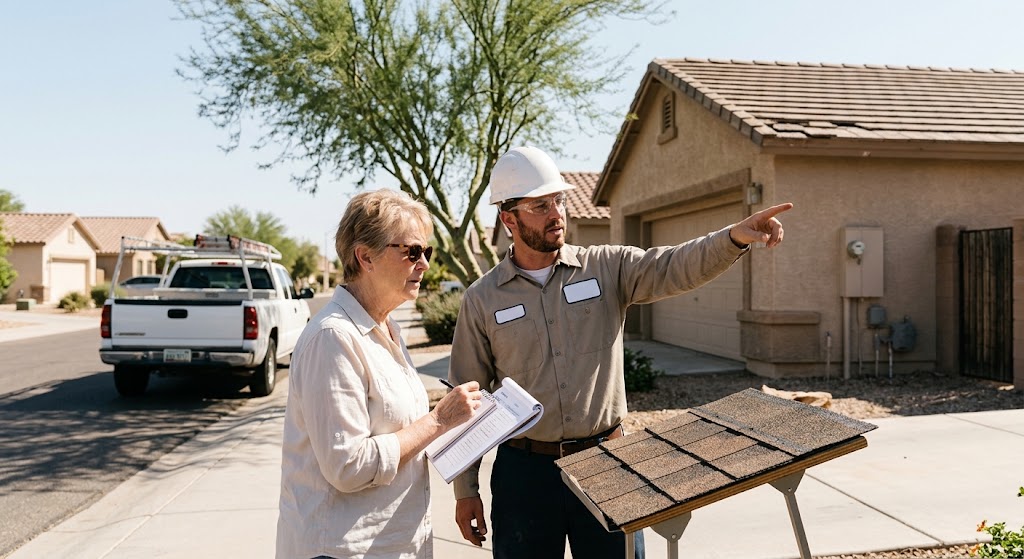
A trustworthy roofer offers a free or low cost inspection before quoting any work. This step lets them assess your roof’s true condition instead of guessing from a photo. Request a roof inspection as your first step, even if you already suspect what the problem might be.
Ask what warranty covers both materials and labor. Manufacturer warranties often only cover product defects, not installation mistakes. A strong roofer backs their own workmanship separately, usually for five to ten years depending on the roofing system installed.
Ask whether the company handles insurance claims directly. Storm damage claims involve paperwork, adjuster meetings, and documentation that many homeowners find confusing. A company well versed in roofing and home insurance claims can save you weeks of back and forth with your provider.
Finally, ask about financing. Roof replacement is a major expense, and not every homeowner can pay the full amount upfront. Reputable companies offer financing options that spread the cost into manageable monthly payments without pressuring you into a rushed decision.
Ask how the company handles unexpected issues discovered mid project, such as rotted decking hidden beneath old shingles. A clear answer here shows whether pricing will stay transparent or balloon with surprise charges.
Red Flags to Watch For During the Hiring Process
Door to door solicitors who show up right after a storm and demand payment before starting work raise immediate concern. Legitimate roofers rarely need to knock on doors since most business comes from referrals and online searches.
Watch for contractors who refuse to put estimates in writing or who pressure you to sign the same day. A written estimate protects both sides and gives you time to compare pricing against other residential roofing companies in your area.
Be cautious of unusually low bids. Roofing materials and labor costs are fairly consistent across the Phoenix metro area, so a bid far below competitors often means corners will get cut somewhere in the process.
Watch for vague contracts that skip details like material brand, warranty length, or cleanup responsibilities. A detailed contract protects you if a dispute arises later and shows the contractor takes the project seriously.
Be wary of large upfront deposits before any work begins. Most reputable roofers request a modest deposit and collect the remaining balance upon completion or in stages tied to project milestones.
How to Compare Multiple Roofing Quotes?
Gather at least three quotes before making a final decision. Comparing pricing side by side helps you spot outliers, whether unusually high or suspiciously low, and gives you leverage during negotiations.
Look beyond the bottom line price. Compare warranty length, material quality, and included services like debris removal or gutter protection during the project. A slightly higher quote often includes value that a cheaper bid leaves out entirely.
Ask each contractor the same set of questions so you can compare answers directly. Consistency in your questioning process makes it easier to spot which company communicates clearly and which one gives evasive answers.
Understanding Roofing Contracts Before You Sign
Read every line of a roofing contract before signing, even if the process feels tedious. Confusing language or missing details often signal problems that surface later during the project.
Make sure the contract lists exact material brands and product lines rather than vague terms like standard shingles. Specific product names let you verify quality and compare pricing accurately against other bids you received.
Check that the payment schedule ties to project milestones rather than a single upfront payment. A fair schedule might include a small deposit, a payment at material delivery, and a final payment upon completion and inspection.
Confirm the contract includes a clear project timeline with a start date and expected completion window. Weather delays happen in Arizona, but a written timeline still gives you a benchmark to hold the contractor accountable to.
Look for a clause addressing cleanup and debris removal. Roofing projects generate significant waste, and a professional company should include full cleanup as part of the standard service rather than an added cost.
Why Local Knowledge of Arizona Codes Matters?
Building codes vary slightly across Arizona municipalities, and an experienced local roofer understands permit requirements specific to your city. Missing a required permit can create problems later when selling your home or filing an insurance claim.
Local contractors also understand wind load requirements tied to monsoon season, ensuring your new roof meets standards designed to withstand seasonal storms rather than generic national guidelines.
A roofer familiar with your specific neighborhood often anticipates common issues before they happen, such as HOA restrictions on roofing color or material choices in certain Phoenix metro communities.
What Avid Roofing Solutions Offers Homeowners?
Our team is family owned, licensed, insured, and bonded under ROC 358748. We provide free inspections before any work begins so you understand exactly what your roof needs. Every estimate is written, detailed, and free of pressure tactics.
We serve homeowners across Phoenix, Mesa, Scottsdale, Chandler, Tempe, Glendale, Gilbert, and many other Arizona communities. Our crews install architectural asphalt shingle, clay and concrete tile, and foam roofing systems built for the demands of Arizona weather. You can explore our full range of services to see which roofing system fits your home and budget.
Our team also assists with insurance documentation, solar panel detach and reset during roof work, and flexible financing plans designed around your budget. We believe homeowners deserve clear answers and honest pricing at every stage of a roofing project.
Choosing the right roofer is one of the most important decisions you will make as a homeowner. A licensed, insured, and experienced team protects your investment for years to come. Take the time to ask the right questions before signing any contract, and do not let pressure or urgency rush your decision. When you are ready for a free inspection or a written estimate, contact us and our team will walk you through every step of the process.
Frequently Asked Questions
How do I verify a roofer’s license in Arizona?
Search the contractor’s ROC number directly on the Arizona Registrar of Contractors website to confirm it is active and check for any filed complaints.
What insurance should a roofing contractor carry?
A legitimate roofer carries general liability insurance and workers compensation coverage to protect your property and their crew during the project.
How long does a licensed roof inspection take?
Most inspections take between thirty minutes and one hour depending on roof size and the extent of visible damage.
Do licensed roofers cost more than unlicensed contractors?
Pricing is often similar, but licensed roofers include insurance, warranty backing, and code compliant work that unlicensed contractors cannot guarantee.
Can a roofer help with my insurance claim after storm damage?
Yes, many established roofing companies assist with documentation and adjuster meetings to help your claim move faster and more accurately.
How many quotes should I get before hiring a roofer?
Most homeowners benefit from comparing at least three written quotes to evaluate pricing, warranty terms, and overall communication quality.