
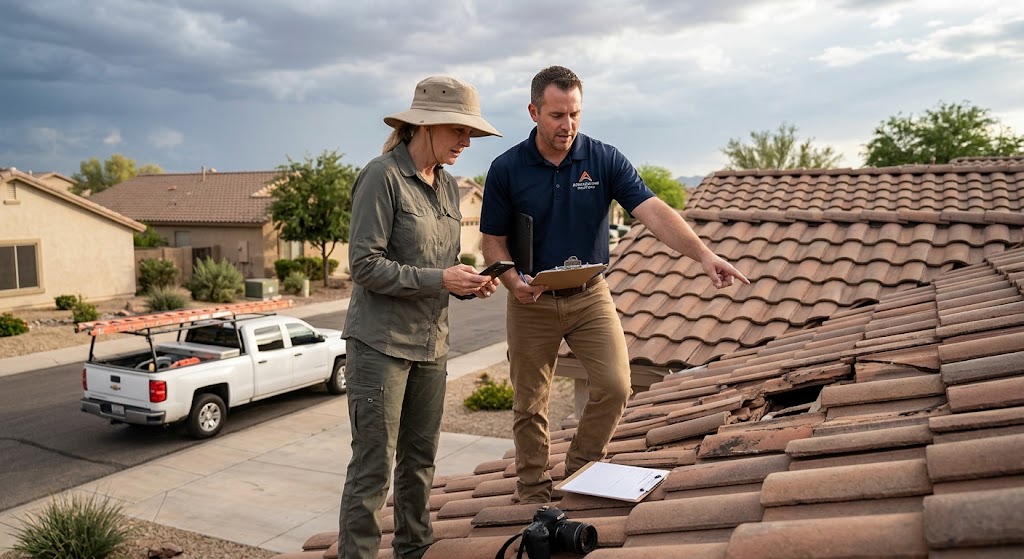
Filing a roof insurance claim after storm damage in Arizona starts with documenting the damage, contacting your insurance provider quickly, and scheduling a professional roof inspection before repairs begin. Insurance companies require clear evidence of the storm event and the resulting damage to approve your claim. Avid Roofing Solutions helps homeowners across Arizona navigate this process, from photographing damage to meeting with adjusters on site.
Arizona’s monsoon season brings intense wind, hail, and dust storms that can crack tiles, lift shingles, and damage underlayment within minutes. Knowing the correct claim process helps you get repairs approved faster and avoid unnecessary delays or denials.
How to File a Roof Insurance Claim After Storm Damage in Arizona Step by Step?
Start by taking photos of any visible damage as soon as it is safe to do so. Capture wide shots of the entire roof along with close up images of cracked tiles, missing shingles, or torn flashing. This documentation becomes essential evidence for your claim.
Next, contact your insurance provider within a few days of the storm. Most policies require prompt reporting, and delays can raise questions about whether the damage occurred during the storm or from gradual wear over time.
Schedule a professional roof inspection before your insurance adjuster arrives. A licensed roofer can identify damage that may not be visible from the ground, including signs of underlayment failure hidden beneath tiles or shingles.
What to Expect During the Adjuster Visit?
The insurance adjuster will walk your roof to assess damage and compare it against your policy coverage. Having your roofing contractor present during this visit often leads to a more accurate assessment, since contractors understand roofing systems in greater technical detail than most adjusters.
Bring your contractor’s written inspection report to the meeting. This report should note specific damage points such as slipped roof tiles or wind lifted shingle edges, giving the adjuster clear documentation to reference in their final report.
If your roof includes a flat section, ask your contractor to check for leaking roof scuppers, since drainage damage is easy to overlook during a quick visual inspection.
Take video walkthroughs in addition to still photos whenever possible, since video often captures the full extent of damage more clearly than individual images alone.
Documenting Interior Damage Alongside Roof Damage
Water intrusion from a damaged roof often affects ceilings, walls, and insulation inside your home. Photograph any water stains, sagging drywall, or damp insulation as part of your overall claim documentation.
Keep receipts for any temporary repairs, such as tarps or emergency patching, since many policies reimburse reasonable costs spent preventing further damage while waiting for permanent repairs.
Create a simple timeline document listing the storm date, when you first noticed damage, and when you contacted your insurance provider. This timeline helps adjusters understand the sequence of events clearly.
Common Reasons Claims Get Delayed or Denied
Missing documentation is the most common reason claims stall. Insurance companies need clear photo evidence, contractor reports, and a timeline showing when the storm occurred relative to when damage was reported.
Pre-existing wear can also complicate a claim. If your roof already showed signs of aging before the storm, the insurer may argue that some damage resulted from normal deterioration rather than the storm itself. Regular inspections help establish a clear baseline condition before storms occur.
Choosing a contractor unfamiliar with insurance processes can slow things down as well. Working with a team experienced in storm damage repair and insurance documentation reduces back and forth between you, your roofer, and the insurance company.
Handling Disputes Over Claim Amounts
If the insurance payout seems lower than your contractor’s estimate, request a written explanation from the adjuster detailing how they calculated the amount. This helps identify whether certain damage was overlooked.
You can hire an independent public adjuster if you feel your claim was undervalued significantly. Public adjusters work on your behalf rather than the insurance company, though they typically charge a percentage of the settlement.
Keep all correspondence organized in one folder, whether digital or physical, so you can reference specific dates and details quickly if a dispute drags on longer than expected.
Understanding Your Policy Before a Storm Hits
Review your homeowners policy annually so you understand what your storm damage coverage actually includes. Some policies separate wind and hail coverage from general water damage coverage, which directly affects how the insurer processes your claim.
Check your deductible amount for wind and hail claims specifically, since many Arizona policies apply a percentage-based deductible for these events rather than charging a flat dollar amount.
Ask your insurance agent whether your policy covers full replacement cost or actual cash value, since this distinction significantly changes your payout when storm damage affects older roofing materials.
Working With Your Roofing Contractor Through the Process
Choose a contractor who communicates clearly about what they can and cannot guarantee regarding your claim outcome. No roofer can promise a specific insurance payout, but an experienced team can advocate for a fair and accurate assessment.
Ask your contractor to provide itemized estimates broken down by material, labor, and any additional repairs needed. Detailed estimates make it easier for adjusters to match your claim against actual project costs.
Keep communication between your contractor and insurance company documented in writing whenever possible, whether through email or a shared project portal. This creates a clear record if questions arise later in the process.
After Your Claim Is Approved
Once your claim is approved, ask your roofing contractor for a written scope of work that matches what your insurance company approved. This ensures repairs align with the payout and avoids unexpected out of pocket costs.
If your home experienced sudden wind damage during a haboob or dust storm, review our guide on emergency roof repair for haboob and wind damage to understand typical repair timelines and urgency levels.
Ask about financing options if your deductible or uncovered repairs create a budget gap. Many homeowners use short term financing to bridge costs while waiting for insurance reimbursement.
Filing a roof insurance claim does not need to feel overwhelming when you understand the correct steps. Document the damage quickly, schedule a professional inspection, and work with a contractor experienced in insurance claims to keep the process moving smoothly. When you need help after a storm, contact us for a free inspection and guidance through every stage of your claim.
Frequently Asked Questions
How soon should I file a roof insurance claim after a storm?
Most insurance providers recommend filing within a few days of the storm to avoid questions about damage timing.
Do I need a professional inspection before filing a claim?
Yes, a professional inspection provides documented evidence that strengthens your claim and helps identify damage not visible from the ground.
Will my insurance company work directly with my roofer?
Many insurers coordinate with your chosen roofing contractor, especially when the contractor provides a detailed written inspection report.
What if my claim gets denied?
You can request a re-inspection or appeal the decision, often with additional documentation from your roofing contractor supporting the original damage.
Does homeowners insurance cover full roof replacement after storm damage? Your policy terms, the total extent of damage, and your routine roof maintenance before the storm hit directly determine your coverage payout.
What is the difference between actual cash value and replacement cost coverage?
Actual cash value accounts for depreciation on your existing roof, while replacement cost coverage pays to replace the roof without factoring in its age.
Can I choose my own roofing contractor for insurance repairs?
Yes, homeowners generally have the right to select their own licensed contractor rather than using one assigned by the insurance company.
How long does the insurance claim process usually take? Timelines vary, but proper documentation and adjuster availability usually resolve most roof damage claims within two to six weeks.
Preventing Future Storm Damage Claims
Schedule routine roof inspections at least once a year, ideally before monsoon season begins in June. Catching loose tiles or worn flashing early can prevent minor issues from becoming major storm damage later.
Trim overhanging tree branches near your roofline, since falling limbs during high winds are a common cause of shingle and tile damage across Arizona neighborhoods.
Keep gutters and scuppers clear of debris throughout the year. Blocked drainage during a sudden monsoon downpour can lead to water backing up under roofing material and causing damage that mimics storm impact.
Final Thoughts on Filing Your Claim
Storm damage claims move faster and get approved more often when homeowners stay organized from the very first step. Clear photos, prompt reporting, and a professional inspection form the foundation of a strong claim.
Working alongside an experienced roofing team throughout the process removes much of the guesswork and stress that often comes with dealing with insurance paperwork after a storm.
Arizona’s monsoon season will continue bringing unpredictable wind and hail each year, so knowing this process ahead of time puts you in a stronger position whenever damage occurs.