
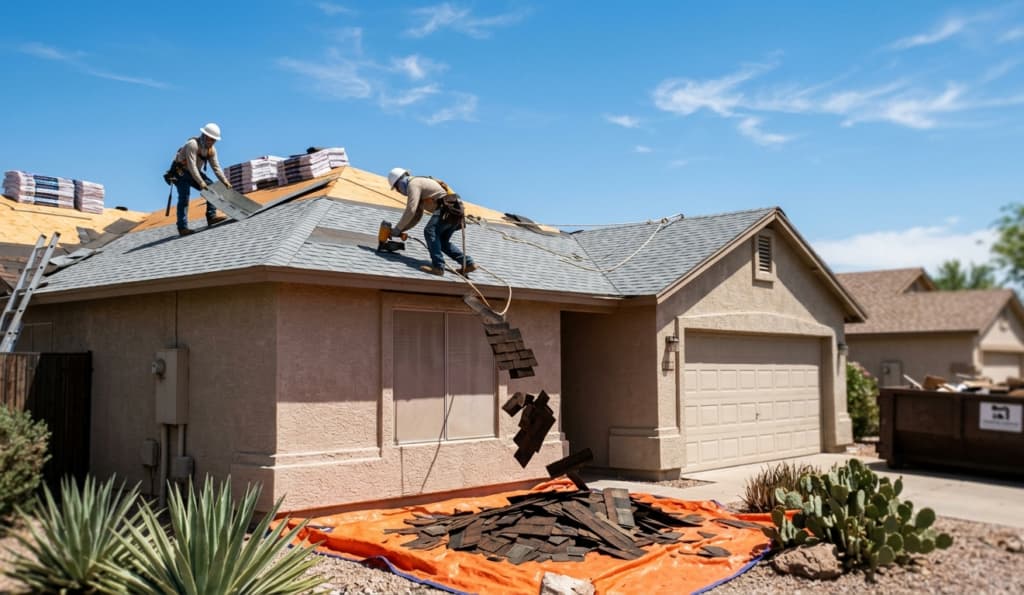
A full roof replacement in Arizona runs anywhere from $8,000 to $30,000 depending on size, material, and complexity. Most homeowners do not have that sitting in a savings account, and most roofing companies prefer cash or check. What gets left out of the conversation too often is that there are legitimate, low-cost financing options that make roof replacement manageable without draining your emergency fund or going into high-interest debt.
Avid Roofing Solutions works with Arizona homeowners on both the roofing side and the financial planning side of a project. This guide covers what is actually available in 2026, what the fine print usually says, and how to compare offers so you do not end up paying far more than you expected.
Roofing Financing Arizona 2026: The Main Options Available
There are five primary ways Arizona homeowners finance roof replacements. Each has different requirements, interest structures, and long-term costs.
1. Contractor financing programs: Many roofing companies partner with third-party lenders like GreenSky, Service Finance, or Hearth to offer financing at the point of sale. These programs often advertise 0% APR for 12 to 18 months. After the promotional period, rates typically jump to 17% to 26% if the balance is not paid in full.
2. Home equity line of credit (HELOC): If you have equity in your home, a HELOC gives you access to funds at relatively low interest rates, often 7% to 10% in the current rate environment. The interest may be tax-deductible. This requires a home appraisal and takes several weeks to set up, so it is not ideal for emergency repairs.
3. Personal loans: Unsecured personal loans from banks, credit unions, or online lenders can be approved in one to three business days. Rates range from 7% to 24% depending on credit score. No home equity required, and funding is fast.
4. FHA Title I home improvement loans: These federally backed loans do not require equity and are available for amounts up to $25,000 for single-family homes. Interest rates are fixed and currently range from 7% to 11%. The application process is more involved, but the rates are competitive.
5. PACE financing (Property Assessed Clean Energy): Available in some Arizona counties, PACE lets you finance energy-efficient roofing improvements through your property tax bill. No credit check is required. Repayment is added to your annual property tax. This option has significant risks if you sell your home before the balance is paid off.
Zero Down Roof Financing Phoenix: What the Ads Are Not Telling You
“Zero down, zero interest, zero payments for 12 months” sounds ideal. And it can be, if you pay the full balance before the promotional period ends. But deferred interest is the catch that bites a lot of homeowners.
Deferred interest means that if you still have even $1 of balance remaining when the promotional period ends, interest is charged retroactively on the entire original loan amount from day one. On a $15,000 roof job at 24.99% APR, that could mean $3,750 added to your balance overnight.
Before signing any contractor financing agreement, ask specifically: is this deferred interest or true 0% APR? True 0% means interest accrues only on the remaining balance after the promotional period. Deferred interest means the full amount has been accruing the whole time and gets added if you do not pay in full.
No Money Down Roof Replacement Arizona:
Financing a roof replacement makes clear financial sense in these situations:
Your current roof is causing active damage to your home through leaks, moisture intrusion, or structural issues. Delaying to save cash costs more in interior repairs than the interest on a loan would.
You have a promotional 0% period and a concrete plan to pay the balance within that window. This is the closest thing to genuinely free financing available.
You qualify for a HELOC or FHA Title I loan at rates below 9%, and you can comfortably manage the monthly payment. Spreading a $15,000 roof over 7 years at 8% adds about $4,500 in total interest, which many homeowners find acceptable given the protection a new roof provides.
If you are not sure whether your roof situation is urgent enough to justify financing now versus saving for six to twelve months, getting a professional opinion is the first step. Knowing the specific signs you need roof repair in Arizona can help you decide whether this is an emergency or something you have time to plan around.
How to Compare Offers Side by Side?
When evaluating financing offers from different contractors or lenders, put these numbers in a spreadsheet before signing anything:
Total interest paid: Not the monthly payment. Calculate total interest over the full loan term. A lower monthly payment stretched over more years often costs dramatically more.
Promotional period terms: Exactly when does the promotional rate end? Is it 12 months from signing or 12 months from first payment? The difference matters.
Prepayment penalties: Can you pay the loan off early without penalty? Some contractor financing programs charge fees for early payoff.
Origination fees: Some personal loan lenders charge 1% to 5% of the loan amount as an origination fee. This effectively raises your real interest rate even if the stated APR looks competitive.
Choosing the right roofing contractor matters just as much as choosing the right financing. A low financing rate means nothing if the contractor overcharges for the work or cuts corners. If you are evaluating multiple contractors, reviewing how to find the best roofing contractors near you covers what to check before signing a contract.
Best Roofing Financing Options in Phoenix By Homeowner Profile:
Good credit (700+), owns home with equity: HELOC or home equity loan at the lowest available rate. Use contractor financing only for short promotional periods you know you can pay off.
Good credit, limited equity: Personal loan from a credit union or online lender. Rates around 7% to 12% are achievable. Avoid high-APR contractor financing.
Fair credit (620 to 699): FHA Title I loan or a contractor program with a rate cap you understand. Avoid PACE unless you have exhausted other options and understand the property lien implications.
Limited credit history: Start with credit unions, which often have more flexible underwriting than banks. Some contractor financing programs approve applicants that traditional lenders would not.
Commercial Roofing Financing in Arizona: Different Rules Apply
Business owners replacing commercial roofs have additional options. Section 179 of the tax code allows businesses to deduct the full cost of a roof replacement in the year it is installed, rather than depreciating it over decades. This can effectively reduce the net cost of a commercial roof replacement by 20% to 35%, depending on your tax bracket.
Commercial roofing projects also qualify for SBA 504 loans in some cases, particularly for energy-efficient installations. If you are replacing a commercial flat roof in the Phoenix area, the specifics of commercial single-ply roofing options in Avondale are worth reviewing alongside your financing options.
Frequently Asked Questions
Can I get roofing financing with bad credit in Arizona?
Yes, though options are narrow. PACE financing requires no credit check. Some contractor financing programs work with scores as low as 580. Expect higher interest rates. A co-signer can improve your options significantly.
Is it better to use a HELOC or a personal loan for a roof replacement?
If you have equity and time to set up a HELOC, the rate is usually lower. Personal loans are faster and require no equity. The right choice depends on urgency, equity position, and your tax situation.
Do roofing contractors in Arizona offer in-house payment plans?
Rarely. Most contractor financing is through third-party lenders that the contractor is partnered with. True in-house payment plans where the contractor holds the note are uncommon and usually come with stricter terms.
What credit score do I need for 0% roofing financing?
Most promotional 0% APR programs through contractor financing partners require a minimum score of 640 to 680. The best promotional terms typically go to applicants with scores above 720.
Can I finance just part of a roof replacement?
Yes. If you have some savings but not enough to cover the full project, most financing programs allow you to finance a portion and pay the rest upfront. This reduces your total interest cost while keeping your cash reserves intact.
Does financing a roof affect my home insurance?
Financing itself does not affect your insurance. However, if your lender requires a home equity position, they may require proof of insurance coverage. A new roof can actually lower your homeowner insurance premiums in some cases.