
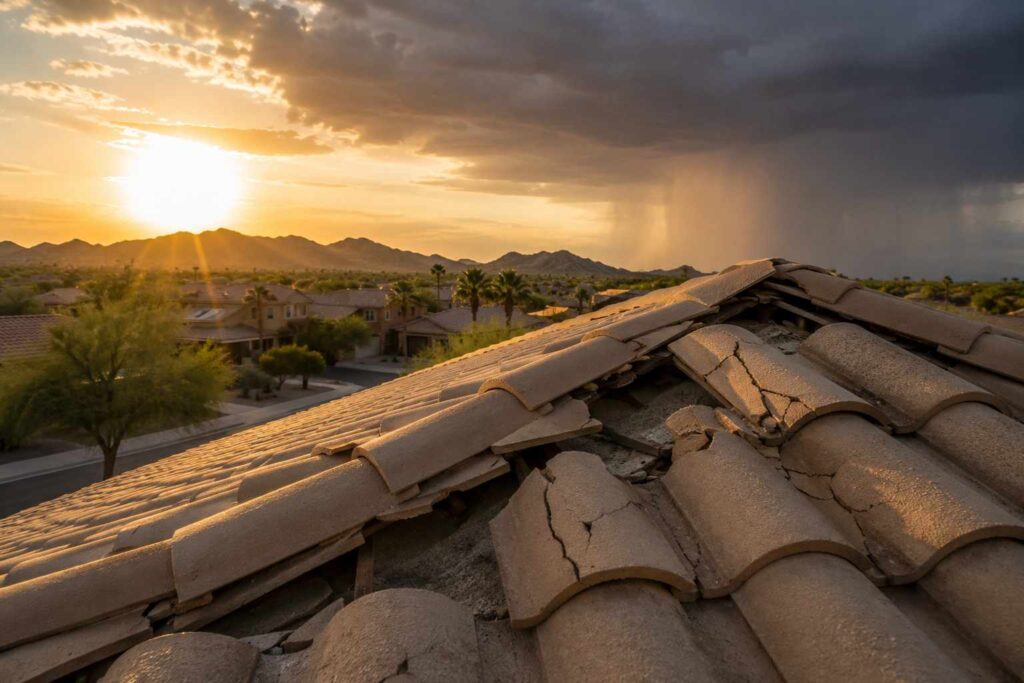
Thermal shock roof damage happens when Arizona’s extreme temperature swings cause roofing materials to expand and contract rapidly. Desert roofs can face a 40 to 50 degree shift between scorching afternoons and cool nights. This constant stress cracks tiles, warps shingles, and breaks down seals faster than in milder climates. Homeowners who understand this process can catch early warning signs, schedule timely inspections, and protect their roof’s lifespan. Avid Roofing Solutions works with Arizona property owners every day to identify thermal stress before it turns into costly structural repairs.
Arizona summers push roof surface temperatures well above 150 degrees. Once the sun sets, that same surface can drop by 40 degrees or more within hours. Roofing materials were never designed to handle that kind of daily whiplash. Over months and years, this cycle wears down even premium roofing systems.
Understanding Thermal Shock Roof Damage in Arizona
Thermal shock roof damage refers to the physical stress roofing materials endure from rapid heating and cooling cycles. Every material has a unique expansion rate. When temperatures spike or drop quickly, materials expand or contract unevenly across the roof surface.
This uneven movement creates tension at seams, flashing points, and fastener locations. Small cracks form first, often invisible from the ground. Left unaddressed, these cracks widen and let moisture penetrate the roofing system.
Tile roofs are especially vulnerable in Arizona neighborhoods. Clay and concrete tiles absorb heat differently than the underlayment beneath them. This mismatch accelerates wear at the tile edges and fastening points, which is why regular checks for tile roof underlayment issues matter so much in this climate.
Asphalt shingles face a similar challenge. The granules that protect shingles from UV rays start to loosen as the material repeatedly flexes. Once granule loss begins, the shingle underneath becomes exposed to direct sun damage.
Flat and foam roofs common on Phoenix commercial buildings react to thermal shock differently. The membrane surface can develop blisters or splits where heat stress concentrates. These weak points often become the first place water enters during monsoon storms.
Metal roofing systems expand and contract more than most materials. Without proper fastening design, metal panels can loosen screws or pull away from seams over several seasons. This is a common issue Avid Roofing Solutions addresses during routine maintenance visits across the Valley.
How Roof Expansion and Contraction Accelerates Wear?
Roof expansion and contraction is the mechanical root cause behind most thermal shock damage. Materials physically grow larger in heat and shrink as they cool. Repeated daily cycles fatigue the material at a molecular level.
This fatigue shows up first at connection points. Flashing around chimneys, vents, and skylights moves independently from the surrounding roof deck. Over time, the sealant meant to keep these areas watertight starts pulling apart.
Monsoon season makes this worse. Sudden rain on a superheated roof surface creates an intense thermal shock event within minutes. Roofs already weakened by summer heat cycles are far more likely to develop leaks during these storms.
Homeowners often notice slipped or cracked tiles right before the rainy season begins. Catching these issues early is critical, and our guide on how to fix slipped roof tiles before monsoon rains walks through the warning signs to watch for.
UV exposure compounds the expansion and contraction problem. Constant sun exposure breaks down protective coatings faster, leaving materials more brittle and prone to cracking under thermal stress. Our detailed breakdown of UV roof damage in Arizona explains how sun exposure and heat cycling work together to shorten roof lifespan.
Signs of Underlayment Failure From Thermal Stress
Underlayment sits beneath the visible roofing material and acts as a secondary moisture barrier. Thermal cycling causes underlayment to dry out, crack, and lose its flexibility over time. This is one of the most overlooked causes of hidden roof damage.
Common warning signs include water stains on interior ceilings, musty odors in the attic, or visible sagging near roof valleys. These symptoms often point to underlayment breakdown long before the roofing material itself shows obvious wear. Our resource on signs of roof underlayment failure covers each indicator in detail.
Because underlayment damage is not always visible from the ground, professional evaluation matters. A trained eye can spot early cracking or brittleness during a routine roof inspection before it becomes a major leak.
Preventing Thermal Shock Damage on Your Roof
Prevention starts with material selection. Lighter colored roofing reflects more heat and reduces surface temperature swings. This single choice can meaningfully lower the daily thermal stress your roof endures.
Proper attic ventilation also plays a major role. Good airflow reduces heat buildup beneath the roofing material, which lowers the temperature differential during rapid cooling events like monsoon storms.
Routine maintenance catches small problems before they escalate. Scheduling inspections twice a year, ideally before and after summer, helps identify cracked seals, loose fasteners, and early underlayment wear.
Reflective coatings offer another layer of protection for flat and foam roofing systems common in Phoenix and Scottsdale. These coatings reduce surface temperature and slow the rate of material fatigue significantly.
Storm damage from sudden thermal shock events can happen even with preventive care in place. Knowing when to call for storm damage roof repair after a monsoon can prevent a small leak from becoming a major repair.
Timely repairs matter more in Arizona’s climate than almost anywhere else. Addressing cracked tiles, loose flashing, or worn sealant quickly through professional roof repair services extends your roof’s overall lifespan by years.
The Role of Roofing Materials in Heat Resistance
Not every roofing material handles Arizona heat the same way. Concrete tile tends to outperform clay in raw durability, though both offer strong protection when installed correctly. The underlayment beneath either option still bears the brunt of daily thermal cycling.
Foam roofing systems, widely used on Phoenix commercial buildings, respond well to reflective coatings. A properly maintained foam roof can resist thermal shock far better than an aging asphalt system exposed to the same conditions.
Choosing the right material during a replacement is one of the most effective long term prevention strategies available. It also affects energy costs, since heat absorbed by the roof transfers directly into the building below.
Commercial Properties Face Unique Thermal Shock Risks
Commercial roofs often have larger, flatter surfaces than residential homes. This increases total exposure to direct sun and creates more area for heat to build up throughout the day. Rooftop HVAC units add another layer of complexity, since they create localized hot spots.
Business owners in Phoenix and Scottsdale should pay close attention to membrane roofing systems, which are especially sensitive to rapid cooling during monsoon downpours. A single storm can expose weak points that months of heat stress created.
Routine commercial inspections catch these issues before they interrupt daily operations. Warehouses, retail centers, and office buildings all benefit from a proactive maintenance schedule built around Arizona’s seasonal patterns rather than a generic annual checkup.
Cost of Ignoring Thermal Shock Damage
Delaying repairs after thermal shock damage almost always increases the final cost. A small crack in tile or flashing might cost a few hundred dollars to fix today. That same crack can lead to interior water damage, mold growth, or structural rot if ignored through even one monsoon season.
Insurance claims also become more complicated when damage has been left unaddressed for an extended period. Adjusters look for evidence of ongoing maintenance, and a documented inspection history strengthens any future claim related to storm damage.
Homeowners who invest in preventive care typically spend less over the life of their roof. Small, consistent repairs cost far less than emergency replacements triggered by long term neglect.
Protecting Your Arizona Roof Long Term
Thermal shock is a permanent reality for any roof in the desert Southwest. The daily and seasonal temperature swings will not change, but how you prepare for them makes all the difference. Regular inspections, smart material choices, and prompt repairs keep your roof performing well for decades.
If you have noticed cracked tiles, granule loss, or unexplained interior water stains, do not wait for the next monsoon to find out how bad the damage has become. A professional evaluation now can save thousands in repair costs later and give you peace of mind before the next heat wave hits.
Frequently Asked Questions
What is thermal shock damage on a roof?
Thermal shock damage occurs when rapid temperature changes cause roofing materials to expand and contract quickly, leading to cracks, warping, and broken seals over time.
How does Arizona’s climate affect roof lifespan?
Extreme daily temperature swings, intense UV exposure, and sudden monsoon storms combine to stress roofing materials more than in milder climates, often shortening lifespan by several years without proper maintenance.
Can thermal shock cause roof leaks?
Yes. Cracked underlayment, loosened flashing, and broken seals caused by thermal stress create entry points for water, especially during sudden monsoon rain on a hot roof surface.
How often should Arizona homeowners inspect their roof for thermal damage?
Most roofing professionals recommend inspections twice a year, ideally in spring before summer heat peaks and again in early fall after monsoon season ends.
Does roof color affect thermal shock risk?
Yes. Lighter colored roofing materials reflect more sunlight and stay cooler, which reduces the severity of daily expansion and contraction cycles compared to darker materials.