
Roof Repair in Phoenix, AZ
Most roof leaks in the Valley are repairs, not replacements. A failed pipe jack boot, a cracked tile, a rusted valley, a flashing that lost its seal — these are a few hundred dollars and a few hours of work, not a new roof.
We’ll tell you which one you’re dealing with. If a repair will hold, we’ll do the repair.
Signs You Need a Roof Repair
- A ceiling or wall stain that appears after rain — even a small one, even one that stops growing.
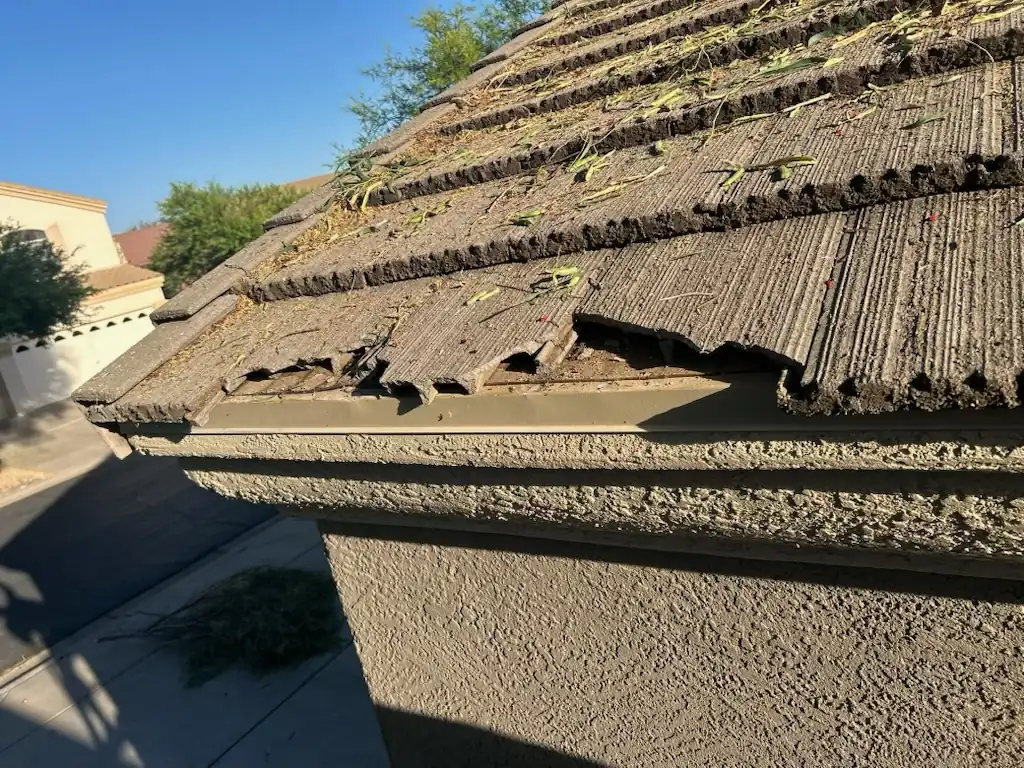
- A cracked, slipped, or missing tile, particularly after a monsoon microburst.
- Daylight visible through the roof deck from inside the attic.
- Dark streaking or staining down an exterior wall, often a sign of failed wall flashing or a scupper.
- Standing water on a flat roof more than 48 hours after rain.
- A soft or spongy spot underfoot on a foam or flat roof.
- Debris in valleys and drains after a haboob — dust packs into valleys and blocks drainage, backing water up under tile.
The Repairs We Do Most in Phoenix
- Pipe jack boot replacement. The single most common leak source on Arizona roofs. Every plumbing vent penetrating your roof has a rubber collar sealing it, and Phoenix UV destroys that rubber in eight to twelve years — it cracks, splits, and lets water straight into the attic. It’s an inexpensive repair. It’s also the thing homeowners most often pay for a full roof inspection to discover.
- Cracked and slipped tile repair. Foot traffic from other trades — HVAC techs, solar installers, satellite crews — cracks more Phoenix tile than weather does.
- Valley metal repair and replacement. Valleys carry the most water on any roof. Older galvanized valley metal rusts through, especially where dust and debris accumulate and hold moisture.
- Flashing repair at wall abutments and chimneys. Where the roof meets a vertical surface is where thermal movement is greatest and sealants fail first.
- Emergency and storm response. Tarping and temporary stabilization after monsoon damage. See storm damage roof repair.
- Flat roof and foam repair. Blisters, punctures, seam separation, and failures around HVAC curbs.
- Parapet wall and scupper repair. Common on flat-roofed Phoenix homes and a frequent source of leaks that present as interior wall staining rather than ceiling staining.
Our Repair Process
When a Repair Isn’t the Right Answer
We’d rather tell you this up front than take your money for a patch that fails in six months.
A repair is the wrong choice when the underlying system has reached end of life. If your tile underlayment is disintegrating across the whole roof, patching one leak just relocates the problem — the next one shows up somewhere else within a season or two. Signs you’re past the repair stage:
- Black felt fragments in your gutters and landscaping
- Multiple leaks in unrelated areas of the roof
- Repairs that keep failing in new locations
- A pre-2006 home with original underlayment
What Roof Repairs Cost in the Phoenix Area
- Pipe jack boot replacement: $250 – $600
- Individual tile replacement / minor tile repair: $350 – $900
- Valley metal repair: $600 – $2,000
- Flashing repair or replacement: $400 – $1,500
- Flat roof / foam patch repair: $400 – $1,800
- Emergency tarping: $250 – $600
Multiple repairs on the same visit cost less than the same items done separately — most of the cost in a small repair is getting a crew and equipment to your property.
Service Areas
Frequently Asked Questions
Most repair inspections are scheduled within one to two business days. Active leaks during monsoon season get priority, and we can often tarp the same day to stop damage while a permanent repair is scheduled.
Very common. Water enters at one point, travels along rafters or trusses, and drops somewhere else entirely. The stain location tells us where the water landed, not where it got in. Finding the entry point is most of the work.
It depends on cause. Sudden damage from a specific storm event is generally covered; wear-and-tear failure from age is generally not. We document what we find either way, and that documentation supports a claim if you file one.
Yes, in writing. Terms vary by the type of repair and the condition of the surrounding roof — we’ll be specific about what’s covered before you sign anything.
A repair holds when the surrounding system is sound and the failure is isolated. If the underlayment is at end of life, patching one leak just moves the problem — we’ll show you photos of the membrane condition so you can see which situation you’re in.
Yes. Panels in the work area need to be removed and reset, which adds cost and coordination. We’ll include that in the estimate rather than discovering it on the day.
Get a Free Roof Inspection
We’ll find the source, photograph it, and give you a written estimate. No charge, and no pitch for work you don’t need.