
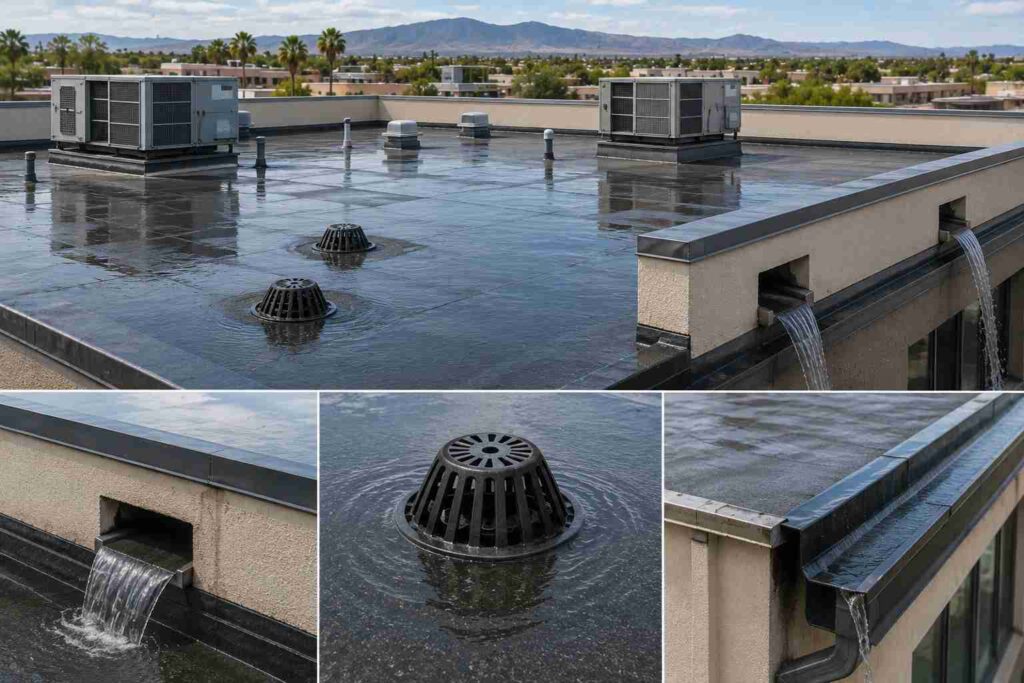
Flat roof drainage relies on three main systems: parapet walls with scuppers, interior drains, and edge drainage. Each moves water off the roof differently, and the right choice depends on building size, roof slope, and local rainfall patterns. Interior drains work best for large roofs with limited perimeter access.
Scuppers suit buildings with parapet walls that trap water. Poor drainage design causes ponding, leaks, and premature roof failure. Avid Roofing Solutions helps Arizona property owners choose and maintain the right drainage system for their commercial roof.
Commercial flat roofs face constant water management challenges. Arizona’s monsoon storms can drop heavy rain in short bursts. Without proper drainage, that water has nowhere productive to go.
Understanding Flat Roof Drainage Systems in Commercial Buildings
Flat roof drainage is not truly flat in most cases. Roofs are built with a slight slope, usually a quarter inch per foot, to guide water toward drainage points. This slope prevents standing water from sitting on the membrane for extended periods.
Three drainage methods dominate commercial construction. Interior drains pull water through the roof deck and into underground plumbing. Scuppers push water through openings in parapet walls. Edge drainage lets water flow directly off the roof perimeter into gutters below.
Each system has tradeoffs. Interior drains handle heavy rainfall efficiently but require regular cleaning to prevent clogs. Scuppers are simpler and cheaper but depend on properly sloped roof sections feeding each opening.
Building size often determines which system makes sense. Large warehouses and big box stores typically need interior drains since their roofs are too big for edge drainage alone. Smaller commercial buildings can often rely on scuppers or a hybrid approach.
Arizona’s roofing challenges add another layer of complexity. Intense summer heat softens roofing membranes, making them more vulnerable to pooling water damage. A well designed drainage system reduces this risk significantly across different commercial roofing systems used throughout the Valley.
How Parapet Walls Affect Roof Drainage Design?
Parapet walls sit at the edge of a flat roof and rise above the roofing surface. They create a visual barrier and often hide rooftop equipment from street view. These walls also trap water unless drainage is properly planned.
Scuppers are the most common solution for parapet wall drainage. These are rectangular openings cut through the base of the wall. Water flows through scuppers and either drops directly to the ground or into a connected downspout.
Scupper placement matters more than most building owners realize. Each scupper needs to sit at the lowest point of its drainage zone. Poor placement leaves pockets where water collects instead of draining away.
Overflow scuppers add a critical safety layer. These sit slightly higher than primary scuppers and only activate if the main drainage system becomes overwhelmed or blocked. Building codes in many Arizona municipalities require overflow protection on commercial structures.
Parapet walls without adequate scuppers create serious problems during monsoon season. Water can back up against the wall, adding weight stress and increasing leak risk at the wall to roof transition point.
Interior Roof Drains as an Alternative Drainage Solution
Interior roof drains work through openings built directly into the roof deck rather than the parapet wall. Water flows down through the drain body and into pipes that run through the building’s interior structure.
This system offers major advantages for large commercial roofs. Interior drains can be positioned anywhere across the roof surface, not just along the perimeter. This flexibility allows for better water management on complex roof shapes.
Strainer domes sit on top of each interior drain. These prevent leaves, debris, and roofing gravel from entering and clogging the pipe system below. Regular strainer cleaning is essential maintenance for any building using this drainage type.
Interior drains require more upfront installation cost than scuppers. The plumbing runs through the building structure, which adds complexity during construction. However, many property owners find the long term performance worth the investment for large flat roof commercial roofing systems.
Combining interior drains with scuppers is common on larger properties. Interior drains handle the bulk of water removal, while scuppers serve as overflow protection during unusually heavy storms.
Comparing the Three Main Flat Roof Drainage Options
Choosing between drainage systems depends on several site specific factors. Roof size plays the biggest role, since interior drains scale better for larger surfaces than edge drainage alone.
Local climate also shapes the decision. Areas with intense, sudden rainfall like Arizona’s monsoon season benefit from drainage systems that handle high water volume quickly. Undersized systems back up fast during these storms.
Budget constraints matter for many commercial property owners. Scuppers cost less to install than a full interior drain system. However, the total cost of ownership should factor in long term maintenance and potential water damage repairs.
Building design sometimes limits the options available. A structure without existing parapet walls cannot easily add scuppers without significant construction work. Interior drains work independently of parapet wall presence, offering more design flexibility in these cases.
Professional guidance helps property owners avoid costly mistakes. A commercial roofing contractor can evaluate roof slope, square footage, and local rainfall data to recommend the most effective drainage layout for your specific building.
Common Drainage Problems on Arizona Commercial Roofs
Ponding water remains the most frequent drainage complaint on flat commercial roofs. Water that sits for more than 48 hours accelerates membrane breakdown and increases the risk of interior leaks.
Clogged drains cause backup during storms even when the underlying system was designed correctly. Debris, dust, and roofing gravel build up over time, especially on roofs that go long periods without inspection.
Improper slope during original construction creates permanent low spots. These areas collect water regardless of how well the drains themselves function. Fixing slope issues often requires tapered insulation or partial roof reconstruction.
Storm damage can also compromise drainage systems suddenly. High winds during Arizona monsoons sometimes dislodge scupper covers or damage drain strainers, and knowing when to schedule storm damage roof repair after a major weather event protects your building from further water intrusion.
Routine inspections catch these issues early. A thorough roof inspection should always include a check of every drain, scupper, and downspout across the property.
Choosing the Right Drainage System for Your Building
Every commercial property has unique drainage needs based on size, shape, and location. Business owners weighing their options should consider both immediate installation costs and long term performance under Arizona’s demanding climate.
Understanding the broader landscape of commercial roofing systems helps property owners see how drainage design connects to overall roof material and structure decisions. Drainage cannot be planned in isolation from the rest of the roofing system.
Many Phoenix business owners have questions before committing to a drainage upgrade or new roof installation. Reviewing common commercial roofing questions can clarify what to expect during the planning and installation process.
Single ply membrane roofs also interact closely with drainage design choices. Learning more about commercial single ply roofing options gives property owners a clearer picture of how membrane type affects water flow and drainage performance over time.
Maintenance Habits That Extend Drainage System Life
Regular cleaning keeps every drainage type performing as designed. Debris buildup is the leading cause of blocked scuppers and clogged interior drains across Arizona commercial properties.
Seasonal timing matters for maintenance scheduling. Cleaning drains before monsoon season begins reduces the risk of overwhelmed systems during the year’s heaviest rainfall.
Roofing gravel can migrate toward drain openings on ballasted roof systems. This gravel buildup restricts water flow even when the underlying drain hardware works correctly. Periodic sweeping around drain areas prevents this slow accumulation.
Property managers should also watch for standing water after any rain event. Water that remains visible more than two days after a storm signals a drainage problem that needs professional attention.
Documenting drainage inspections creates a useful maintenance history. This record helps identify recurring problem areas and supports insurance claims if storm damage does occur.
Final Thoughts on Commercial Flat Roof Drainage
Flat roof drainage is not a detail to overlook during design or renovation. Parapet walls with scuppers, interior drains, and combination systems each offer distinct advantages depending on your building’s size and local climate demands.
Arizona’s intense heat and sudden monsoon storms make proper drainage even more critical than in milder climates. Ponding water and clogged systems lead to expensive repairs if left unaddressed for too long.
If your commercial building shows signs of poor drainage such as ponding water, interior leaks, or overflowing scuppers, do not wait for the problem to worsen. A professional evaluation now can identify the right fix and protect your investment for years to come.
Frequently Asked Questions
What is the best drainage system for a flat commercial roof?
The best system depends on roof size and layout. Interior drains work well for large roofs, while scuppers suit smaller buildings with parapet walls.
How do scuppers work on a flat roof?
Scuppers are openings built into parapet walls that let water flow off the roof surface, either directly to the ground or into a downspout system.
Why does water pool on my flat roof?
Ponding water usually results from improper slope, clogged drains, or aging roofing material that has settled unevenly over time.
How often should commercial roof drains be inspected?
Most roofing professionals recommend inspecting drains, scuppers, and downspouts at least twice a year, plus after any major storm event.
Can interior drains and scuppers be used together?
Yes. Many large commercial roofs combine interior drains for primary water removal with scuppers as backup overflow protection during heavy storms.