
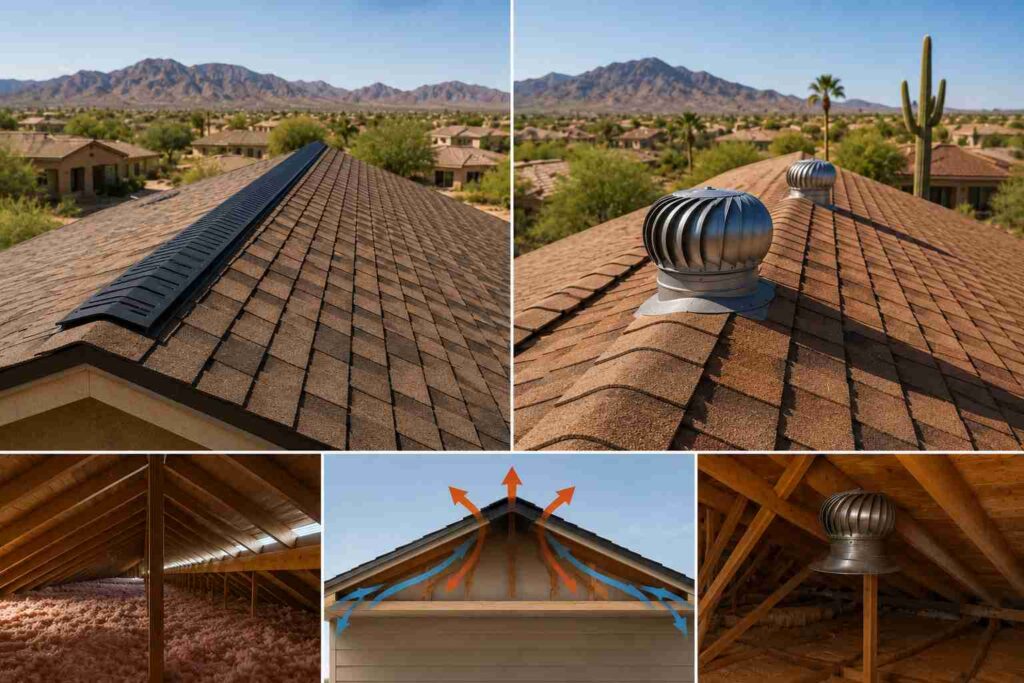
Ridge vents work better than turbine vents for most Arizona homes because they provide consistent airflow without moving parts that wear out in extreme heat. Ridge vents run along the roof peak and use natural convection to pull hot air out continuously. Turbine vents spin with wind movement, which makes them less reliable during Arizona’s calm summer days.
Homeowners choosing attic ventilation should weigh reliability, maintenance, and how each system performs during the hottest months. Avid Roofing Solutions helps Arizona homeowners select ventilation systems built for desert conditions.
Attic ventilation plays a bigger role in home comfort than most homeowners realize. A poorly ventilated attic can reach temperatures well above 150 degrees during Arizona summers. That trapped heat radiates into living spaces and drives up cooling costs significantly.
Ridge Vents vs. Turbine Vents: Which Works Best for Desert Attics?
Both ridge vents and turbine vents aim to remove hot air from the attic space. The way each system accomplishes this differs significantly, which affects performance in Arizona’s specific climate conditions.
Ridge vents install along the highest point of the roofline. They rely on the natural principle that hot air rises, creating continuous airflow without any mechanical parts or moving components involved.
Turbine vents, sometimes called whirlybirds, use a spinning metal design that pulls air out as wind spins the turbine blades. Faster wind speeds create stronger suction, while calm conditions reduce their effectiveness considerably.
Arizona summers often bring long stretches of still, hot air with minimal wind. This climate pattern favors ridge vents, which continue working through natural convection regardless of wind conditions outside.
Understanding how proper attic airflow protects your home connects directly to why roof ventilation matters so much for Arizona properties facing intense and prolonged summer heat.
How Attic Ventilation Affects Arizona Home Performance
Poor attic ventilation creates a chain reaction of problems throughout the home. Trapped heat forces air conditioning systems to work harder, increasing energy bills during the months homeowners need cooling most.
Excess attic heat also shortens roofing material lifespan. Shingles, underlayment, and even tile roofing systems degrade faster when exposed to consistently elevated attic temperatures over many years.
Moisture management is another important function of attic ventilation. Even in Arizona’s dry climate, condensation can form inside attics during cooler months, and proper airflow prevents this moisture from causing wood rot or mold growth.
Balanced ventilation requires both intake and exhaust components working together. Ridge vents and turbine vents both serve as exhaust points, but neither works effectively without adequate soffit vents providing fresh air intake at the roof’s lower edge.
Homeowners planning a residential roofing project should discuss ventilation upgrades alongside any roofing material changes to maximize long term performance and energy efficiency.
Attic Temperature Reduction as a Key Ventilation Benefit
Attic temperature reduction stands out as the primary benefit homeowners notice after upgrading ventilation. A properly ventilated attic can run 20 to 30 degrees cooler than an inadequately vented space during peak summer heat.
This temperature difference directly impacts energy consumption. Cooler attics mean less heat transfer into living spaces below, which reduces the workload on air conditioning systems throughout the hottest parts of the year.
Ridge vents excel at maintaining consistent temperature reduction because they operate continuously. Turbine vents can achieve similar results on windy days but often underperform during Arizona’s frequent calm, still afternoons.
Homeowners concerned about UV exposure should also note that reduced attic temperatures help protect roofing materials from the compounding effects of UV roof damage that intensifies when heat builds up beneath the roofing surface.
Maintenance Differences Between Ridge Vents and Turbine Vents
Ridge vents require minimal maintenance once installed correctly. Without moving parts, there is little that can wear out or break down over the vent’s lifespan.
Turbine vents include bearings and moving components that eventually wear out. Dust and debris common in Arizona’s desert environment can accelerate this wear, sometimes causing turbines to squeak or stop spinning entirely.
Regular roof inspections help catch ventilation problems before they cause bigger issues. A thorough roof inspection should always include a check of ventilation components alongside general roof condition assessment.
Turbine vents also present more opportunities for water intrusion if bearings fail or the unit becomes damaged during high wind events. Ridge vents, when properly installed with quality baffles, offer better resistance to wind driven rain during monsoon storms.
Installation Considerations for Arizona Homes
Roof design affects which ventilation system works best for a specific home. Homes with long, straight ridgelines are ideal candidates for ridge vent installation since the vent runs continuously along the peak.
Complex rooflines with multiple ridges, valleys, or dormers sometimes benefit from a combination approach. Some homeowners use ridge vents on primary roof sections while adding turbine vents in areas where ridge coverage is limited.
Proper installation matters significantly for either system. Improperly installed ridge vents can allow water infiltration, while incorrectly placed turbine vents may create dead zones where airflow remains stagnant despite the vent’s presence.
Existing roof repair needs should factor into ventilation planning as well. If your roof already needs attention, addressing roof repair issues alongside a ventilation upgrade often makes sense from both a cost and scheduling perspective.
Cost Comparison and Long Term Value
Ridge vents typically cost more upfront due to the continuous installation along the roofline and the labor involved in proper integration with roofing materials. However, their durability often offsets this cost over time.
Turbine vents cost less per unit and install faster in many cases. This lower upfront cost appeals to homeowners working within a tighter renovation budget for attic ventilation improvements.
Long term value favors ridge vents for most Arizona homes. Fewer replacement needs and more consistent performance translate into better value over a 15 to 20 year ownership period.
Energy savings should factor into any cost comparison. Homes with effective, consistent ventilation typically see lower cooling costs throughout summer, which can offset the higher initial investment in ridge vent systems over several years.
Protecting Roofing Materials Through Better Ventilation
Ventilation and roofing material lifespan are closely connected topics that many homeowners overlook. Reduced attic heat protects underlayment from premature breakdown, which extends the overall service life of the roofing system above it.
Tile roofing systems benefit significantly from proper ventilation since trapped heat beneath tiles can accelerate underlayment failure. Understanding how tile roof underlayment interacts with attic temperature helps homeowners make informed decisions about ventilation upgrades.
Homeowners investing in a full roof replacement have an ideal opportunity to upgrade ventilation at the same time. Combining these projects often reduces overall labor costs compared to tackling each improvement separately.
Signs Your Attic Ventilation Needs an Upgrade
Certain warning signs suggest your current ventilation system is not keeping up with Arizona’s demands. Recognizing these signs early can prevent more costly damage down the line.
Unusually high summer energy bills often point to a ventilation problem rather than an air conditioning issue alone. If your attic runs hotter than expected, your cooling system works harder just to maintain a comfortable indoor temperature.
Visible warping or curling on shingles near the roof peak can also signal excess attic heat. This damage pattern frequently appears first in areas where hot air becomes trapped due to inadequate exhaust ventilation.
Musty odors or visible moisture stains in the attic, though less common in Arizona’s dry climate, still indicate a ventilation imbalance that should be addressed before it leads to structural wood damage.
A qualified roofing professional can evaluate your current ventilation setup and recommend whether ridge vents, turbine vents, or a combination approach best addresses the specific issues your home is experiencing.
Choosing the Right Ventilation System for Your Home
Ridge vents and turbine vents both serve the same basic purpose but perform differently in Arizona’s specific climate conditions. Ridge vents offer more consistent performance during calm, hot summer days when natural airflow matters most.
Turbine vents can still work well in certain situations, particularly on homes with complex rooflines or in areas that experience more consistent wind patterns throughout the year.
The right choice depends on your roof design, budget, and long term maintenance preferences. A professional assessment can help determine which system, or combination of systems, will perform best for your specific home.
If your attic feels excessively hot or your energy bills keep climbing, do not wait to address the underlying ventilation issue. Reach out today to schedule an inspection and get expert guidance on the right ventilation solution for your home.
Frequently Asked Questions
Are ridge vents better than turbine vents for Arizona homes?
Ridge vents generally perform better in Arizona because they work through natural convection rather than relying on wind, which makes them more reliable during calm summer days.
Do turbine vents work without wind?
Turbine vents lose most of their effectiveness without wind since they depend on spinning motion to pull air out of the attic space.
How much can proper ventilation lower attic temperature?
A well ventilated attic can run 20 to 30 degrees cooler than a poorly ventilated one during peak summer heat, reducing strain on cooling systems.
Can I combine ridge vents and turbine vents on the same roof?
Yes. Some homes use ridge vents as the primary system while adding turbine vents in areas where ridge coverage is limited due to roof design.
How often should attic ventilation be inspected?
Most roofing professionals recommend checking ventilation components during routine roof inspections at least once or twice a year.