
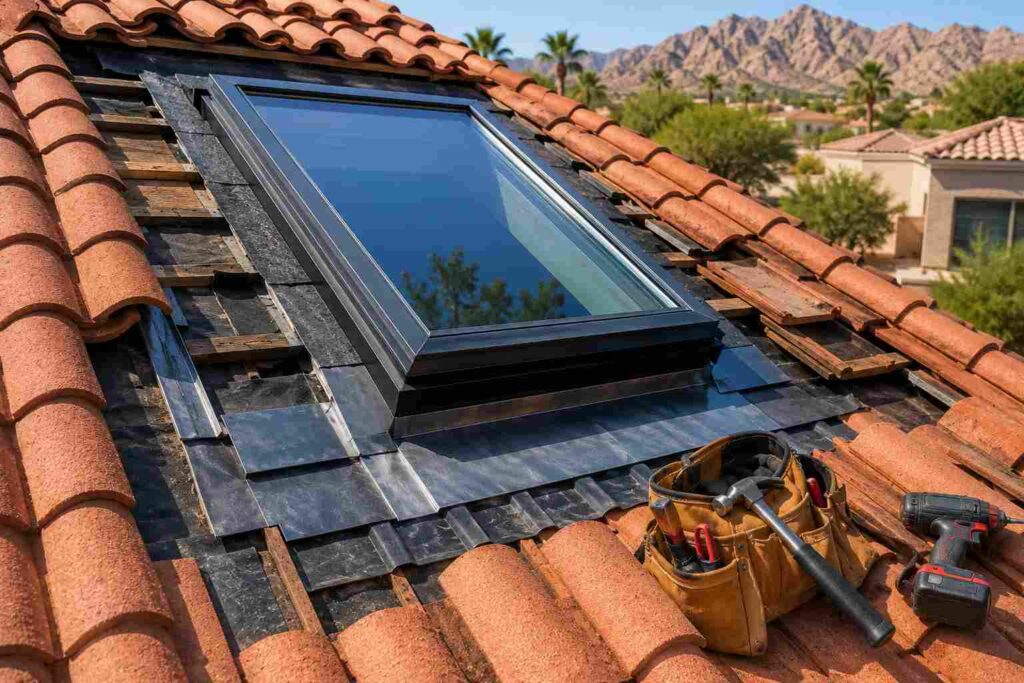
Skylight replacement and flashing repair should always happen together during a roof replacement to prevent future leaks. Old skylight seals and worn flashing are common leak sources, even on roofs with brand new shingles or tiles. Replacing an aging skylight while the roof is already open avoids costly follow up repairs later. Proper flashing installation around any skylight is just as important as the skylight unit itself. Avid Roofing Solutions helps Arizona homeowners coordinate skylight and flashing work during full roof replacement projects.
A roof replacement is the ideal time to address every weak point on your roof, not just the roofing material itself. Skylights and their surrounding flashing often get overlooked, yet they remain one of the most common sources of roof leaks.
Skylight Replacement & Flashing Repair During Roof Replacement Skylights create an opening in the roof deck, which means they always carry higher leak risk than the surrounding roofing surface. Proper flashing seals this opening and directs water away from the vulnerable transition point.
Many homeowners assume their skylight is fine simply because it has not leaked yet. Seals and flashing degrade gradually, often failing right when a homeowner least expects it during a heavy storm.
Replacing a skylight during a full roof replacement makes practical sense. The roofing material is already removed around the skylight area, which reduces both labor costs and the risk of damaging new roofing material during a separate future project.
Flashing repair without skylight replacement sometimes works for newer skylights in good condition. However, skylights older than 15 to 20 years often benefit from full replacement rather than repeated flashing repairs alone.
Homeowners planning a residential roofing project should discuss every skylight on their home with their contractor before work begins, not after problems appear.
Understanding Roof Flashing Leaks Around Skylights
Roof flashing leaks around skylights typically develop slowly before becoming noticeable indoors. Small cracks in sealant allow moisture intrusion long before visible ceiling stains appear inside the home.
Step flashing is the most common flashing style used around skylight installations. This method layers individual flashing pieces with each row of roofing material, creating overlapping protection against water infiltration.
Continuous flashing, sometimes called apron flashing, offers an alternative approach for certain skylight designs. This single piece wraps around the skylight base, though it generally provides less flexibility than step flashing on sloped roofs.
Sealant breakdown accelerates in Arizona’s intense sun exposure. UV rays degrade rubber and caulk based sealants faster than in milder climates, making periodic flashing inspection especially important for desert homes.
Storm damage can also compromise flashing suddenly rather than gradually. High winds during monsoon season sometimes lift flashing edges, and knowing when to schedule storm damage roof repair after severe weather protects your home from sudden water intrusion around skylights.
Step Flashing as a Key Entity in Skylight Waterproofing
Step flashing deserves special attention because it directly determines how well water sheds away from a skylight opening. Each metal piece must overlap correctly with the roofing material above and below it.
Improperly installed step flashing creates gaps where water can work its way beneath roofing material during heavy rain. This installation error often goes unnoticed until interior damage forces a closer inspection.
Quality step flashing installation requires experience with the specific roofing material being used. Tile roofs, shingle roofs, and metal roofs each require slightly different flashing techniques to achieve a watertight seal.
Homeowners with tile roofing should understand how flashing interacts with their tile roof underlayment system, since improper integration between these components is a frequent cause of skylight related leaks.
Signs Your Skylight Needs Replacement or Flashing Repair
Interior water stains near a skylight are the clearest warning sign of a flashing or seal failure. Even small, faint stains deserve prompt investigation before they develop into larger structural issues.
Visible daylight gaps around the skylight frame indicate a serious sealing problem. This issue allows both water and air infiltration, affecting both roof integrity and home energy efficiency simultaneously.
Fogging or condensation between skylight glass panes suggests the unit’s seal has failed. This problem typically requires full skylight replacement rather than a simple flashing repair.
Cracked or discolored flashing visible from ground level or during a roof walk often signals it is time for professional evaluation. Learning to recognize signs of roof underlayment failure nearby can also help homeowners catch related issues before they worsen around skylight installations.
Skylight Placement and Roof Design Considerations
Skylight location on the roof affects both performance and leak risk. Skylights positioned near roof valleys or areas with heavy water flow face greater exposure to standing water and debris buildup.
Homeowners planning new skylight installation during a roof replacement should discuss placement options with their contractor. Moving a skylight to a more favorable roof location sometimes reduces long term maintenance needs significantly.
Roof pitch also influences flashing design around each skylight. Steeper roofs shed water faster, which can reduce the burden placed on flashing compared to lower slope sections where water lingers longer.
Multiple skylights on a single roof require coordinated flashing planning. Each unit needs its own properly integrated flashing system, and rushing this work across several skylights increases the chance of installation errors.
The Skylight Replacement Process During a Roof Project
Skylight replacement typically begins with careful removal of the old unit and surrounding flashing. Contractors inspect the roof deck beneath for any water damage that may have developed unnoticed over time.
Damaged decking must be repaired before new flashing installation begins. Installing a new skylight over compromised decking undermines the entire waterproofing system, regardless of flashing quality.
New flashing installation follows manufacturer specifications for the specific skylight model being installed. Most modern skylights include detailed flashing kits designed to work with common roofing materials.
Final sealing and integration with the surrounding roofing material completes the process. This step ensures the skylight becomes a seamless, watertight part of the overall roofing system rather than a vulnerable weak point.
Cost Considerations for Skylight and Flashing Work
Combining skylight replacement with a full roof replacement typically costs less than tackling each project separately. Shared labor and reduced material waste both contribute to this savings.
Flashing repair alone costs significantly less than full skylight replacement, making it a reasonable option for newer skylights showing only minor flashing issues rather than unit failure.
Delaying necessary skylight work often increases total project cost. Water damage to roof decking or interior ceilings from a failed skylight can turn a moderate repair into a much larger restoration project.
A thorough roof inspection before your roof replacement begins helps identify every skylight and flashing issue upfront, allowing for accurate project planning and cost estimates.
Choosing a Contractor for Skylight and Flashing Work
Not every roofing contractor has extensive skylight installation experience. Ask potential contractors specifically about their skylight replacement history and the flashing techniques they use for different roofing materials.
Manufacturer certification matters for warranty purposes. Many skylight manufacturers require certified installation to honor their product warranty, making contractor credentials an important factor in your decision.
References from previous skylight projects can reveal a contractor’s true expertise beyond general roofing experience. Ask to see examples of completed skylight installations similar to your home’s roofing material and skylight style.
Clear communication about timeline and process helps set proper expectations. A qualified contractor should explain exactly how skylight replacement integrates into your broader roof replacement schedule.
Protecting Your Home With Proper Skylight Care
Skylight replacement and flashing repair are essential considerations during any roof replacement project. Addressing these components alongside your new roofing material prevents future leaks and avoids costly separate repair projects down the road.
Arizona’s intense sun and monsoon storms make quality flashing and properly sealed skylights especially important for long term home protection. Small oversights in this area often lead to significant water damage over time.
If your upcoming roof replacement includes one or more skylights, do not leave this critical detail as an afterthought. Reach out today to discuss skylight and flashing options as part of your complete roofing project.
Frequently Asked Questions
Should I replace my skylight during a roof replacement?
Yes, especially if your skylight is more than 15 years old. Replacing it while the roof is already open saves on labor and prevents future leaks.
What causes leaks around skylights?
Most skylight leaks result from failed flashing, degraded sealant, or improper installation rather than problems with the skylight glass itself.
How much does skylight flashing repair cost?
Flashing repair costs vary by roof type and access difficulty, but it generally costs far less than full skylight replacement for units in otherwise good condition.
Can I repair flashing without replacing the skylight?
Yes, if the skylight unit itself is in good condition. Flashing repair alone can resolve leaks caused by seal or flashing failure around a functional skylight.
How do I know if my skylight flashing has failed?
Watch for interior water stains, visible daylight gaps around the frame, or cracked and discolored flashing visible from a roof inspection.