
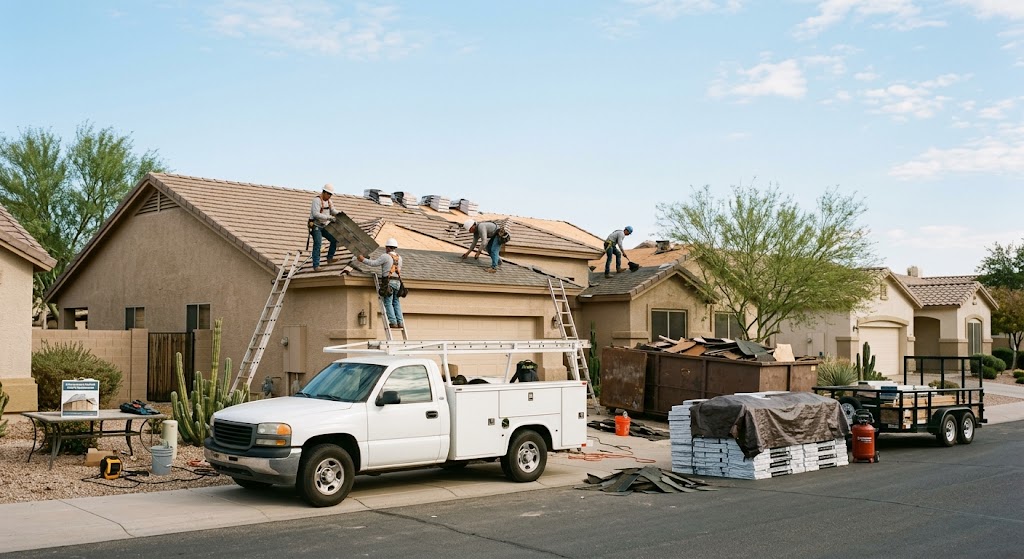
The best time of year to replace your roof in Arizona is during the fall or early spring, when temperatures are mild and monsoon season has passed. Roofing materials like asphalt shingles and adhesives perform better when installed in moderate heat rather than during summer highs above 110 degrees. Avid Roofing Solutions recommends scheduling replacements between October and April for the smoothest installation and the strongest long term results.
Timing matters more in Arizona than in most states because of the extreme heat and seasonal monsoon storms. A roof replacement scheduled at the wrong time can lead to material problems, delayed crews, and unnecessary stress for homeowners.
Why the Best Time of Year to Replace Your Roof in Arizona Matters?
Summer heat in Phoenix and Tucson often exceeds 110 degrees, which softens asphalt shingles and makes them harder to install correctly. Extreme heat can also affect adhesive bonding, leading to shingles that lift or shift sooner than expected.
Monsoon season runs from June through September and brings sudden wind, hail, and heavy rain. Scheduling a replacement during this window risks work stoppages and exposed decking during a surprise storm. Waiting until the season ends reduces this risk significantly.
Fall and early spring offer milder daytime temperatures, which allows roofing crews to work full days without heat related delays. Materials also cure and seal more reliably in these cooler conditions, extending the lifespan of your new roof.
Roofing crews also experience less scheduling backlog outside of the extreme heat and storm windows, meaning your project is more likely to start on time. Homeowners who plan ahead avoid the rush that often hits right after monsoon season ends.
Signs You Should Not Wait for the Ideal Season
Sometimes a roof cannot wait for perfect timing. If you notice curling shingles, missing tiles, or uv roof damage that has worn down protective granules, replacement should happen sooner rather than later.
Active leaks, sagging areas, or signs of underlayment failure mean your roof may already be compromising your home’s structure. In these cases, a professional replacement should not be delayed for seasonal convenience.
If a recent storm has already caused visible damage, contact a storm damage repair team immediately rather than waiting months for the ideal installation window.
Planning Your Replacement Around Arizona’s Climate
Start planning at least six to eight weeks before your target installation date. Roofing companies often book quickly during the fall rush when many homeowners schedule replacements at once.
Ask your contractor about expected roof replacement cost early in the process so you can budget accurately and avoid surprises once the project begins. Costs vary depending on material choice, roof size, and the complexity of your home’s structure.
Consider the expected lifespan of your current roofing material. Asphalt shingles typically last twenty to thirty years in Arizona conditions, so understanding your shingle roof lifespan helps you plan replacement well before a full failure occurs.
Ask about financing options if the full cost feels overwhelming upfront. Many Arizona homeowners spread payments over time rather than paying the entire project cost at once.
How Weather Affects Different Roofing Materials?
Asphalt shingles are the most sensitive to extreme heat since the adhesive strips beneath each shingle need moderate temperatures to bond correctly. Installing shingles during a summer heatwave can weaken this seal over time.
Clay and concrete tile handle heat better than shingles, but installation crews still work more efficiently in cooler months. Tile roofing also requires careful handling, and cooler temperatures reduce the risk of cracking during transport and placement.
Foam roofing applications depend heavily on temperature and humidity levels during the spray and coating process. Extreme heat can cause the foam to cure unevenly, while monsoon humidity can trap moisture beneath the surface if applied at the wrong time.
Preparing Your Home Before Replacement Day
Clear driveway and yard access so delivery trucks and dumpsters can reach your property easily. Roofing crews need room to stage materials and remove old roofing debris throughout the project.
Move vehicles away from the home and cover patio furniture or pool equipment to protect against falling debris during tear off. A little preparation on your end helps the project move faster and more safely.
Let your neighbors know about the upcoming project, especially if you live in a shared driveway community or a neighborhood with close set homes. A brief conversation avoids confusion about noise or parked work vehicles.
Choosing the Right Contractor for Seasonal Timing
Not every roofing company plans installations around Arizona’s climate patterns. Ask potential contractors directly how they handle scheduling during peak heat months and how they prepare for monsoon season disruptions.
A knowledgeable residential roofing team should be able to explain material behavior in extreme heat and recommend the safest installation window for your specific roof type and location.
Budgeting for a Seasonal Roof Replacement
Set aside time to compare quotes from multiple contractors before your target season arrives. Pricing can shift slightly depending on demand, so getting quotes early gives you a more accurate budget picture.
Factor in potential add on costs such as decking repair or upgraded ventilation, which are sometimes discovered once old roofing material is removed. Building a small buffer into your budget helps avoid stress if these issues appear.
Review your homeowners insurance policy to understand what portion of a replacement might be covered, especially if aging or storm damage contributed to the need for a new roof.
Common Mistakes Homeowners Make With Timing
Waiting until a roof fails completely before scheduling a replacement often forces homeowners into whatever season is available rather than the ideal one. Planning ahead based on your roof’s age and condition avoids this scramble.
Assuming all roofing materials behave the same in Arizona heat is another common mistake. Each material reacts differently to temperature and humidity, so timing decisions should factor in the specific system you plan to install.
Ignoring early warning signs such as granule loss, curling edges, or minor leaks often turns a manageable spring project into an emergency summer repair. Regular seasonal inspections catch these issues before they force your hand.
Some homeowners also delay replacement hoping prices will drop, but material and labor costs in Arizona tend to rise steadily each year. Locking in a project during the ideal season often saves money compared to waiting indefinitely.
Long Term Benefits of Proper Seasonal Planning
Replacing your roof during the recommended window often extends the overall lifespan of the new system, since materials cure and seal under more favorable conditions. This can mean fewer repairs and a longer stretch before your next replacement.
Homeowners who plan seasonally also tend to secure better contractor availability, since top rated companies book quickly once the fall rush begins. Early planning gives you more flexibility in choosing your preferred crew and materials.
Proper timing also reduces the chance of weather related delays mid project, keeping your home protected and your household routine less disrupted throughout the replacement process.
Timing your roof replacement correctly protects both your investment and your home’s structural integrity. Fall and early spring remain the strongest windows for most Arizona homeowners, though active damage should never wait for ideal weather. When you are ready to plan your project, contact us for a free inspection and a clear timeline built around your home and your budget.
Working Around Your Household Schedule
Roof replacement projects usually run for several days, which can affect noise levels and driveway access at your home. Planning around school schedules or work from home routines can make the experience less disruptive.
Ask your contractor how they handle pets during the project, since open garage doors and constant crew activity can create stress for animals unfamiliar with the noise and movement.
If you work from home, consider scheduling the loudest phase of the project, typically tear off, during a day when you can step out or plan quieter tasks that do not require concentration.
Frequently Asked Questions
What month is best to replace a roof in Arizona?
October through April offers the mildest temperatures, avoiding both extreme summer heat and monsoon storm disruptions.
Can a roof be replaced during monsoon season?
It is possible but riskier due to sudden storms. Most contractors recommend waiting until monsoon season ends in late September.
How long does a roof replacement take in Arizona?
Most residential roof replacements take between two and five days depending on roof size and material type.
Does extreme heat damage new roofing materials during installation?
Yes, high heat can affect shingle adhesion and worker safety, which is why cooler months are generally preferred.
Should I replace my roof before or after a storm?
If your roof already shows storm damage, replacement should happen as soon as possible rather than waiting for seasonal timing.
Does roofing material availability change by season in Arizona?
Popular materials can face short waits during the fall rush, so scheduling early in the season helps secure your preferred product without delay.
How far in advance should I book a roof replacement?
Most homeowners should reach out six to eight weeks before their target installation window to secure a spot with a reputable contractor.