
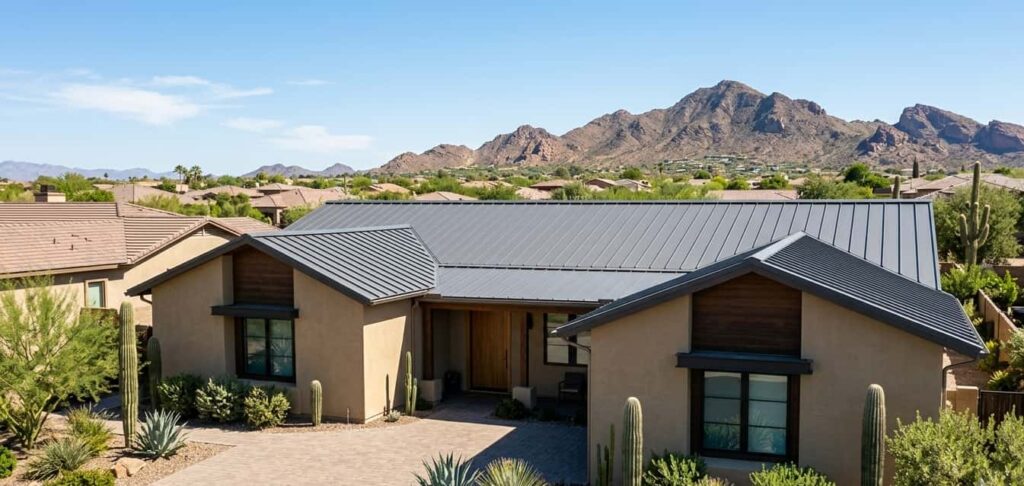
Choosing between tile and shingle is one of the biggest decisions Phoenix homeowners face when replacing a roof. The tile vs shingle roof cost in Phoenix comparison looks different depending on whether you focus on upfront price or cost over the full life of the roof.
Avid Roofing Solutions installs both materials across the valley and sees homeowners weigh the same tradeoffs again and again: lower initial price against long-term durability in extreme desert heat and intense summer sun.
Tile vs Shingle Roof Cost in Phoenix: Upfront Pricing
Asphalt shingle roofs cost less to install, typically running four to seven dollars per square foot installed. Tile roofing runs significantly higher, often nine to eighteen dollars per square foot, because the tiles themselves cost more and take longer to install correctly across a full roof surface.
For a standard 2,000 square foot roof, that difference can mean a gap of six thousand dollars or more between the two materials at the time of installation, which is often the deciding factor for homeowners working with a tighter renovation budget.
This question comes up just as often for homeowners exploring Chandler roofing services or Scottsdale roofing services as it does for those in central Phoenix, since the climate and cost drivers stay largely the same across the valley.
What Drives Tile Roofing Cost So High?
Tile roofing cost reflects both material weight and structural requirements. Heavier tile often requires reinforced framing, and installation takes longer since each tile is set and fastened individually rather than nailed down in fast, overlapping rows the way shingles are.
The type of tile also affects price. Concrete tile sits at a lower price point than clay tile, while specialty profiles and custom colors push cost higher still, especially on homes where matching an existing roofline or a homeowners association requirement limits material choice.
Long-Term Value: Lifespan and Maintenance
Shingle roofing cost looks better upfront but shingles typically last fifteen to twenty years in the Arizona climate before needing replacement. Tile roofing regularly lasts forty to fifty years or longer, which changes the math considerably when you calculate cost per year of service rather than cost on installation day alone.
Maintenance costs also differ. Shingles are prone to curling and granule loss under intense UV exposure, while tile holds up well against sun damage but can crack from foot traffic or falling debris during monsoon storms, which makes occasional professional maintenance visits worthwhile for tile roof owners.
Over a thirty year window, a shingle roof owner may pay for one or even two full replacements, while a tile roof owner often pays for a single installation plus occasional tile replacement and flashing maintenance, which narrows the long-term cost gap between the two materials considerably.
Energy Efficiency and Cooling Costs
Tile roofing allows better airflow beneath the tiles, which helps reduce attic heat buildup during Phoenix summers. Shingle roofs absorb more heat directly, often pushing cooling costs slightly higher over the course of a hot season, especially in homes with older or undersized attic ventilation systems.
Lighter colored tile and reflective shingle products can narrow this gap somewhat, since reflective granules and coatings reduce how much heat any roofing material absorbs from direct summer sun. Homeowners focused heavily on energy savings should ask contractors about reflective or cool-roof rated options within each material category.
Which Material Fits Your Situation?
If you plan to sell within the next five to seven years, shingle roofing cost savings upfront may make more financial sense, since you likely will not stay long enough to benefit from tile’s extended lifespan or recover the higher installation cost through years of reduced maintenance.
If you plan to stay in your home long term, tile’s higher upfront cost often pays for itself through fewer replacements and lower cooling bills, especially on larger commercial roofing projects where energy savings scale with square footage across an entire building.
Home style also plays a role. Southwestern and Spanish-influenced architecture common across much of the Phoenix area often calls for tile to match the aesthetic, while more contemporary home styles frequently pair well with any material choice depending on personal preference and neighborhood standards.
Storm Resistance Comparison
Both materials can withstand Arizona monsoon storms, but tile handles high wind and hail slightly better when properly installed, while shingles are easier and cheaper to repair after storm damage roof repair is needed following a rough storm season.
Hail impact tends to dent or bruise shingles without always breaking the surface, while a hard enough impact can crack individual tiles that then need replacement. Both types of damage are usually repairable without a full roof replacement, provided the underlying decking and underlayment remain intact.
Regional Climate Factors Within Arizona
Homeowners at higher elevations, such as those closer to Prescott or the higher desert areas north of the valley, sometimes deal with occasional freeze and thaw cycles that central Phoenix rarely sees. Both tile and shingle handle this reasonably well, though tile’s density can offer a slight edge in areas with more temperature swings.
Homes in the hottest, lowest elevation parts of the valley see the most extreme summer roof surface temperatures, which is where the airflow benefits of tile roofing tend to matter most for indoor comfort and cooling costs during the peak of summer.
Insurance and Financing Considerations
Insurance premiums can differ slightly based on roof material, since some insurers view tile as more storm resistant and offer a modest discount as a result. It is worth asking your insurance provider directly how your choice of material might affect your premium before finalizing a decision.
Financing options exist for both materials, though the larger upfront cost of tile roofing means financing plays a bigger role in making that choice accessible for many households. Spreading a higher material cost over several years through a manageable payment plan often changes which option feels realistic for a given budget.
Underlayment and Flashing Cost Considerations
Regardless of which surface material you choose, the underlayment and flashing beneath it play a major role in how well the roof performs over time. Premium synthetic underlayment adds a modest cost to tile or shingle projects alike but provides a stronger secondary barrier against leaks during heavy monsoon rain.
Flashing quality around chimneys, skylights, and roof valleys matters just as much as the surface material itself, since most leaks originate at these transition points rather than across the flat field of tiles or shingles. Investing in quality flashing work is one of the best ways to protect your material choice long term.
Getting Quotes for Both Materials
The most reliable way to make this decision is requesting itemized quotes for both tile and shingle on your specific roof, rather than relying on general price-per-square-foot averages found online. Your actual roofline, pitch, and any structural work needed can shift the comparison meaningfully in more than one direction.
A side-by-side quote also makes it easier to see exactly where the price difference comes from, whether that is material cost, labor hours, or additional framing work. This clarity helps you make a decision based on your specific home rather than a generic estimate that may not apply to your situation.
Repair Frequency and Long-Term Costs
Shingle roofs generally need more frequent minor repairs as granules wear away and edges begin to curl, particularly in the years leading up to full replacement. These repairs are individually inexpensive but can add up over the life of the roof if left unaddressed for too long.
Tile roofs need fewer repairs overall, but individual tile replacement can cost more per repair visit since matching existing tile color and profile sometimes requires sourcing from a specific manufacturer. Keeping a few spare tiles from the original installation on hand can reduce this cost significantly if repairs are ever needed.
Installation Timeline Differences
Project length is another practical factor separating the two materials. A typical shingle roof replacement on an average single-family home wraps up in two to three days, while a comparable tile roof project often takes four to six days given the slower, tile-by-tile installation process.
Homeowners with tight scheduling needs, such as an upcoming home sale or a family event, sometimes factor this timeline difference into their material decision just as heavily as price. A faster shingle installation can matter more than long-term savings if a deadline is approaching quickly.
Weather can also extend both timelines. Monsoon season storms occasionally pause work for a day or more regardless of material, so scheduling a replacement outside of peak storm months tends to keep both shingle and tile projects moving on schedule.
Curb Appeal and Resale Considerations
Tile roofing carries a certain prestige in much of the Phoenix real estate market, particularly in neighborhoods where Spanish and Southwestern architectural styles dominate. Buyers touring homes in these areas sometimes expect tile as a baseline feature, which can make a shingle roof feel slightly out of place stylistically.
That said, well-maintained shingle roofs sell perfectly well in neighborhoods where architectural style leans more contemporary or where tile is less common overall. Local buyer expectations matter more than any universal rule about which material appraises higher across the entire valley.
A recent roof replacement, properly documented, regardless of material, tends to matter more to buyers than the specific material itself. Fresh installation with a clear warranty often outweighs a slight stylistic preference during a home sale.
Weight Considerations and Structural Requirements
Before choosing tile, it is worth confirming your home’s roof structure can support the added weight without modification. Older homes originally built with a lightweight shingle roof in mind sometimes need additional framing reinforcement before a tile conversion, which adds meaningfully to the total project cost.
A structural assessment as part of your initial quote avoids the unpleasant surprise of discovering mid-project that the framing needs upgrading. This is one of the most overlooked cost factors when homeowners compare tile and shingle pricing using generic online calculators instead of a proper on-site evaluation.
Homes originally built with tile in mind already have the necessary structural support in place, which is one reason replacing an existing tile roof with more tile is often more straightforward than converting from shingle to tile for the first time.
Noise and Comfort Differences
Tile roofing tends to dampen sound from rain and hail better than shingle roofing, which some homeowners notice most clearly during a strong monsoon storm. This is a minor factor for most buyers, but it is worth mentioning if noise during heavy weather has been a concern in a previous home.
Attic temperature differences between the two materials can also affect comfort in rooms directly beneath the roof, particularly bonus rooms or converted attic spaces that lack the buffer of a full ceiling and insulation layer found elsewhere in the home.
Color and Style Options Within Each Material
Shingle roofing today comes in a wide range of colors and textures, including dimensional shingles designed to mimic the look of wood shake or slate at a fraction of the cost. This variety gives homeowners meaningful design flexibility without stepping up to a more expensive material category.
Tile roofing offers its own range, from traditional terracotta barrel tiles to flatter, more contemporary profiles in muted tones. Custom color matching is possible but tends to add cost, particularly for smaller repair jobs where sourcing an exact match to aged, sun-faded tile can take extra time.
Homeowners working within a homeowners association should confirm approved colors and materials before finalizing a decision, since some communities restrict roofing choices to maintain a consistent neighborhood appearance.
Talking to Neighbors and Checking Recent Local Work
Homeowners deciding between tile and shingle often benefit from talking to neighbors who have recently replaced a roof, since seeing the finished result in person, in a similar climate and architectural style, provides a clearer picture than photos alone ever could.
Asking a contractor for addresses of recent, similar projects nearby is a reasonable request, and a company confident in its work will usually be glad to share a few examples from the immediate area.
Making the Final Decision
There is no universal right answer to the tile vs shingle roof cost in Phoenix question, since the best choice depends on your budget today, how long you plan to stay in the home, and how much weight you place on long-term durability versus upfront affordability.
A detailed conversation with an experienced roofing contractor, paired with real numbers for your specific roof size and layout, gives you a far clearer picture than general averages alone can provide. Avid Roofing Solutions can walk you through both options side by side using your actual roof measurements.
The tile vs shingle roof cost in Phoenix decision comes down to your budget, timeline, and how long you plan to stay in your home. Avid Roofing Solutions can walk you through real numbers for your specific roof and help you choose the material that makes the most financial sense for your situation long term.
Frequently Asked Questions
Is tile or shingle roofing cheaper in Phoenix?
Shingle roofing costs less upfront, while tile roofing costs more initially but lasts significantly longer, often making it cheaper per year of use over time.
How long does a shingle roof last in Phoenix?
Most shingle roofs in Phoenix last fifteen to twenty years, though intense sun exposure can shorten that lifespan if attic ventilation is poor.
Does tile roofing keep a house cooler than shingles?
Yes. Tile allows airflow underneath the material, which reduces heat transfer into the attic compared to shingles that absorb heat directly into the roof deck.
Can I replace shingle roofing with tile roofing?
Yes, though your roof structure may need reinforcement first since tile is significantly heavier than asphalt shingles and places more load on the framing.
Which roof type handles Arizona monsoons better?
Both materials perform well when installed correctly, though tile generally has a slight edge in wind and hail resistance during severe storms.
Does roof material affect my homeowners insurance rate?
It can. Some insurers offer modest discounts for more storm resistant materials like tile, so it is worth asking your provider directly about your specific policy.
Is a mid-range material like metal roofing worth considering?
Metal can be a reasonable middle ground between shingle affordability and tile longevity, particularly on homes with simple rooflines and adequate ventilation already in place.
Does my home need extra framing support to switch to tile?
Some older homes built with shingle in mind need reinforced framing before a tile conversion, which is why a structural assessment should be part of any accurate quote.
How much does it cost to repair a few cracked tiles versus a section of shingles?
Both are typically inexpensive repairs, often a few hundred dollars, though matching older, sun-faded tile can take longer and cost slightly more than a shingle patch.