Buyers in Phoenix pay close attention to roof condition before making an offer, and a small issue on your roof can turn into a major negotiating point during escrow. Avid Roofing Solutions helps homeowners get ahead of this by scheduling a thorough roof inspection in Phoenix before the home ever hits the market.
An inspection report gives you leverage. Instead of reacting to a buyer’s inspector finding problems late in the process, you walk into negotiations already knowing your roof’s condition and any repairs needed, along with a rough sense of what those repairs would cost.
Why a Roof Inspection in Phoenix Matters Before Listing?
Desert sun breaks down roofing material faster than many sellers realize. Cracked tiles, curling shingles, and worn flashing are common even on roofs that look fine from the ground, and buyers’ inspectors are trained to spot every one of them during a standard walkthrough.
A pre-listing inspection catches these issues while you still control the timeline and the contractor. Waiting until a buyer’s inspection means repairs happen under pressure, often at a premium price and on someone else’s schedule, which rarely works in your favor during a negotiation.
Sellers who skip this step frequently find themselves negotiating from a weaker position once a buyer’s report lists several roof concerns. A seller who already has a clean, documented inspection in hand can respond to those same concerns with confidence rather than surprise.
What a Pre-Listing Roof Inspection Covers?
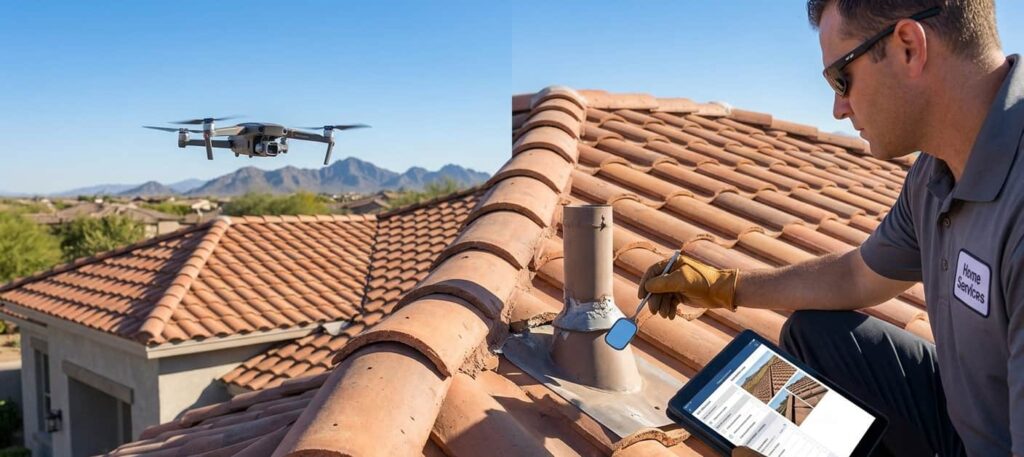
A proper inspection checks shingle or tile condition, flashing around vents and chimneys, gutter attachment, attic ventilation, and signs of past leaks. Each of these areas can affect appraisal value and buyer confidence during the sale, so a thorough technician walks the entire roof surface rather than glancing at it from a ladder.
The inspection also looks at valleys and low slope areas where water tends to pool during monsoon storms. These spots are often the first to show wear and the most likely to raise a red flag during a buyer’s own inspection later in the process.
How Roof Condition Affects Your Sale Price?
Appraisers and buyers alike treat roof age and condition as a major line item. A roof nearing the end of its lifespan can knock thousands off an offer, while a roof with a clean inspection report or a recent replacement often becomes a selling point featured directly in the listing itself.
Real estate agents in the Phoenix area frequently recommend inspection reports as part of the disclosure package, since a documented, professional assessment reassures buyers far more than a verbal assurance that the roof is fine. Homeowners who worked with Avid Roofing Solutions often share their experience in our client testimonials, describing how a pre-listing inspection made their sale smoother and their negotiations shorter.
Buyers financing through certain loan programs also look closely at roof age during underwriting, and a documented inspection can prevent a lender from requesting last-minute repairs that delay closing by weeks.
Roof Certification for Buyers and Lenders?
Some lenders require a roof certification confirming a minimum remaining lifespan before approving a buyer’s loan. Getting this document ready ahead of time keeps your closing timeline on track instead of stalling during underwriting while everyone waits on a report that could have been prepared weeks earlier.
A certification typically states the estimated remaining years of service on the roof along with any conditions, such as required minor repairs, that must be addressed first. Having this paperwork in hand before you list removes a common source of delay in the final weeks of a transaction.
What Happens During the Inspection Visit?
A technician walks the full roof surface, checks the attic from the inside, and photographs any problem areas found along the way. You receive a written report with clear findings, not vague verbal notes that are hard to reference later during negotiations with a buyer or their agent.
If repairs are recommended, you get itemized pricing so you can decide whether to fix issues yourself or offer a credit to the buyer instead. Both paths keep you in control of the outcome rather than leaving the decision to a last-minute negotiation during escrow.
Most inspections take less than two hours for an average single-family home, and Avid Roofing Solutions typically delivers the written report within a day or two, giving you plenty of time to plan repairs before your listing goes live.
Timing Your Inspection Before You List?
The best time to schedule an inspection is a few weeks before your home goes live, giving you enough time to complete any needed repairs without delaying your listing date. Avid Roofing Solutions works with sellers on this timeline regularly and can turn around reports quickly so your schedule stays on track.
If your roof shows storm damage from a recent monsoon season, addressing that damage before listing prevents a buyer’s inspector from flagging it as a red flag during their own walkthrough later in the process. Waiting until after an offer is accepted almost always costs more, since repairs completed under a tight escrow deadline rarely come at the best price.
You can learn more about our licensing, service history, and team on our about page, which many sellers review before scheduling their first inspection appointment.
Should You Complete Repairs Before Listing
Not every issue found during an inspection needs to be fixed before you list. Cosmetic wear that does not affect function, for example, can often be disclosed rather than repaired, saving you money while still keeping the transaction transparent and honest with potential buyers.
Structural concerns, active leaks, and missing or damaged flashing are a different story. These issues tend to worry buyers regardless of price point, and addressing them before listing usually protects your sale price better than offering a credit and hoping the buyer does not walk away over the concern.
A conversation with your inspector about which items are cosmetic and which are functional helps you prioritize your pre-listing budget wisely instead of spending money everywhere at once.
What Buyers Actually Look For?
Beyond the technical condition of the roof, buyers are also weighing how much peace of mind a home offers before they commit to an offer. A documented inspection signals that a seller has been proactive about maintenance, which often builds trust that carries into other parts of the negotiation, from appliances to HVAC condition.
Photos included in the report matter too. Buyers who can see the actual condition of tiles, flashing, and attic ventilation feel more confident than those relying only on a verbal summary, and agents frequently include a few of these images directly in listing materials when the news is good.
Working With Your Real Estate Agent
Share your inspection report with your listing agent early so they can decide how to position the roof in your marketing materials. A recently inspected or newly replaced roof is a legitimate selling point that agents can highlight directly in listing descriptions and open house conversations with prospective buyers.
Your agent can also advise on whether a repair credit or a completed repair makes more sense for your specific market conditions. In a competitive seller’s market, disclosure alone is often enough, while a slower market may call for completing repairs to keep your listing attractive against other options nearby.
Avid Roofing Solutions serves homeowners across our full list of service locations throughout the Phoenix metro, and many real estate agents in the area already know our reports by reputation when they show up in a disclosure packet.
Setting Realistic Expectations With Buyers
Even a well-maintained roof will show some signs of age, and setting realistic expectations with buyers upfront tends to produce smoother negotiations than presenting a roof as flawless only to have a buyer’s inspector find minor, expected wear. Honest framing builds trust that often carries through the rest of the transaction.
Buyers generally respond well to sellers who are upfront about a roof’s condition and provide a clear plan, whether that plan is a completed repair, a credit, or simple disclosure of a minor cosmetic issue that does not affect function.
Common Roof Issues Found During Pre-Listing Inspections
Cracked or slipped tiles are among the most common findings on tile roofs across the Phoenix area, often caused by foot traffic from prior maintenance work or falling debris during monsoon storms. These are usually inexpensive to fix but show up quickly on a buyer’s inspection if left unaddressed before listing.
Curling or missing granules on shingle roofs signal sun damage that has been building for years under intense UV exposure.Inspect the affected area carefully. While a few curling shingles do not always require a full roof replacement, widespread curling often indicates the roof is nearing the end of its useful life.
Worn pipe boots and cracked sealant around vents are another frequent discovery, since rubber components degrade faster than the surrounding roofing material in extreme heat. These small, inexpensive repairs prevent slow leaks that could otherwise damage attic insulation and ceiling drywall over time.
How Roof Age Factors Into Buyer Decisions?
Buyers and their agents typically ask about roof age within the first few questions of any showing, since it directly affects how soon they will need to budget for a replacement themselves. A roof under ten years old is generally seen as a non-issue, while anything approaching twenty years draws closer scrutiny.
Providing installation records or previous repair invoices alongside your inspection report gives buyers a clear timeline instead of a rough guess. This kind of documentation often shortens negotiations since both sides are working from the same facts rather than competing assumptions about the roof’s true condition.
Preparing for a Buyer’s Own Inspection
Even after a clean pre-listing inspection, most buyers will still schedule their own roof evaluation as part of their due diligence. Having your own report ready to share in advance often speeds up this second inspection, since the buyer’s inspector can compare fresh findings against a very recent baseline.
Use your original inspection report and photos to resolve any differences quickly if a second inspection identifies conflicting findings, helping keep the transaction on track.
Storm Damage and Its Impact on a Sale
Homes that experienced a recent monsoon season with high winds or hail sometimes carry damage that is not obvious from ground level. A pre-listing inspection catches this early, giving you the choice to file an insurance claim, complete repairs, or disclose the condition clearly before a buyer’s inspector finds it independently.
Addressing storm-related issues ahead of time also avoids the awkward situation of a buyer discovering damage that appears to have been hidden, even unintentionally. Full transparency from the start tends to keep transactions moving smoothly and protects your reputation as a seller in a market where word travels fast.
Budgeting for Repairs Before You List
Once you have your inspection report in hand, ask your contractor to break repair costs into must-fix items and optional upgrades. This distinction helps you decide where to spend money now versus where a simple disclosure to the buyer will suffice without hurting your negotiating position.
Minor repairs like resealing a vent boot or replacing a handful of cracked tiles typically cost a few hundred dollars and often pay for themselves many times over by removing a talking point a buyer’s agent might otherwise use to negotiate the price down.
Larger items, such as a section of damaged decking or a significant area of missing tiles, cost more but tend to matter most to buyers since they signal a potential ongoing issue rather than routine wear. Prioritizing these repairs first usually gives you the best return on your pre-listing investment.
Why Sellers Choose a Local Inspection Team?
A roofing company with deep experience across the Phoenix metro understands which issues are typical for the age and construction style of homes in your specific neighborhood. This local knowledge helps set realistic expectations rather than treating every home with a one-size-fits-all checklist built for a different climate.
Local familiarity also speeds up scheduling and repairs, since a team already working across the valley can often turn around an inspection and any necessary follow-up work faster than a company unfamiliar with the area’s permitting and material supply patterns.
Closing Thoughts
A roof inspection in Phoenix before you list gives you control over price, timeline, and repairs instead of leaving those decisions to a buyer’s inspector. Schedule your pre-listing inspection with Avid Roofing Solutions and head into your sale with a clear, documented picture of your roof’s condition from day one.
Frequently Asked Questions
Do I need a roof inspection before selling my house in Phoenix?
It is not legally required, but it is strongly recommended. A pre-listing inspection helps you address issues early and avoid last-minute negotiation over roof condition.
How much does a roof inspection cost in Phoenix?
Expect to pay anywhere from nothing to a few hundred dollars for a professional roof inspection, depending on your roof size and whether the contractor also provides a repair estimate.
Will a bad roof inspection kill my home sale?
Not necessarily.Offer a repair credit or complete the roof repairs before closing to keep the sale on track. Many buyers will move forward when you disclose the issue and price it fairly.
How long is a roof inspection report valid?
Most inspection reports and roof certifications remain valid for two to four years, but lenders and insurance companies may set different requirements.
Can I sell my house with an old roof in Phoenix?
Yes, though buyers may negotiate a lower price or ask for a credit to cover a future roof replacement. An inspection report helps you understand your negotiating position ahead of time.
Should I repair my roof or offer a credit to the buyer instead?
It depends on your timeline and market conditions. Completing repairs often protects your asking price, while a credit can speed up closing when time is tight.
What documents should I have ready from a roof inspection?
Keep the written inspection report, any repair invoices, and a roof certification if your buyer’s lender requires one, so your file is complete before showings begin.
Do buyers always get their own roof inspection even if I provide one?
Most buyers still schedule their own inspection as part of due diligence, but a recent seller-provided report often speeds up that process and reduces surprises.
How far in advance should I schedule a pre-listing roof inspection?
Aim for three to four weeks before your target listing date, giving enough time to complete repairs without rushing the work or delaying your timeline.