
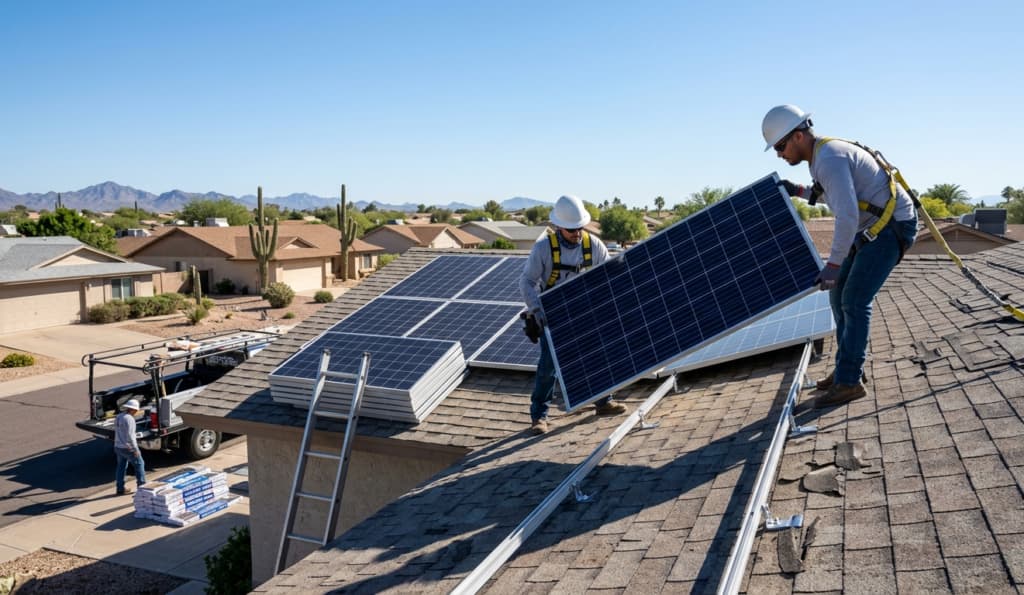
If you have solar panels on your Arizona home and your roof is due for replacement, you are dealing with a situation that a lot of homeowners do not fully anticipate. The panels have to come off first, the roof gets replaced, and then the panels go back on. That process involves your roofing contractor, your solar company, and sometimes your utility provider. Getting clear on who does what and who pays for what upfront saves a lot of frustration.
Avid Roofing Solutions handles roof replacements on solar-equipped homes regularly throughout the Phoenix metro area. The process is manageable when it is coordinated correctly, but the coordination is where most projects run into delays and unexpected costs.
Solar Panel Removal Cost Arizona: Who Actually Pays
This is the question that generates the most confusion. In most cases, the homeowner pays for solar panel removal and reinstallation unless specific warranty or service agreements cover it.
The cost to remove and reinstall solar panels in Arizona typically runs $1,500 to $4,000, depending on the system size, panel count, and whether any components need to be inspected or updated during the process. Larger systems with battery storage or complex mounting configurations cost more.
Your solar installer is usually the right company to handle removal and reinstallation, not your roofing contractor. Roofers can sometimes remove panels, but reinstallation and electrical reconnection require a licensed solar installer and, in some cases, an electrician. Ask both companies upfront who is responsible for each step.
Who Pays for Solar Removal During Roof Replacement in Arizona?
If your solar panels are leased, your leasing company may have specific requirements about who can remove and reinstall them. Review your lease agreement before scheduling anything. Some leasing companies require their own certified technicians to do the work, which can limit your contractor options and add cost.
If you own your panels outright, you have more flexibility. Get quotes from your original solar installer and at least one independent solar service company. Prices can vary by $500 to $1,500 on the same job depending on the provider.
Homeowners insurance typically does not cover solar removal and reinstallation as part of a voluntary roof replacement. If the roof replacement is being triggered by storm damage, check your policy carefully. Some policies cover associated costs like panel removal when the roof damage itself is a covered claim. For a clear picture of what your policy likely covers, reviewing roofing and home insurance in Arizona is a good starting point.
Roof Replacement with Solar Panels in Arizona:
Understanding the full sequence of events helps you plan realistically. Here is how a typical roof replacement with solar panels unfolds in the Phoenix area:
Week 1: Schedule a roof inspection to confirm the scope of work, get a roofing quote, and contact your solar company to schedule panel removal. Aligning both schedules is the most common source of delay.
Week 2 to 3: Solar panels are removed. This typically takes one day for a standard residential system. The system is de-energized, panels are disconnected and labeled, and mounting hardware is removed or left in place depending on the roofing plan.
Week 3 to 4: Roof replacement is completed. Depending on material choice and crew size, a residential re-roof in Phoenix takes one to three days. The roofer patches any holes from old mounting hardware and prepares clean penetration points for reinstallation.
Week 4 to 5: Solar panels are reinstalled. Mounting hardware is refastened through the new roof membrane, flashed properly, and sealed. The system is reconnected, tested, and re-energized. In some cases, the utility company needs to be notified and may require a brief inspection.
Total timeline: four to six weeks from first phone call to fully operational solar system. Delays happen most often when solar company scheduling does not align with roofing crew availability, or when permit processing takes longer than expected.
Solar Panel Removal Cost in Arizona: What Affects the Price
Several variables push the total cost up or down:
Panel count: More panels mean more labor. A 20-panel system costs more to remove and reinstall than a 10-panel system, even if wattage is similar.
Roof pitch: Steep roofs require additional safety equipment and slow down both the removal and reinstallation process.
Mounting system type: Rail-based mounting systems are faster to work with than ballasted or attachment-heavy systems. Some older systems require mounting hardware replacement during reinstallation.
Inverter inspection: Some solar companies include a basic system inspection during reinstallation. Others charge separately. Ask upfront whether the reinstallation quote includes testing and system verification.
Before any work begins, get a roof inspection to understand exactly what the replacement will require. A proper roof inspection in Arizona will identify any deck damage, flashing issues, or structural concerns that could complicate the solar reinstallation.
Getting It Right the First Time
The most important thing to get right during reinstallation is the roof penetrations. Every point where a mounting bracket goes through your new roof membrane is a potential leak point. Your solar installer should use proper flashing kits designed for rooftop solar, not just silicone sealant.
In Arizona, thermal expansion is significant. Daytime temperatures cause roofing materials to expand, and nighttime temperatures cause contraction. Mounting hardware that is not correctly installed for this thermal movement can create gaps that let water in during monsoon season.
Ask your solar company specifically how they handle roof penetrations on new roofs. Companies that have worked extensively with Arizona re-roof projects will have a clear, practiced answer. Those who do not have that experience will be vague.
What Happens to Your Solar Production During the Process?
During the removal and replacement period, your solar system will be offline. In Arizona summers, losing solar production for three to five weeks means running on grid power during peak demand hours. Depending on your utility rate structure and the time of year, this can add $200 to $600 to your utility bills during the downtime period.
If your roof replacement is happening in summer, try to schedule panel removal as late as possible before the roofing crew starts. Some roofing companies can work quickly enough that panels come off on a Monday and go back on by the following week, minimizing grid dependence.
Shingle Roofs and Solar: Special Considerations
Many Phoenix-area homes with solar panels still have original shingle roofs. If your shingles are approaching the end of their life, addressing the roof before the shingles fail is far smarter than waiting for a leak to force the issue. Shingle roof lifespan in Arizona is shorter than in cooler climates due to UV intensity and heat cycling, often running 15 to 20 years versus the 25 to 30 years rated in manufacturer specs.
Replacing a shingle roof under existing solar panels is also an opportunity to upgrade to a more heat-resistant material if your budget allows. Cool-roof shingles, tile, or foam roofing all handle Phoenix conditions better than standard three-tab or architectural shingles. Contact us today to get your roof replaced or repaired
Frequently Asked Questions
Do I need a permit to remove and reinstall solar panels in Arizona?
Most Arizona municipalities require a permit for solar reinstallation after a roof replacement. Your solar company handles this in most cases, but confirm it is included in your reinstallation quote.
Can my roofer reinstall my solar panels?
Roofers can physically remove panels in some cases, but reinstallation requires electrical work and licensing that most roofing contractors do not hold. Hire a licensed solar company for reinstallation.
Will my solar warranty be voided if a roofer removes the panels?
This depends on your warranty terms. Some solar manufacturers require their certified installers to handle any panel removal. Check your warranty documentation before authorizing a roofing contractor to touch your system.
How do I know if my roof needs replacement before my solar panels fail?
A professional roof inspection can identify underlayment condition, flashing integrity, and deck health independent of what the surface looks like. Schedule one if your roof is 15 or more years old, even if you have no visible leaks.
What is the best time of year to do a roof replacement with solar in Phoenix?
Fall and early spring are ideal. Temperatures are manageable for roofing crews, monsoon season has passed, and solar production loss is less costly than during peak summer months.