
Emergency Roof Repair in Phoenix, AZ
(602) 888-0450
We tarp and stabilize first to stop the damage, then diagnose and repair properly once the weather clears.
What Counts as an Emergency
- Active water coming through a ceiling or wall
- A ceiling that’s sagging, bulging, or holding water
- Visible structural damage after a microburst — lifted roof sections, missing large areas of material
- A tree or large limb on the roof
- A hole in the roof from debris impact
- Water reaching electrical fixtures or panels
Anything else — a stain that appeared last week, a cracked tile, a slow drip that only shows during heavy rain — is urgent but not an emergency. See roof repair.
What to Do Right Now
- Move what you can. Get furniture, electronics, and anything of value out from under the leak.
- Contain it. Buckets under active drips. A plastic sheet or tarp over anything you can’t move.
- If a ceiling is bulging, be careful. That’s water pooling above drywall, and it can come down all at once. Keep people out from underneath it. A small hole punched at the low point with a screwdriver, standing to the side with a bucket beneath, will drain it in a controlled way rather than letting it collapse.
- Kill the power to affected areas if water is anywhere near lights, outlets, or fixtures.
- Photograph everything. Before you clean anything up. Wide shots and close shots, inside and out. If there’s an insurance claim, this is the documentation that supports it.
- Stay off the roof. Wet tile is slick, wet foam is slicker, and storm-damaged roofs have compromised structure you can’t see from above. Nothing you’d accomplish up there is worth it.
- Call us. (602) 888-0450
Our Emergency Response
- Phone assessment. We ask what’s happening, where, and how bad, and give you a realistic arrival window rather than an optimistic one.
- Tarping and stabilization. Water gets stopped first. Everything else waits.
- Documentation. We photograph the damage thoroughly as we work, which serves both the repair and any insurance claim.
- Diagnosis once conditions allow safe inspection.
- Written estimate for permanent repair.
- Permanent repair scheduled as soon as weather and materials allow.
Temporary tarping is exactly that — temporary. It buys days to weeks, not months, and monsoon wind is hard on it. Permanent repair should follow promptly.
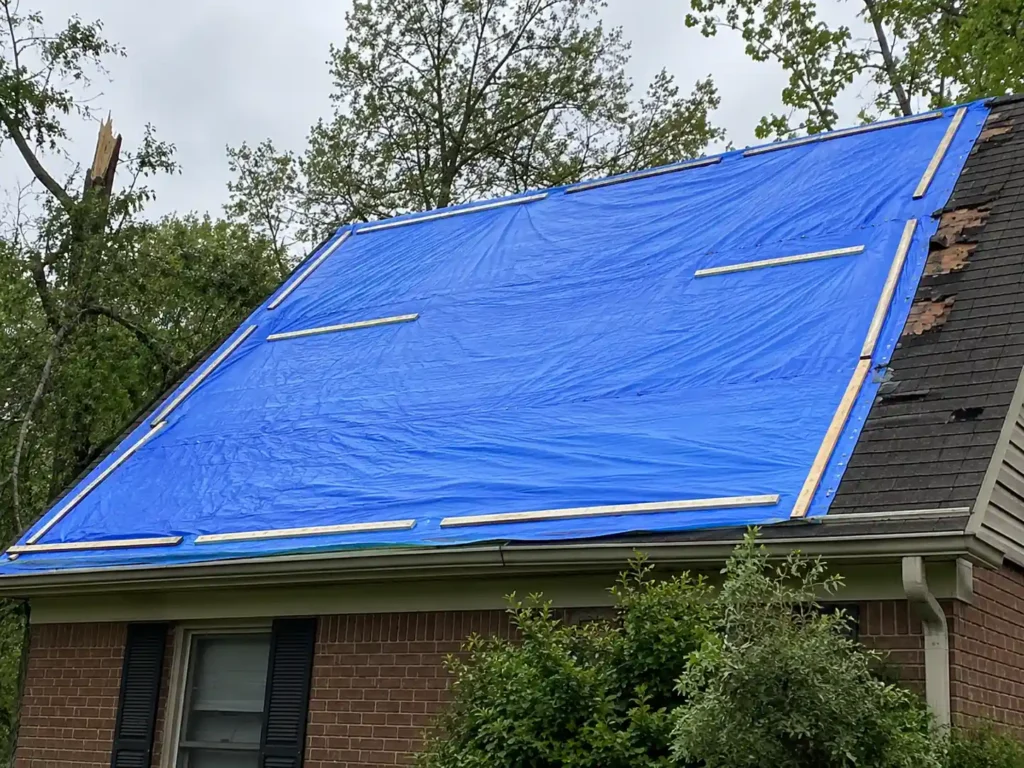
[EXPERIENCE: A specific storm — the date, what the wind did to a roof, what we found when we got there.]
Monsoon Season
Microbursts generate straight-line winds of 60 to 100 mph, well beyond what most roofs are detailed for. Driving rain at that speed goes sideways and upward, under tile laps and behind flashings that shed normal rainfall without difficulty.
Haboobs pack dust into valleys and drains, and the next storm’s water backs up behind it and finds its way under the roof surface.
Call volume spikes hard during and immediately after storms. We prioritize active water intrusion over everything else, but if you’re seeing a stain rather than a stream, an inspection in a day or two is the realistic path.
The best thing you can do is not need us in August. A free inspection in May, before the season starts, catches the failed pipe jack or lifted flashing that becomes an interior flood in July.
What Emergency Service Costs
- Emergency tarping: $250 – $600 depending on area and access
- Temporary stabilization: quoted on site
- Permanent repair: quoted after diagnosis — see roof repair for typical ranges
Insurance
Sudden storm damage is generally a covered loss. Age-related wear generally isn’t.
We document everything we find with photographs and provide a written assessment, which is what an adjuster needs. We’ll also meet with your adjuster on site if that’s useful.
We don’t file claims for you and we don’t advise you on whether to file — that’s between you and your carrier. What we do is make sure the documentation exists.
See storm damage roof repair.
Service Areas
Frequently Asked Questions
Water Coming In? Call Now.
(602) 888-0450
Licensed, bonded, and insured · Arizona ROC 358748