
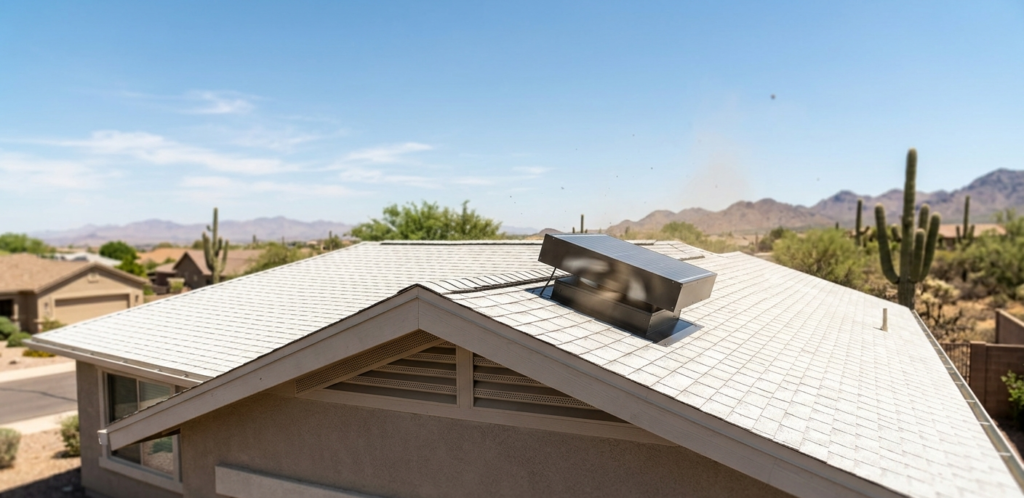
Proper roof ventilation plays a major role in keeping Arizona homes safe, efficient, and comfortable. The extreme desert climate puts constant pressure on roofing systems, especially during long summer months.
Avid Roofing Solutions helps homeowners across Arizona manage heat buildup, improve attic airflow, and extend roof lifespan through professional roofing care designed for hot climates. Without proper ventilation, attic spaces can trap heat at dangerous levels, increasing energy bills and damaging roofing materials over time.
Importance of roof ventilation in Arizona homes and attic ventilation Arizona climate
Arizona homes experience some of the harshest roof conditions in the country. Constant sun exposure causes attic temperatures to rise significantly higher than outdoor temperatures.
The attic ventilation Arizona climate challenge is not just about comfort but also about roof durability. When hot air gets trapped, it slowly breaks down insulation and roofing layers.
Over time, this leads to uneven cooling inside the home and higher electricity usage as air conditioners work harder to compensate. In many cases, homeowners first notice rooms becoming hotter even when the AC is running continuously. This is a strong sign that ventilation is not working properly. Professional evaluation through residential roofing services helps identify hidden airflow issues before they become costly repairs.
How to improve roof ventilation in hot climates and attic heat problems Arizona houses?
Hot climates require a properly balanced ventilation system. Air must enter through intake vents and exit through exhaust vents to maintain steady airflow.
One of the most common attic heat problems Arizona houses face is blocked soffit vents. When these are blocked, hot air has nowhere to escape, creating extreme heat buildup.
Simple improvements such as clearing vents or adjusting insulation placement can significantly improve airflow performance.
In more advanced cases, upgrading to ridge vents or powered ventilation systems may be necessary for long-term protection.
When roof damage contributes to poor airflow, combining ventilation work with storm damage roof repair ensures the structure and airflow system are both restored properly.
These combined improvements help stabilize attic temperatures and reduce strain on cooling systems.
Why roof ventilation is critical in hot dry climates like Arizona?
Understanding why roof ventilation is critical in hot dry climates like Arizona starts with heat behavior. Even without humidity, extreme temperatures can cause severe damage inside attic spaces.
When airflow is restricted, heat accumulates and radiates downward into living spaces. This forces HVAC systems to work harder and increases monthly energy costs.
Improving airflow requires a proper balance between intake and exhaust vents. Air must continuously move through the attic to prevent overheating.
Insulation placement also plays a key role. If insulation blocks airflow paths, ventilation systems lose efficiency even if vents are installed correctly.
Homeowners in different regions of Arizona often need tailored solutions based on climate intensity and roof design. Localized support such as Tucson roofing services and Mesa roofing services ensures ventilation systems are properly matched to environmental conditions.
Roof ventilation tips for desert homes and best ways to cool attic in Arizona summer
Desert homes require ventilation systems designed for continuous heat exposure. Standard systems used in cooler climates often fail under Arizona’s extreme summer conditions.
One of the most effective upgrades is improving ridge ventilation. Ridge vents allow hot air to escape naturally from the highest point of the roof.
Soffit vents complement this by pulling cooler air into the attic, creating a natural circulation system. Reflective roofing materials can also help reduce heat absorption before it enters the attic space.
For complete system optimization, homeowners rely on professional roofing services to ensure ventilation systems are properly designed and installed.
Long-term benefits of proper roof ventilation in Arizona homes
Proper ventilation delivers long-term protection and improved home efficiency. One of the biggest benefits is reduced attic temperature, which improves indoor comfort.
Energy savings are another major advantage. When attic heat is controlled, air conditioning systems operate more efficiently and consume less power.
Roof lifespan also improves significantly. Stable temperatures reduce expansion and contraction, preventing cracks and structural wear. Ventilation also supports insulation performance. When insulation remains at stable temperatures, it works more effectively throughout the year.
For homeowners looking for reliable long-term solutions, trusted providers like Avid Roofing Solutions offer complete roofing evaluations and maintenance support.
Conclusion
Roof ventilation is essential for every Arizona home due to the extreme desert climate and long periods of intense heat.
Understanding the importance of roof ventilation in Arizona homes helps homeowners take proactive steps to protect their property, reduce energy costs, and improve comfort.
Small improvements in airflow can make a significant difference in attic temperature and overall roof performance. Proper evaluation and maintenance ensure your home stays protected against Arizona’s extreme summer conditions.
FAQ:
Why is roof ventilation important in Arizona homes?
It helps remove trapped heat from attics, improving comfort and preventing roof damage caused by extreme temperatures.
What causes attic heat problems in Arizona houses?
Blocked vents, poor airflow design, and insulation interfering with ventilation are the most common causes.
How can I improve attic airflow in my home?
Ensure soffit and ridge vents are clear, improve insulation placement, and upgrade ventilation systems if needed.
Does roof ventilation reduce electricity bills?
Yes, better airflow reduces attic heat, lowering the workload on air conditioning systems.
How often should roof ventilation be inspected?
At least once a year, especially before peak summer heat conditions.