
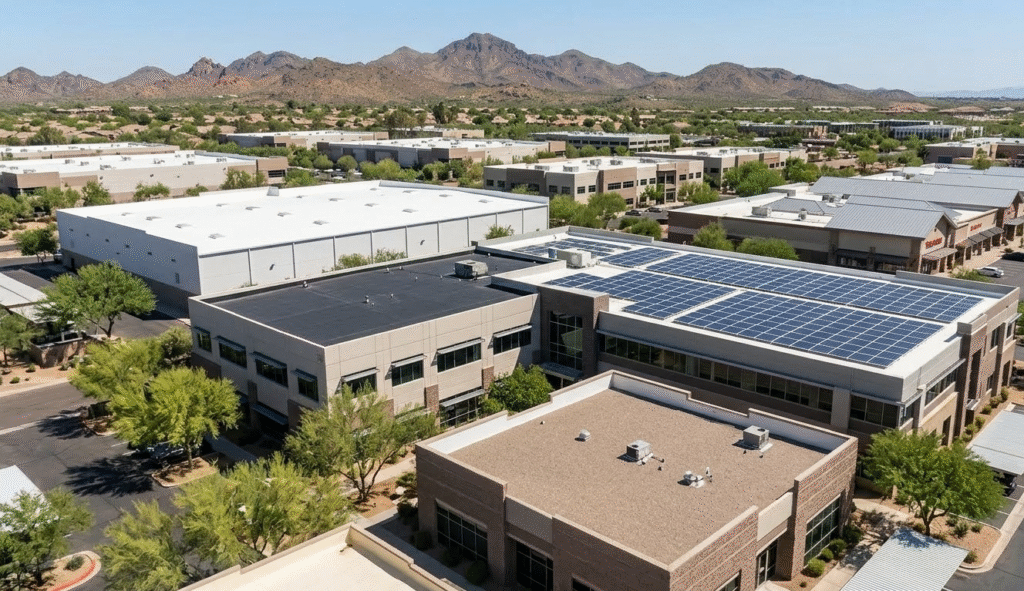
Choosing the right roof for your business in Arizona matters. With aging structures, extreme heat, monsoons and strict energy codes, understanding the Types of commercial roofs AZ helps you protect assets and minimize long‑term costs. This guide explores 10 top commercial roofing systems, what makes them unique, and which options offer the best performance under the Arizona sun.
Whether you’re planning a new build or replacing an existing roof, this guide gives clarity on materials, durability, and Best commercial roofing options in Arizona 2026.
In the first steps of planning, it helps to work with experienced roofing professionals such as Aavid Roofing Solutions for tailored recommendations and quality installation.
Understanding Types of Commercial Roofs AZ
Commercial roofs differ from residential roofs in size, slope, material, and performance requirements. Arizona’s climate demands materials that resist UV rays, reduce heat gain, and handle monsoon rains. Businesses often install flat or low‑slope roofs that combine waterproofing, insulation, and energy‑saving features.
Selecting the right system also influences the Cost of commercial roofing systems in AZ. Some materials have higher upfront costs but deliver decades of service and lower energy bills.
Arizona building codes and local climate zones also affect insulation requirements and roofing design decisions. Roof restoration in Arizona can help extend the life of older commercial roofs while improving energy efficiency.
1. Thermoplastic Polyolefin (TPO) Roofing
TPO roofing is one of the most popular single‑ply membranes used on commercial buildings in Arizona. It reflects sunlight, reducing heat absorption and cutting cooling costs in hot desert climates.
TPO sheets are heat‑welded at the seams to create a waterproof barrier. This makes installation faster and gives excellent resistance to leaks. Their bright white surface also qualifies as a cool roof under many energy‑efficiency programs.
Best For: Large flat roofs, retail centers, warehouses
Benefits: Energy savings, lower lifecycle cost, excellent reflectivity
2. EPDM Roofing
EPDM is a single‑ply rubber membrane known for durability and flexibility. It’s especially suited for flat or low‑slope commercial buildings, provides consistent performance, and resists extreme temperatures.
EPDM is relatively low‑cost compared to some alternatives and can be ballasted or fully adhered depending on your roof design.
Best For: Office buildings, industrial facilities
Benefits: Long lifespan, durable, easy repairs
3. PVC Roofing
PVC roofing is another single‑ply membrane with strong chemical resistance. Its heat‑welded seams create exceptional waterproofing. PVC’s lighter color and reflective surface make it a strong contender in Arizona’s desert heat.
Best For: Restaurants, chemical or industrial buildings
Benefits: Excellent durability, reflective surface
4. Metal Commercial Roofing
Metal roofing includes steel, aluminum, or other metal panels. Commercial metal roofing is rugged, long-lasting, and stands up well against UV exposure, wind, hail, and precipitation.
Metal roofs offer performance and aesthetic appeal. Their high reflectivity helps reduce heat gain and can contribute to lower energy consumption.
Best For: Retail campuses, industrial installations
Benefits: Highest longevity, lower maintenance
5. Built‑Up Roofing (BUR)
Built‑Up Roofing is a traditional system made with multiple layers of bitumen and reinforcing fabrics. The result is a thick, dependable membrane ideal for low‑slope commercial roofs.
The layers are capped with aggregate such as gravel, which protects from UV damage and enhances fire resistance.
Best For: Large buildings with significant foot traffic
Benefits: Proven durability, strong waterproofing
6. Modified Bitumen Roofing
This system builds on the BUR approach, adding polymers for flexibility and enhanced weather resistance. It combines ease of installation with rugged durability, making it a reliable choice for various commercial applications.
Best For: Industrial facilities
Benefits: Excellent flexibility, reliable performance
7. Spray Polyurethane Foam (SPF) Roofing
SPF roofing starts as a liquid and expands into foam, sealing the entire roof surface. Once cured and coated, it forms a seamless and insulating layer.
This system offers exceptional thermal performance, making it a top energy-efficient commercial roofs Arizona option.
Best For: Complex roof shapes, buildings with high insulation needs
Benefits: Seamless waterproofing, energy-saving
8. Roof Coatings
Roof coatings don’t replace a roof but enhance its performance. Reflective coatings like silicone or acrylic lower surface temperatures and delay replacements.
Best For: Existing roofs nearing end of life
Benefits: Lower cooling loads, add waterproof protection
9. Green Roof Systems
Green roofs integrate vegetation over a waterproof membrane. Though less common in deserts, they offer stormwater control, better insulation, and reduced urban heat island effects.
Best For: Sustainable office complexes
Benefits: Environmental impact, insulation benefits
10. Solar‑Ready Commercial Roofs
Solar installations are increasingly paired with commercial roofing systems, especially TPO and metal. Preparing a roof for solar modules at the design stage ensures structural support and seamless integration. Energy production can offset operational costs year after year.
Best For: Energy-focused businesses
Benefits: Lower energy bills, sustainability
Closing Thoughts
When choosing among the Types of commercial roofs AZ, consider your building use, local climate, and long-term goals. Options like TPO and EPDM balance performance and cost, while metal and SPF systems offer premium durability. Energy efficiency and Best commercial roofing options in Arizona 2026 are key elements in decision-making.
Get expert insights and precise cost estimates tailored to your project by consulting experienced professionals to secure a roof built for Arizona’s challenges.
Frequently Asked Questions
Q: What’s the best commercial roofing material for Arizona’s heat?
A: TPO and high-reflectivity metal roofs are strong choices for heat resistance and energy savings.
Q: How long do commercial roofs last in AZ?
A: Lifespans range widely: metal and SPF can last 40–50+ years; TPO and EPDM often last 20–30 years.
Q: Does Arizona require special roofing insulation?
A: Local codes often require R-value insulation depending on climate zone.
Q: Are energy-efficient commercial roofs more expensive upfront?
A: They can be, but energy savings and longer lifespan often lower total lifecycle costs.